Yesterday, June 21, Ukraine celebrated Pectoral Day.
The Scythian golden pectoral was named by UNESCO as “one of the most significant archaeological discoveries of humanity in the twentieth century” and a masterpiece of world art. Its discoverer was the archaeologist Borys Mozolevsky. On June 22, 1971, on the Day of the Summer Solstice, at 14:30, he was lucky enough to find it while clearing the soil of a crypt in the Tovste Mohyla mound near the town of Pokrov (Ordzhonikidze), Dnipro region.
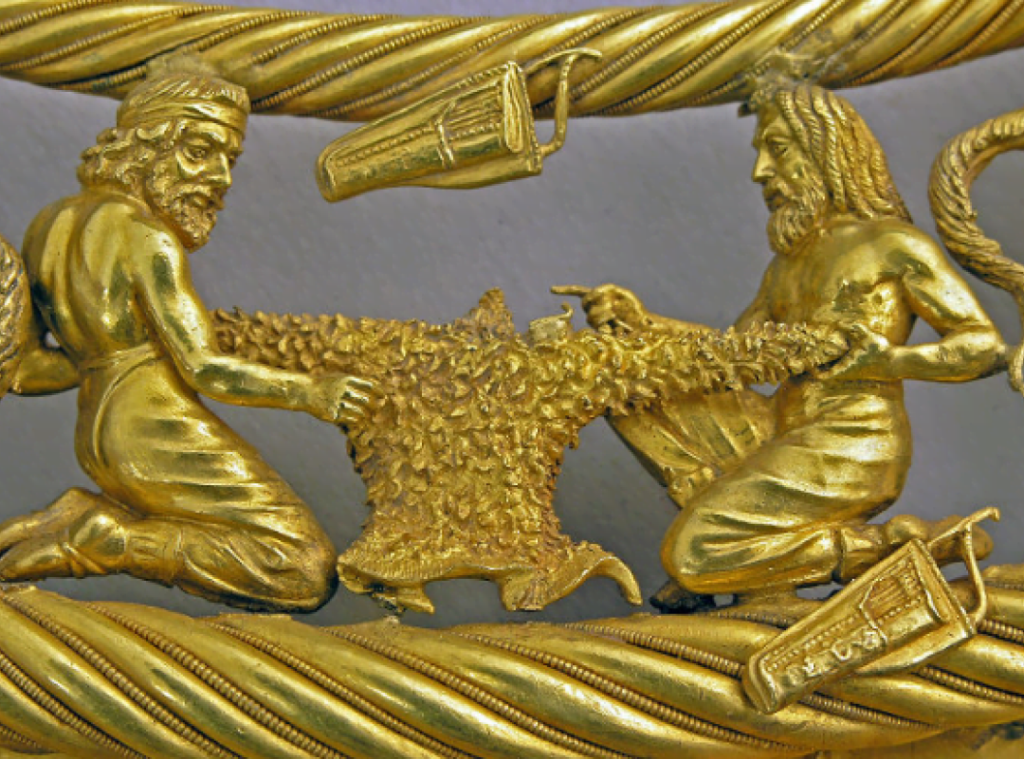
According to one version, the central part of the upper tier of the Scythian pectoral depicts the ancient Scythian kings Hap and Pal holding a sheepskin with the outlines of Crimea encoded on it. This version also resonates with the historical fact of the settlements of the Scythians, who for a long time were located in southern Ukraine and, in particular, on the Crimean peninsula.
The Golden Pectoral proves once again that the Ukrainian south, along with Crimea, are integral parts of Ukraine’s important cultural heritage.