Yevhen Bondarenko, the Head of the Mission’s Information Support Department, participated in the panel discussion “Threats to Ukrainian Activists in the Occupied Territories” within the framework of the round table “Challenges of Civil Society During the War,” organized by the Ukrainian Helsinki Human Rights Union.
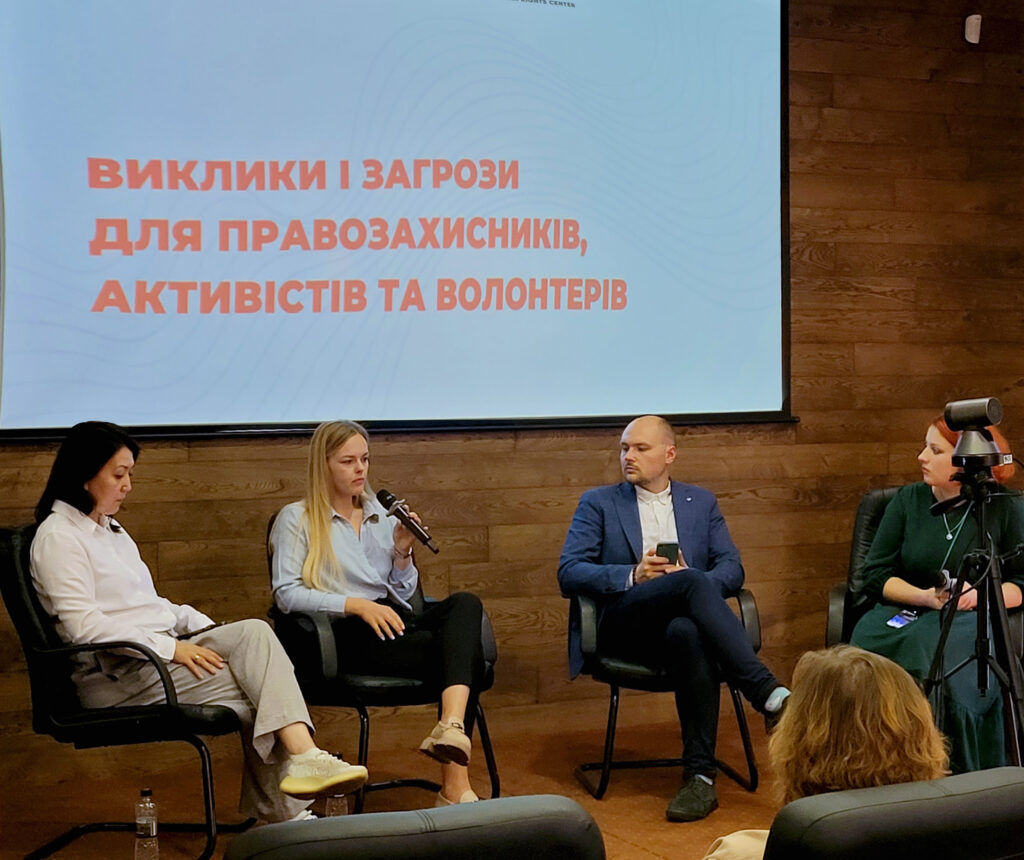
“Currently, 218 political prisoners have been registered, 132 of them are Crimean Tatars. We also know about 943 cases of discrediting the Russian army, and 836 fines have been imposed. On average, there are up to 33 cases per month. Anyone can be charged under this article, from listening to Ukrainian songs to wearing national symbols to simply for color coincidence. The occupier does not care whether you are an activist, a representative of the Indigenous people, or just an ordinary citizen. You can be imprisoned for no reason,” Yevhen Bondarenko emphasized.
He also reminded that in temporarily occupied Crimea, resistance intensified in 2022, after the start of Russia’s large-scale invasion. The response to this was introducing an article in Russian legislation on the so-called “discrediting the Armed Forces of the Russian Federation.”
“It is necessary to communicate cases of political prisoners in Ukraine and abroad, and it is crucial to destroy Russian propaganda about the Crimean Peninsula. Russian propaganda is actively spreading the narrative that Crimea is allegedly “historically Russian territory,” which is certainly not true. The liberation of Crimea means, first of all, the liberation of all our citizens who are being harassed in all aspects: cultural, religious, and educational,” said Yevhen Bondarenko.
In addition, he emphasized that Russia, despite ten years of occupation, has failed to conquer Crimean society and has resorted to an explicit colonization policy.
The event also discussed humanitarian aid, lobbying, international cooperation, and the problems of activists in local communities.