Today, the Mission’s Office hosted a meeting with the leadership of the Artek International Children’s Center.
Participants discussed preparations for events marking the 100th anniversary of the camp, which will be commemorated on June 16, 2025. The discussion also focused on the forcible deportation of children, the use of Crimea as a transit zone for their illegal transfer, the need to counter Russian propaganda, and the development of educational programs to spread knowledge about the Crimean Peninsula.
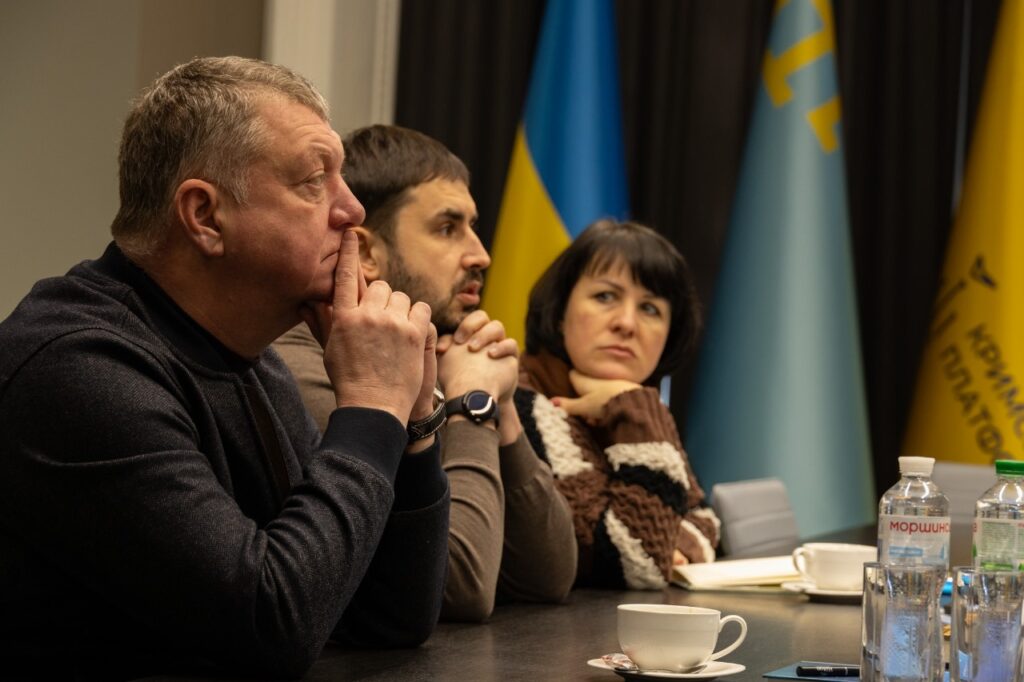
The meeting was attended by Permanent Representative Olha Kuryshko, Head of the Information Support Department of the Mission Yevhen Bondarenko, General Director of the Artek International Children’s Center Serhii Kapustin, First Deputy General Director Daria Mukha, and Head of the Health Protection and Sanatorium-Resort Facilities Department of the State Management of Affairs Dmytro Slobodianiuk.
The Permanent Representative reported that the occupation administration continues to abduct Ukrainian children, forcibly transporting them to Russia or using temporarily occupied Crimea as a transit zone for deportation. Olha Kuryshko emphasized that in 2024, the Mission published an analytical report titled “Forcible Deportation of Ukrainian Children to/via Occupied Crimea,” which provides a detailed account of the forced displacement of Ukrainian children, their illegal detention in recreational areas and camps, and their unlawful adoption. Ukrainian and international human rights organizations recognize these actions as the forced transfer of children from one national group to another, which constitutes an act of genocide.
Russia systematically erases the Ukrainian identity of children through propaganda, forced Russification, and militarization, stated Yevhen Bondarenko, Head of the Information Support Department of the Mission. He stressed that the occupiers deliberately eradicated Ukrainian culture by imposing Russian narratives and emphasized that silence on these crimes would only contribute to their continuation, making international awareness and response critically important.
Meeting participants also underscored the urgent need for high-quality educational programs to help children learn about Crimea’s culture, nature, and historical heritage. They agreed that Ukrainian children must have access to accurate knowledge about the peninsula, as there is a growing demand for such information.