On November 19, Ádám Kolozsi and Emese Szabo, journalists from Hungary, and Jakub Kotuc from Slovakia visited the Mission of the President of Ukraine in the Autonomous Republic of Crimea/Office of Crimea Platform. The meeting was held in the framework of the Study Visit Program of the Ukrainian Institute.
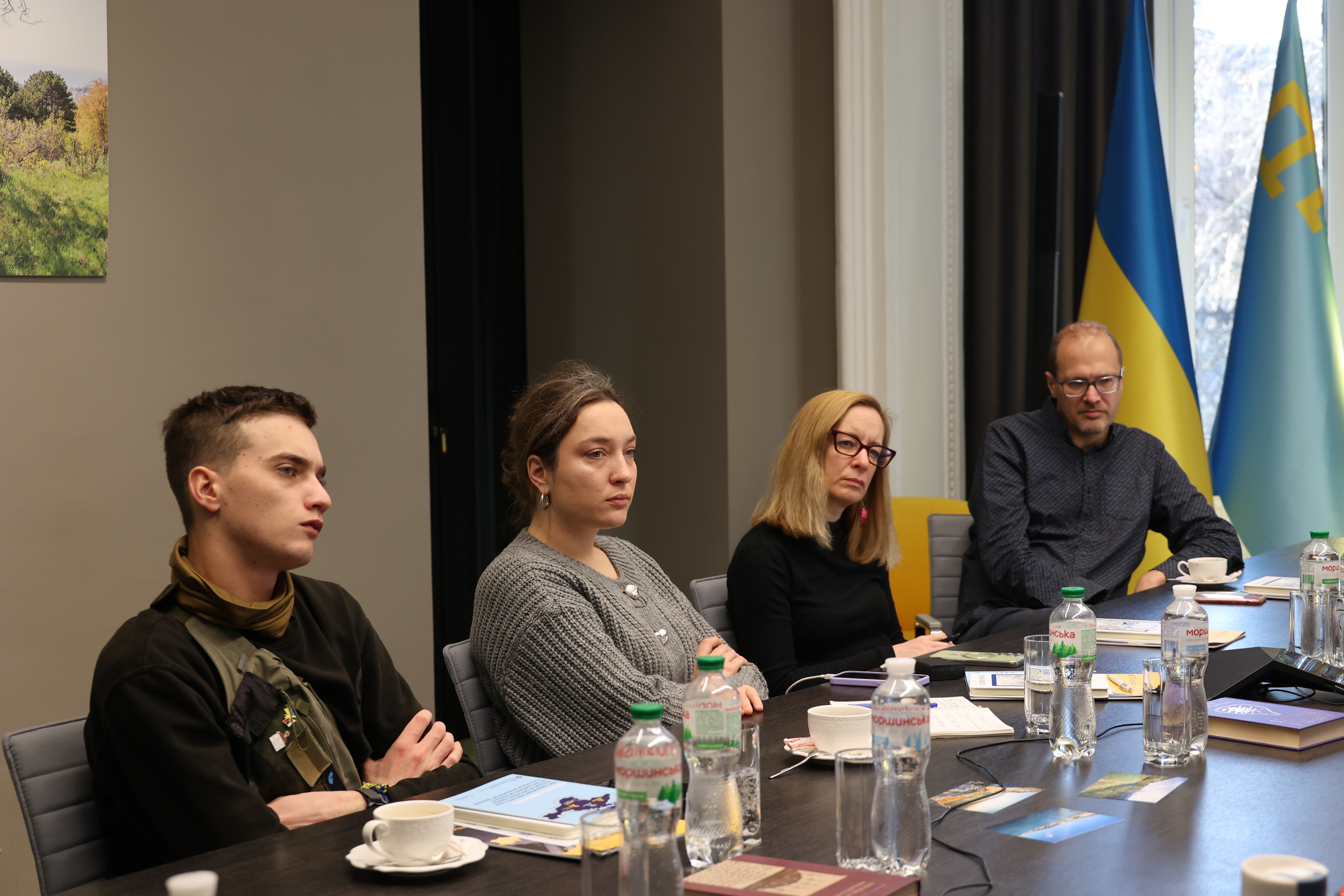
The journalists met with Nelia Hrynyshyn, head of the Crimea Platform Department, and Tetiana Nepomiashcha, chief consultant of the Department. Viktoria Nesterenko, a human rights defender from the ZMINA Human Rights Center, and Oleksandra Barkova, the sister of Crimean political prisoner Bohdan Ziza, also joined the meeting.
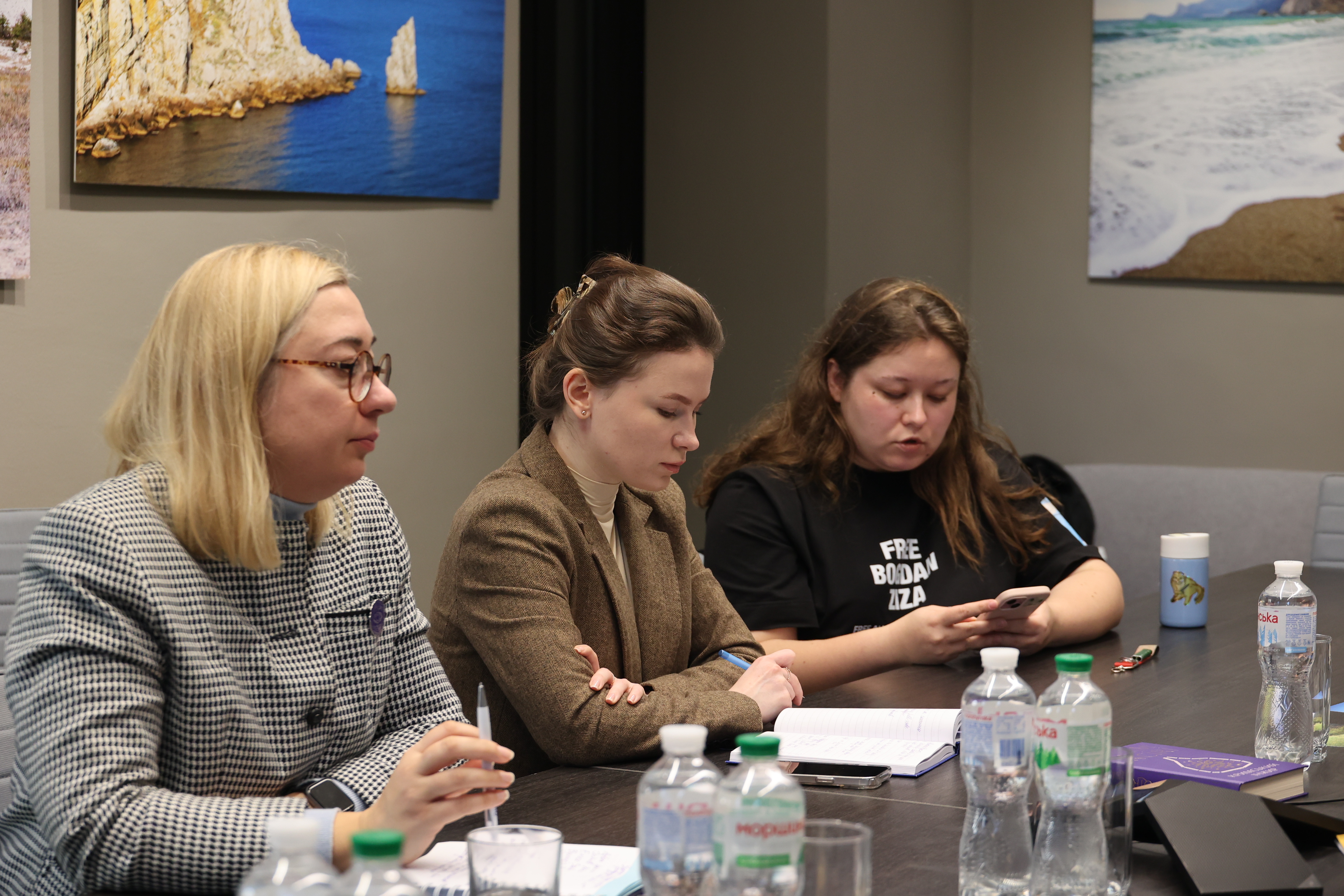
The foreign journalists were briefed on politically motivated persecution in occupied Crimea. Viktoria Nesterenko reported on the unlawful detention of journalists, civil society activists, and pro-Ukrainian residents of the peninsula; about the use of social media posts as grounds for criminal prosecution, and the denial of medical care to political prisoners. According to the ZMINA Human Rights Center, more than 280 political prisoners from occupied Crimea and Ukraine’s newly occupied territories are being held in Crimean pretrial detention centers, including 17 journalists. About 100 prisoners suffer from serious health problems.
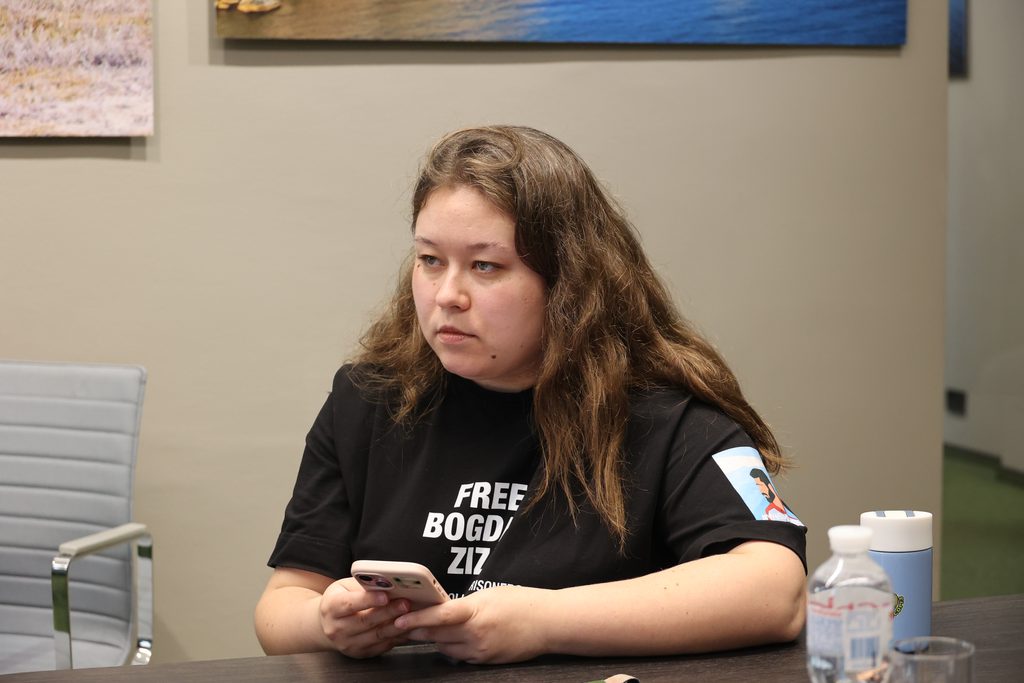
Oleksandra Barkova spoke about her brother, Bohdan Ziza, who is being held captive in Russia, and about the censorship of correspondence in Russian detention facilities. Facility administrations can delay letters, remove certain passages, or even block any mention of Ukrainian cities. Because of these restrictions, political prisoners are unable to fully keep up with events in Ukraine and the campaigns in their support. In particular, Bohdan is not always able to receive information about the songs, exhibitions, and art projects dedicated to him and his resistance.
Journalists also asked how Russia uses propaganda to attempt to normalize the occupation of Crimea and influence various groups of the population. Special attention was paid to the situation of the Crimean Tatars as indigenous people of Ukraine. Also discussed the persecution by occupation administration of those who express their Ukrainian identity and the difficulties faced by those who were trying to escape from the occupied peninsula.
Another topic of discussion was the militarization of Crimea. The conversation focused on the use of the education system to spread Russian narratives and the pressure on young people to enlist in the Russian army.
Nelia Hrynyshyn called to join the advocacy mentorship program over Crimean political prisoners, which gives foreign journalists, politicians, and civil society activists the opportunity to support political prisoners and facilitate their urgent release.
The Mission called on foreign journalists to report on the real situation in occupied Crimea, counter Russian disinformation, and share information about Ukrainian political prisoners.