On 12 May, Brussels hosted the official opening of the First Crimea Week — an initiative, taking place until 16 May, that aims to draw the attention of the international community to the situation in the temporarily occupied peninsula and to advocate for the protection of the rights of its residents. The event began with a panel discussion, where Olha Kuryshko, Permanent Representative of the President of Ukraine in the Autonomous Republic of Crimea, delivered her opening remarks.
Speakers on the panel also included Nariman Dzhelyal, Deputy Chairman of the Mejlis of the Crimean Tatar People; Viktoriia Nesterenko, a human rights defender from the ZMINA Human Rights Center; and Maria Sulianina, Head of the Almenda Center for Civic Education. The discussion was moderated by Nora Wehofsits, International Advocacy Officer at the Human Rights House Foundation. The event also welcomed the participation of Jitka Látal Znamenáčková, Permanent Representative of the Czech Republic to the EU Political and Security Committee.
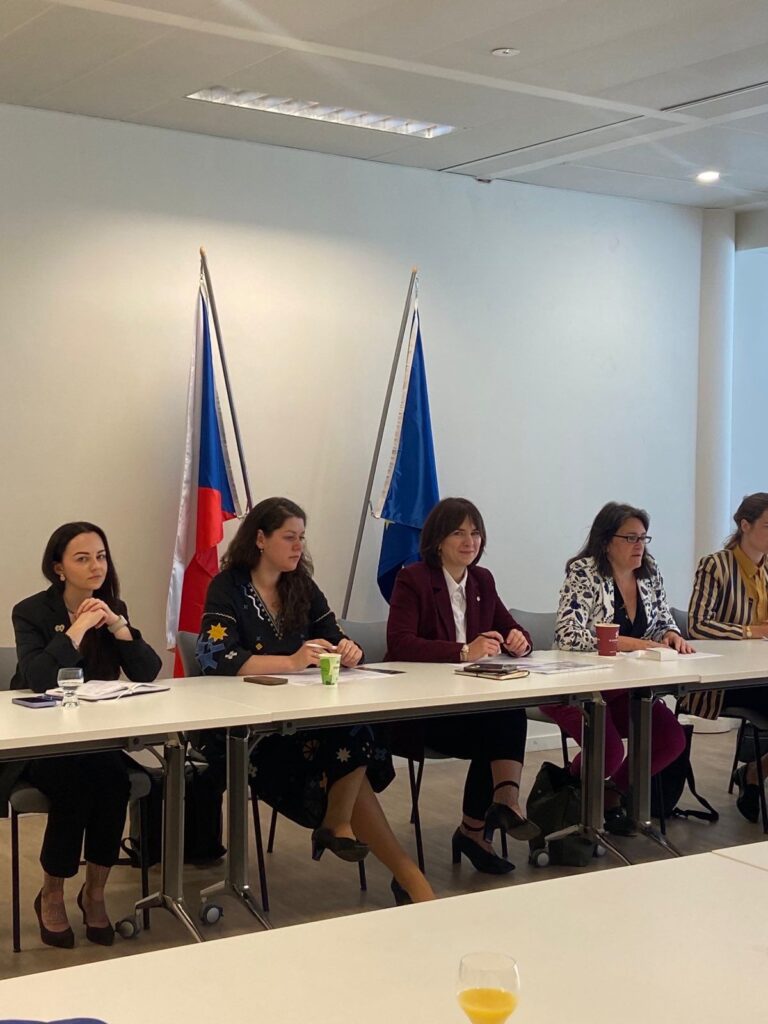
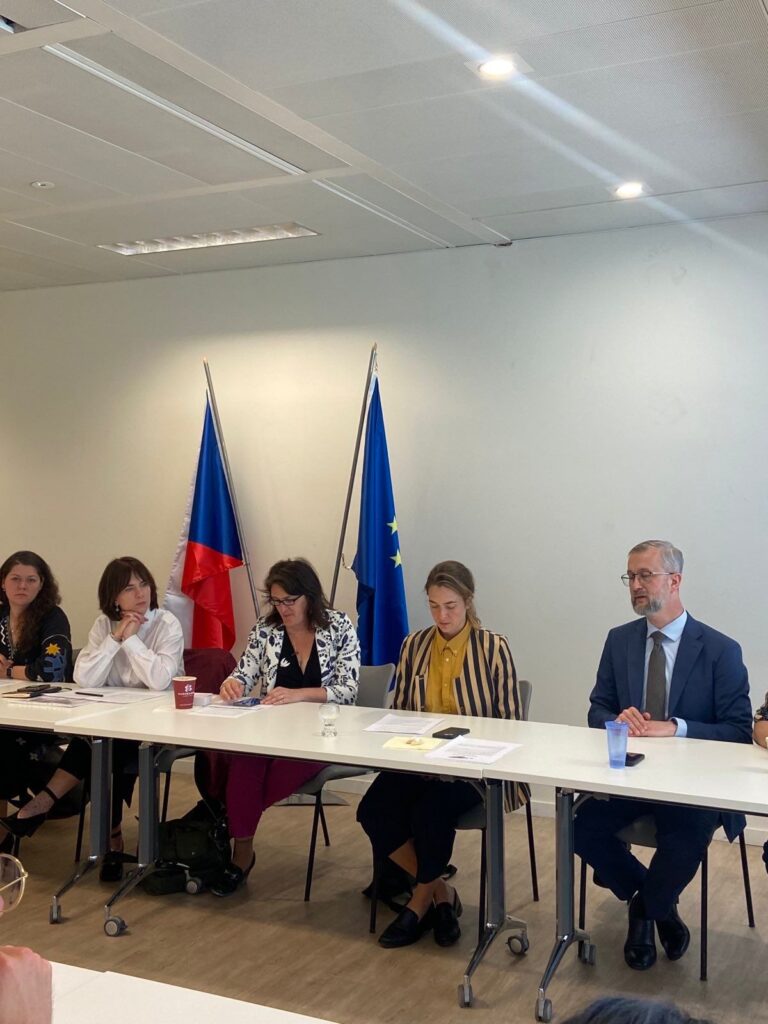
In her remarks, Olha Kuryshko emphasized that Crimea continues to resist Russian occupation:
“Crimea is, first and foremost, its people — those who continue to fight for freedom despite repression: human rights defenders, journalists, and activists. The war began in Crimea, and it was there that Russia first employed its imperial practices: torture, suppression of independent media, restrictions on religious freedom, human rights violations, as well as the militarization and indoctrination of children. These actions represent a flagrant violation of international humanitarian law.”
The Permanent Representative noted that over 11 years of Russian occupation, the peninsula has been transformed into a military base and a de facto prison for its residents, as the occupiers have been systematically violating their rights since 2014. The situation has only worsened since the start of the full-scale invasion, with repression becoming increasingly severe.
The Permanent Representative also underscored the significance of the European Court of Human Rights’ decision in the case of Ukraine v. Russia, adopted in June 2024, which officially recognizes Russia’s responsibility for systematic human rights violations in Crimea. This position has been supported by both the UN General Assembly and the European Parliament. Olha Kuryshko highlighted a mentorship program for political prisoners, launched in cooperation with the Ministry of Foreign Affairs of Ukraine, which aims to bring public attention to the stories of unlawfully imprisoned Ukrainian citizens, to increase pressure on the occupying state, and strengthen international solidarity.
The Permanent Representative emphasized the continuity of repressive policies from the Soviet era, directed against the Crimean Tatar people, and underscored the importance of supporting Ukraine’s Peace Formula, which includes the release of all imprisoned and deported individuals as one of the key conditions for achieving a lasting peace.
At the conclusion of her remarks, the Permanent Representative emphasized that Ukraine is already preparing for the reintegration of Crimea following de-occupation. In particular, the Mission’s team is working on developing policies and strategies, including those for economic recovery based on the “Build Back Better” principle, cognitive de-occupation to counter Russian propaganda, and measures aimed at achieving justice. All of this reflects Ukraine’s systematic preparation for the return of the peninsula and its deep commitment to the people of Crimea.