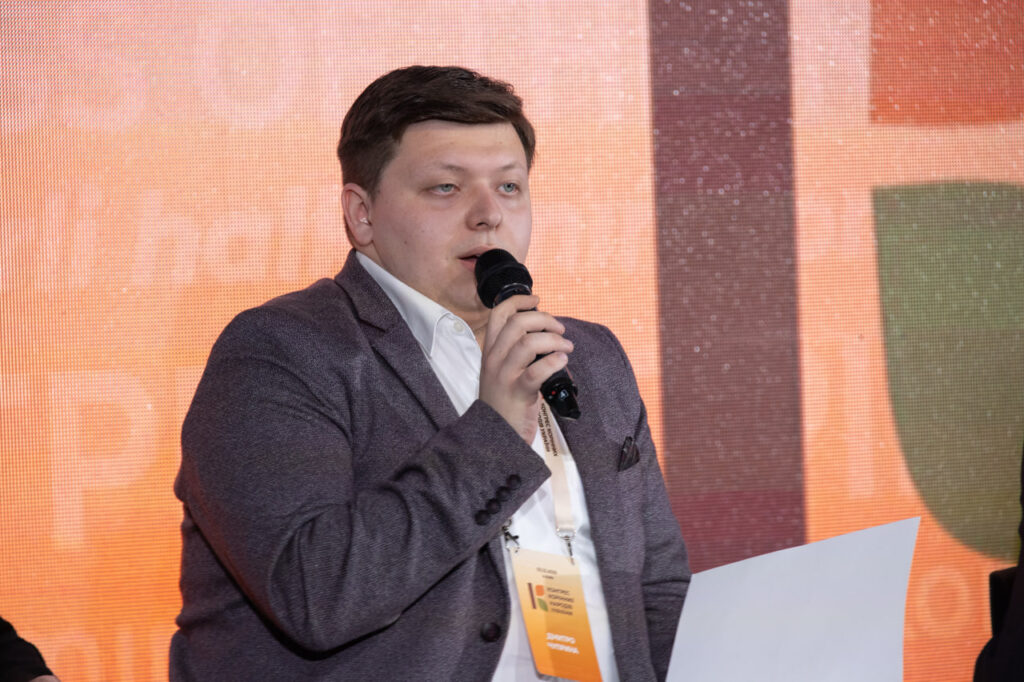
First Panel Discussion “Threats to the Indigenous Peoples of Ukraine in the Context of Russia’s Armed Aggression” at the Congress of Indigenous Peoples of Ukraine
02.12.2025
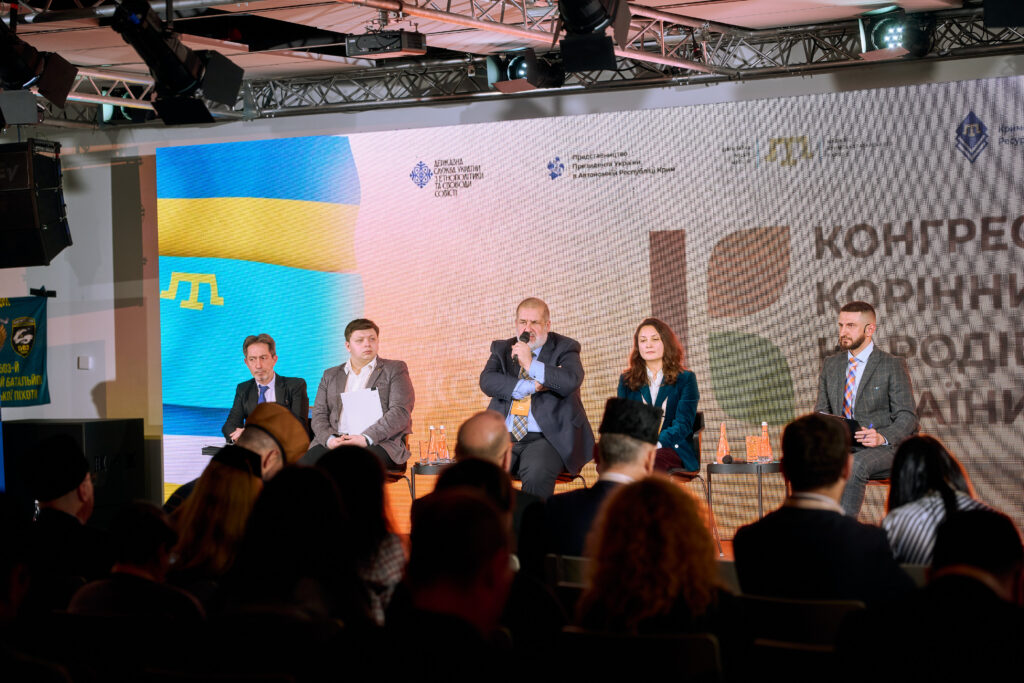
As part of the Congress of Indigenous Peoples of Ukraine, the first panel discussion, titled “Threats to the Indigenous Peoples of Ukraine in the Context of Russia’s Armed Aggression,” took place.
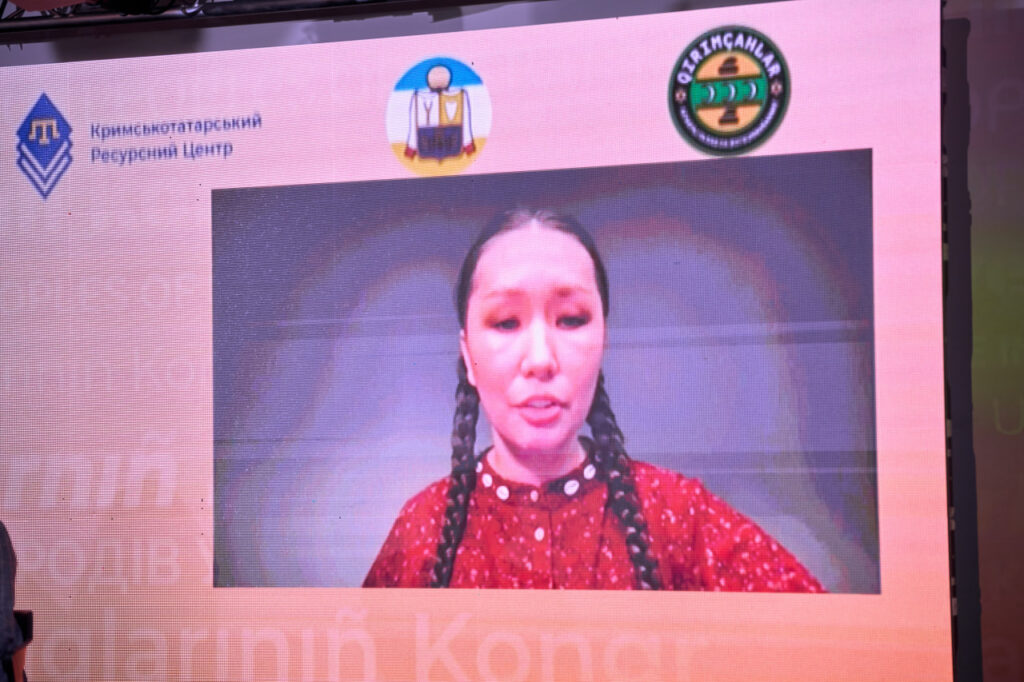
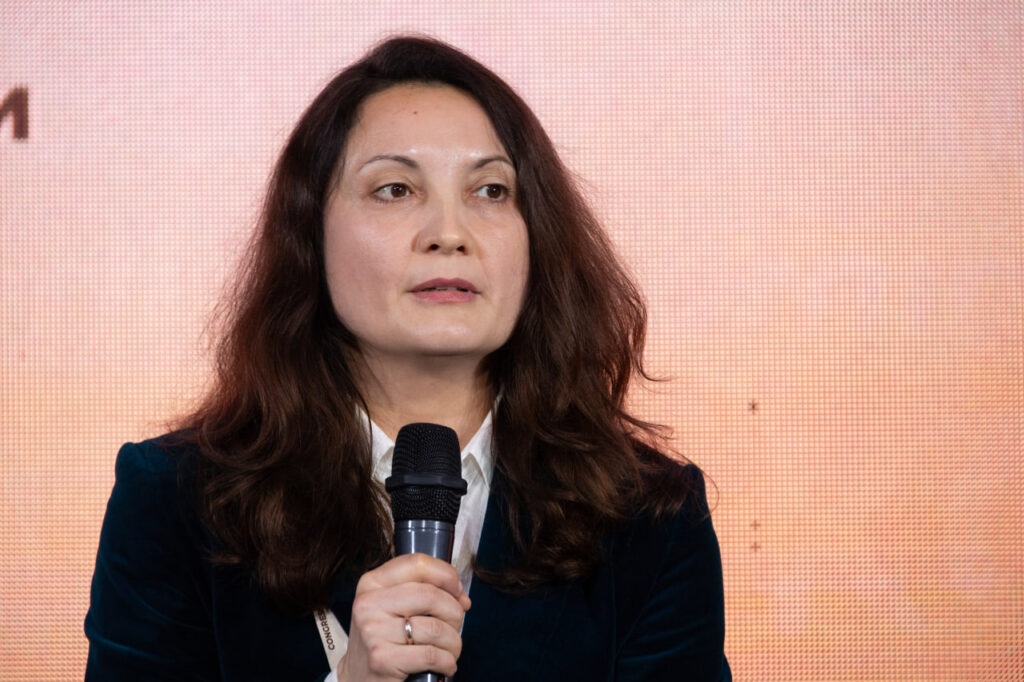
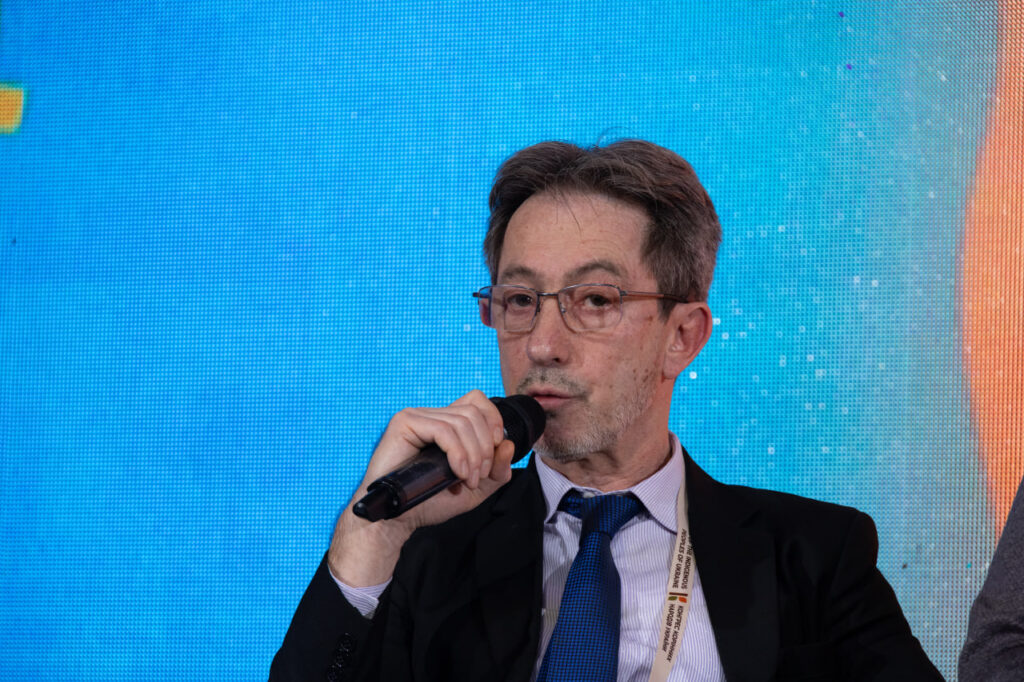
The discussion featured: Refat Chubarov, Head of the Mejlis of the Crimean Tatar People; Tetiana Kosetska, activist of the Krymchak community of Ukraine; Bohdan Movchan, Deputy Head of the Department for Worldwide Ukrainian Community and Humanitarian Initiatives, MFA of Ukraine; Dmytro Chupryna, Acting Head of the Expert Group on School Education, Directorate of School Education, Ministry of Education and Science of Ukraine; Yana Tannagasheva, member and co-founder of the International Committee of Indigenous Peoples of Russia.
The conversation was moderated by Alim Aliev, Deputy Director of the Ukrainian Institute.
Refat Chubarov emphasized that the indigenous peoples of Ukraine currently face an existential threat, as their ancestral homeland has been under Russian occupation since 2014. He stressed that Russia’s policy aims to eliminate or expel all those who refuse to submit to the occupation authorities.
“Today Russia destroys indigenous peoples through political repression, linguistic suppression, forced resettlement of Russians to replace deported residents of Crimea, persecution, imprisonment, and torture,” Chubarov stated.
Yana Tannagasheva expressed deep solidarity with Ukraine’s indigenous peoples and affirmed their shared struggle for freedom. She highlighted that minority indigenous groups within Russia also suffer systemic discrimination and therefore fully understand the pain of the Crimean Tatars. She added that the day will come when the indigenous peoples of Ukraine and Russia will meet again — in peace and dignity. Tannagasheva also read a collective address from oppressed indigenous groups of Russia to the indigenous peoples of Ukraine, expressing firm support for their pursuit of freedom from imperial oppression.
“We support the rights of indigenous peoples, Ukraine’s independence, and believe in victory over the Russian empire,” she stressed.
Tetiana Kosetska noted that part of the Krymchak community remains in the occupied territory, which critically affects their already small population: according to recent data, just over 200 Krymchaks reside in Crimea today — comparable to the number of residents in a single high-rise building. She emphasized that younger generations tend to leave the occupied territory, while older carriers of traditions remain, which disrupts cultural continuity.
Bohdan Movchan underscored that Ukraine continues to strengthen cooperation with the OSCE, Council of Europe, and the UN on protecting the rights of indigenous peoples, who have been subjected to systemic human rights violations and repression by Russian occupation authorities since 2014. He added that safeguarding the rights of national minorities (communities) and ensuring the return of deported Crimean residents remains a key priority.
“The Crimea Platform continues to coordinate efforts with international partners, document human rights violations, and advocate for the release of all Ukrainian citizens illegally detained by Russia,” Movchan stated.
Dmytro Chupryna highlighted that the strength of the Ukrainian people lies in unity and mutual support. He noted that school curricula are being actively updated to expand opportunities for education in the Crimean Tatar language and to strengthen cultural preservation. In particular, Crimean Tatar literature is being added to reading programs, and new textbooks are being developed.