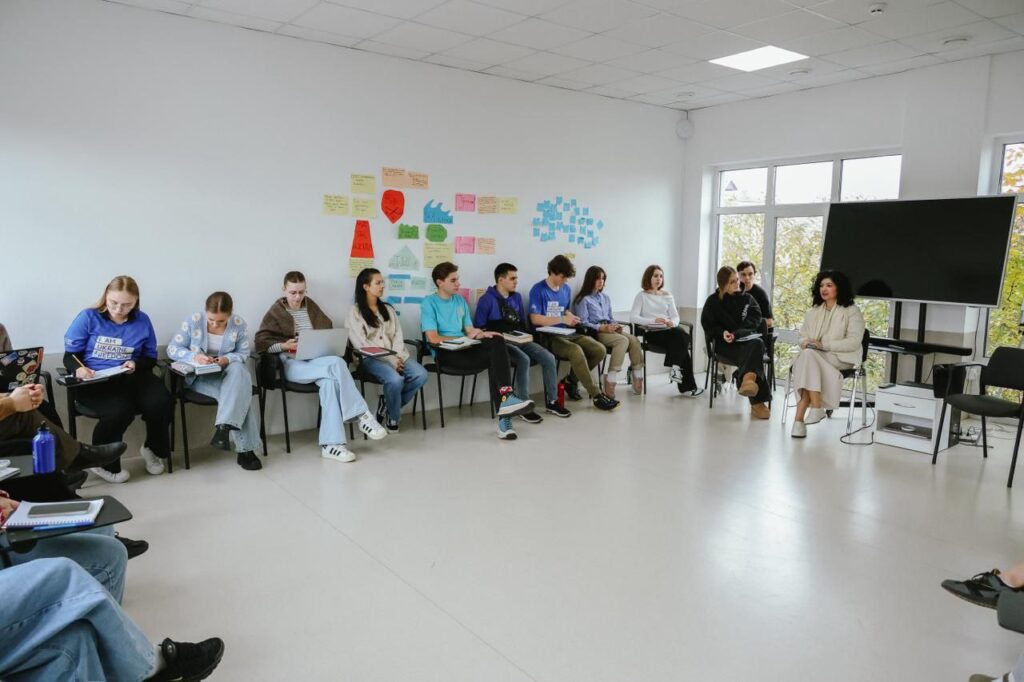
Today, the Permanent Representative, Tamila Tasheva, delivered a lecture titled “Crimea Today and Tomorrow: Current State Actions and Future Priorities” to students of the Ukrainian Leadership Academy. The event gathered active youth eager not only to gain a deeper understanding of the current situation in Crimea but also to contribute to shaping the future of this strategically important region of Ukraine.
During the lecture, Tamila Tasheva focused on the issues arising from the occupation of Crimea. She emphasized the threats faced by the residents of Crimea and the systematic repressions aimed at eradicating the cultural identity of Ukraine’s Indigenous peoples. The occupation administration continues a policy of persecution and intimidation aimed at erasing the culture, language, and traditions of the Crimean Tatars from the Crimean landscape.
Special attention was given to the issues of repression and illegal imprisonments. To date, hundreds of cases of imprisonment have been documented in Crimea, particularly among Crimean Tatars and other activists openly opposing the occupation administration. The Permanent Representative stated that the Ukrainian state continues to work for their release and stressed the importance of highlighting these unlawful imprisonments in the media.
“We need to speak loudly about political prisoners and their health conditions, to bring attention to their names. When a person becomes known, the pressure on them in Russian prisons decreases. In this way, by spreading awareness, we can save lives,” explained Tamila Tasheva.
Tamila Tasheva also outlined the Strategy for the De-occupation and Reintegration of the Temporarily Occupied Territory of the Autonomous Republic of Crimea and the City of Sevastopol, the priority steps of the Ukrainian state after Crimea’s de-occupation, and the Cognitive De-occupation of Crimea Strategy, which form the foundation of state policy to restore Ukraine’s sovereignty over the peninsula. These strategies include both domestic and international efforts aimed at returning Crimea to Ukraine’s constitutional framework and ensuring all citizens’ rights to live freely in a safe and democratic environment. The Permanent Representative also discussed the Crimean Platform and its activities aimed at de-occupying the peninsula through diplomatic means.

She further highlighted Ukraine’s significant security achievements, particularly in the Black Sea. Due to the efforts of the Armed Forces of Ukraine, Russia’s Black Sea Fleet was forced to retreat to Novorossiisk, which strengthened the security not only of Ukraine but of the entire region.
The audience showed interest in demographic changes among Ukraine’s Indigenous peoples in Crimea, humanitarian assistance for internally displaced persons, the activities of resistance movements on the peninsula, and ways to support the residents of Crimea.