The Permanent Representative Held a Meeting with the Head of the Federation of Greek Communities of Ukraine, Stepan Makhsma
10.04.2025
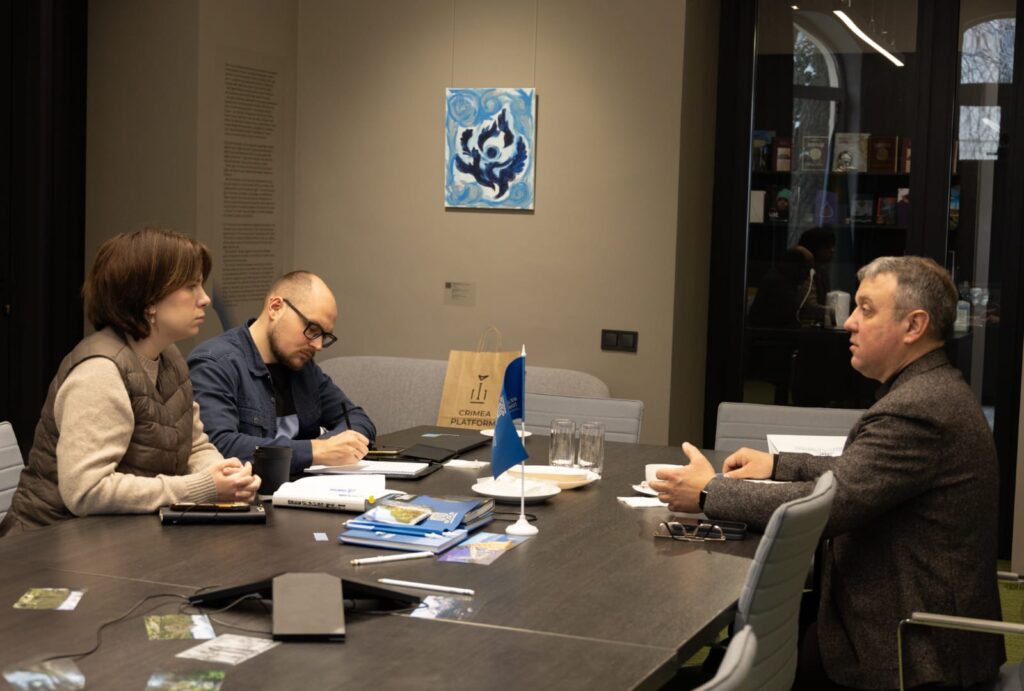
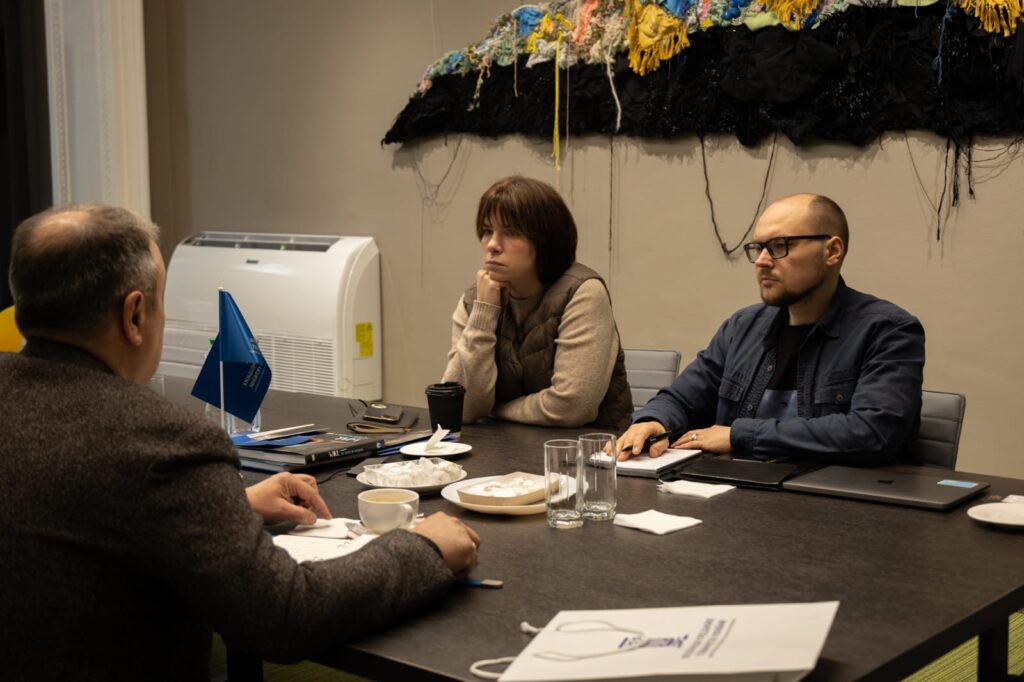
Permanent Representative Olha Kuryshko held a working meeting with Stepan Makhsma, Head of the Federation of Greek Communities of Ukraine. The event was also attended by Yevhen Bondarenko, Head of the Information Department of the Mission.
The participants of the meeting addressed the issue of strengthening cooperation in the context of documenting and communicating the repressive and colonizing practices of the Russian Federation, particularly through the lens of the temporarily occupied territories of Crimea, Mariupol, and other areas in Southern and Eastern Ukraine.
Permanent Representative Olha Kuryshko highlighted the widespread destruction of cultural heritage in the temporarily occupied territories, with a particular focus on the deliberate devastation of historical landmarks in Crimea. She emphasized the targeted destruction of Chersonesus Taurica — a prominent heritage site inscribed on the UNESCO World Heritage List since 2013. In recent years, Russia has transformed this site into a platform for ideological reconstruction: pseudo-historical structures have been erected over archaeological remains, historical layers are being destroyed, and authentic artifacts are being mass-transferred to Russia.
“Chersonesus Taurica is part of the ancient and Byzantine heritage of Crimea and one of the key markers of Greek civilization’s presence on the territory of Ukraine. Russia is turning this unique site into a tool of its propaganda — erecting new constructions, destroying cultural layers, and removing artifacts from Crimea. These actions constitute not only a crime against Ukraine but also against all of humanity,” emphasized Olha Kuryshko.
The Head of the Federation of Greek Communities of Ukraine, Stepan Makhsma, emphasized that the Russian Federation is employing the same methods of displacement and identity erasure in the newly occupied regions of Ukraine that it has used in occupied Crimea.
“Today we are witnessing a repetition of the same repressive mechanisms that Russia applied in Crimea — now in Mariupol and other newly occupied areas of Donetsk and Zaporizhzhia regions. These are aggressive colonization practices: the imposition of Russian historical narratives, the displacement of local populations, and the assimilation of indigenous communities. In particular, the Urum and Rumeíka communities, which historically developed on the Crimean Peninsula, are once again facing the threat of extinction — through the destruction of cultural centers, loss of language, and the forced erasure of their identity,” said Stepan Makhsma.
During the meeting, the parties agreed to establish further cooperation, particularly in the area of communicating the issue of the occupied regions in southern Ukraine and disseminating information about the consequences of the Russian occupation of Ukrainian territories. They also discussed drawing international attention — including in Greece — to the South as a historically multicultural space where communities of Indigenous peoples, national minorities, and ethnic groups have coexisted and developed for centuries.