The Permanent Representative participated in a discussion on vetting tools to overcome the negative impacts of Russian aggression and the occupation of parts of Ukraine’s territories. Organized by the Ukrainian School of Political Studies, the ZMINA Human Rights Center, and the Mission, the discussion focused on the framework for implementing vetting on liberated territories of Ukraine, its objectives, and the challenges involved.
In addition to the Permanent Representative, other speakers included partner of the law firm AZONES Dariia Svyrydova, electoral reform expert Oleksandr Kliuzhev, Judge of the Economic Court of Donetsk Region Kostiantyn Kharakoz, and Ukrainian MP Vitalii Bezghin. The event was moderated by Olena Lunova, Director of the ZMINA Human Rights Center.
During the discussion, the Permanent Representative emphasized that, in line with the President’s mandate, the Mission is working with various government bodies and experts to develop a vision for the primary reintegration measures of the Crimean Peninsula post-liberation, which includes assessing and addressing the implications of Ukrainian citizens’ cooperation with the occupying state’s structures.
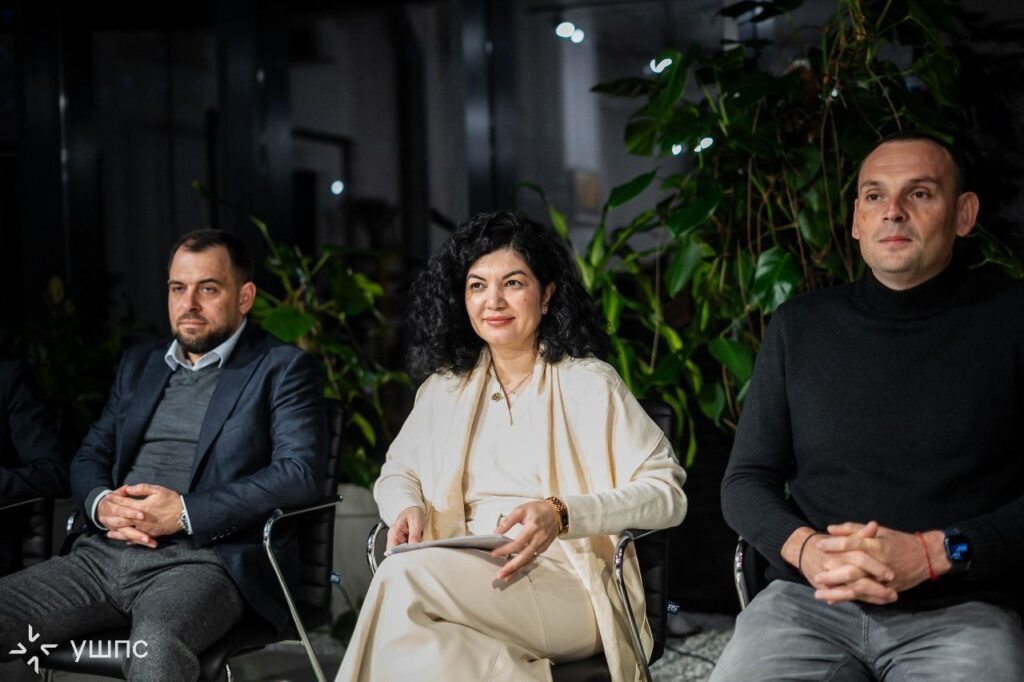
Tamila Tasheva highlighted the need for vetting as an essential tool for reintegration that would help restore public trust in government and foster stability in the region. She noted that vetting procedures must be based on an individual approach and international standards, ensuring a balance between security needs and the demand for qualified professionals to support institutions on the liberated territories.
She further stressed that vetting should not become a means of collective responsibility but should be based on clearly defined criteria, supported by independent commissions, and include the right to appeal vetting decisions. Tasheva also pointed out that the implementation of this process must build public trust in democratic institutions and uphold the constitutional order on the liberated territories.