Yesterday, the Permanent Representative participated in a panel discussion on the Administrative and Territorial Structure of the De-occupied Territories: The Status of the Crimean Peninsula, which was dedicated to discussing the future of the liberated Ukrainian territories. This is the second event in a series of discussions on de-occupation and reintegration organized by the Ukrainian School of Political Studies in cooperation with the Mission of the President of Ukraine in the Autonomous Republic of Crimea and with the support of the Partnership Fund for a Resilient Ukraine as part of the development of reintegration policies, in particular in the field of cognitive de-occupation of Crimea.
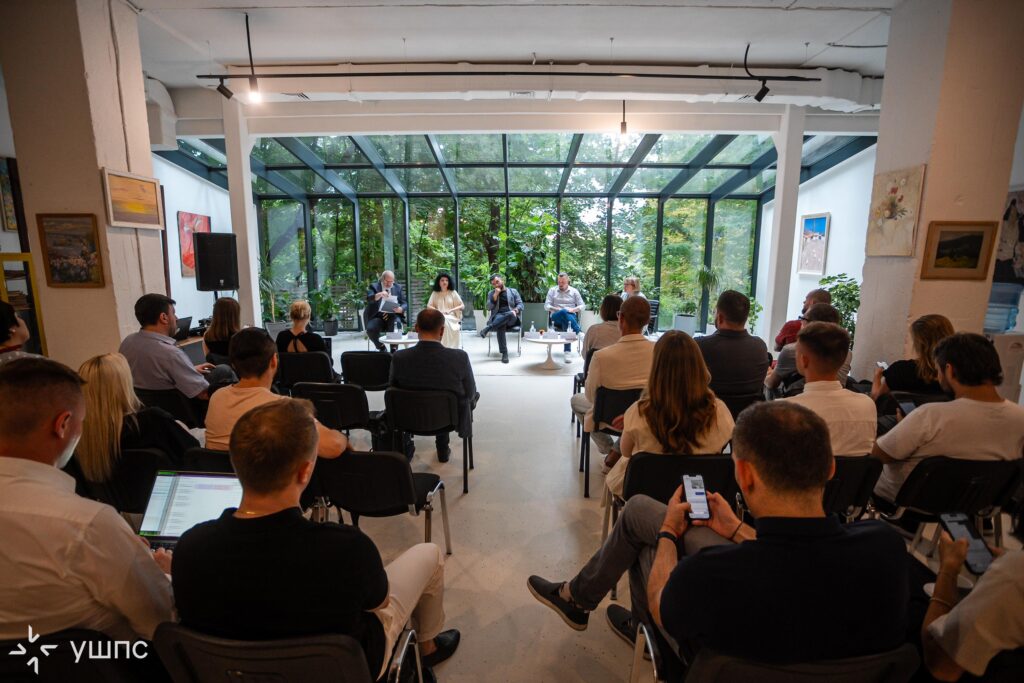
The main issues for discussion were the administrative and territorial structure of the de-occupied territories, the role of military administrations in de-occupied Crimea, and the ways to ensure the realization of the rights of Indigenous peoples to self-determination within the Ukrainian state.
Besides the Permanent Representative, the discussion was attended by Vitalii Bezghin, a Member of the Parliament of Ukraine, a Chairperson of the Sub-committee on Administrative and Territorial System and Local Governance of the Verkhovna Rada of Ukraine Committee on Organization of State Power, Local Self-Government, Regional Development, and Urban Planning; Refat Chubarov, Chairman of the Mejlis of the Crimean Tatar People; Arsen Zhumadilov, Director General of the State Enterprise State Operator of the Logistics. The event was moderated by Olena Lunova, Advocacy Director of the ZMINA Human Rights Center.
The Permanent Representative emphasized the importance of restoring public authorities in Crimea after de-occupation, which involves the resumption of the activities of state authorities, law enforcement agencies, and other structures in the liberated territories. It is possible to restore the activities of public authorities on the territory of the Autonomous Republic of Crimea and the city of Sevastopol by establishing military administrations of various levels on the peninsula. The Permanent Representative also emphasized that this aspect is considered in the document on Ukraine’s priority steps after the de-occupation of Crimea, which the Mission developed in cooperation with the state authorities and experts.
“These issues require in-depth study to ensure the practical implementation of certain visions. In addition to developing a vision of the state’s priority steps after de-occupation, we have moved to the level of legislative support. Thus, last year, the first actual package of draft laws was adopted, in particular on the administrative-territorial structure of the Autonomous Republic of Crimea and the city of Sevastopol, as well as several decisions that will be needed for de-occupied Crimea,” Tamila Tasheva added.
In this context, the Permanent Representative mentioned the law adopted in August 2023, on the eve of the Third Summit of the Crimea Platform, which provided for changes in the administrative and territorial structure of the Autonomous Republic of Crimea, namely the approval of the territory of territorial communities, liquidation and formation of new districts, as well as the development of a draft law on the peculiarities of the restoration of public authorities in the Autonomous Republic of Crimea and the city of Sevastopol.