At the Educational and Scientific Institute of Public Administration and Civil Service of Taras Shevchenko National University of Kyiv, the annual International Scientific and Practical Conference Globalization Challenges: Governance for the Future took place. Permanent Representative Olha Kuryshko delivered a welcoming speech at the official opening of the conference.
The event was attended by the university’s leadership, scholars, and the student community. As part of the panel session titled “Crimea in the Paradigm of the Ukrainian State: Today, After De-occupation, and Its Role in Shaping Ukraine’s Future,” speakers included Liudmyla Shevchuk, Deputy Head of the Department for De-occupation and Reintegration of the Mission; Nariman Dzhelyal, First Deputy Chairman of the Mejlis of the Crimean Tatar People; and Yuliia Tyshchenko, Expert of the Council on Cognitive De-occupation of Crimea, expert on social cohesion, Chair of the Board of the Ukrainian Independent Center for Political Research, and Co-founder of the National Platform for Resilience Social Cohesion.
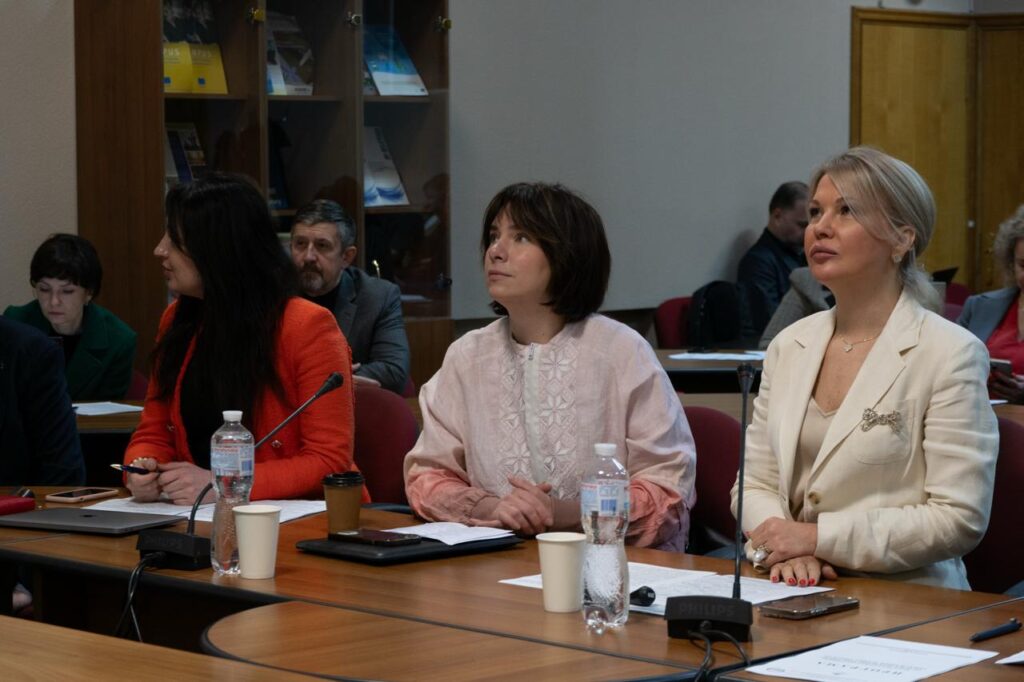
During her address, Olha Kuryshko outlined the challenges faced by professionals working on issues related to the occupied territories and emphasized the importance of academic and educational cooperation in addressing these challenges. She placed particular focus on the need for unity in times of war:
“It is crucial to understand that we are not alone. We are united for the sake of victory, for the sake of our people who remain under occupation. Together, we seek the solutions that will help bring these territories and our people back home.”
Olha Kuryshko emphasized that leadership during wartime is an exceptionally complex task, as there are no clear benchmarks for making the “right” decisions. For this reason, as the Permanent Representative noted, conferences like this one—bringing together scholars, experts, and students for open discussions on difficult topics—serve as a crucial foundation for shaping balanced public policy. She also highlighted that the topic of occupied territories and post-conflict governance remains one of the most challenging areas of work for state institutions.
During the section meetings of the conference, Liudmyla Shevchuk presented key developments by the Mission in the field of reintegration policy. Given over 11 years of occupation and the multitude of challenges it has created, the Mission continues its systematic work across various areas related to Crimea’s recovery. She also spoke about the strategy for economic revitalization and the We Build Crimea platform as a tool for implementing recovery projects.
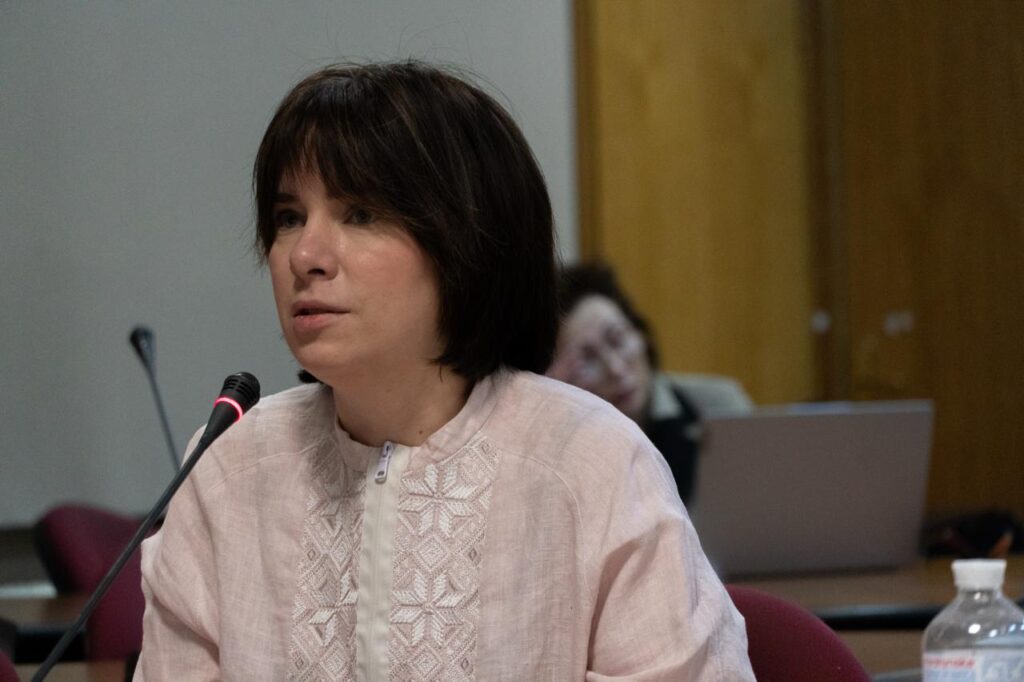
Liudmyla Shevchuk drew the audience’s attention to the priority steps for restoring governance after de-occupation, developed in cooperation with a number of state bodies, civil society organizations, and experts. These steps include the formation of a personnel reserve for state institutions to operate in de-occupied territories and training programs, including educational initiatives based at Taras Shevchenko National University of Kyiv.
“For us, it is fundamentally important that Crimea remains at the center of national policy and international focus. The Mission is working systematically to ensure that the issue of the temporarily occupied peninsula is integrated into the European agenda. We have a clear vision of how to work with liberated territories. The de-occupation of Crimea will happen — and we are already developing the necessary approaches and solutions that will form the foundation of this process,” emphasized Liudmyla Shevchuk.
Particular attention was devoted to the strategy of cognitive de-occupation as a tool to counter destructive Russian narratives, foster understanding of Indigenous peoples, and promote awareness of Crimea’s true history. The Mission’s educational initiatives and its efforts in training professionals for governance in de-occupied territories generated strong interest and became a focal point of active discussion among conference participants.