The Permanent Representative Participates in Panel Discussion “People During the War”
17.04.2025
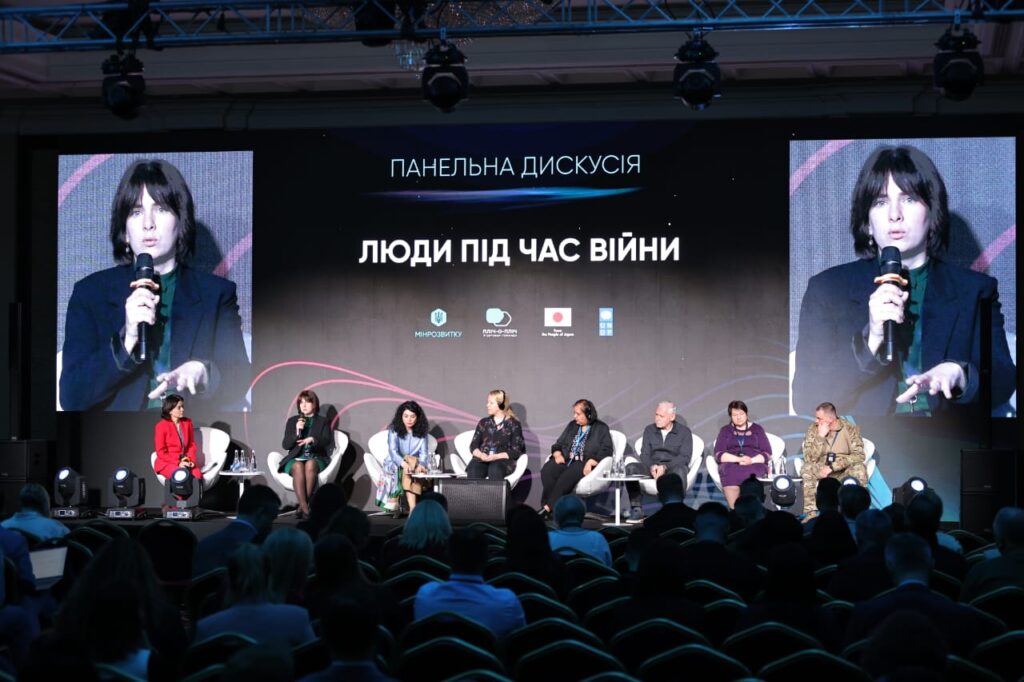
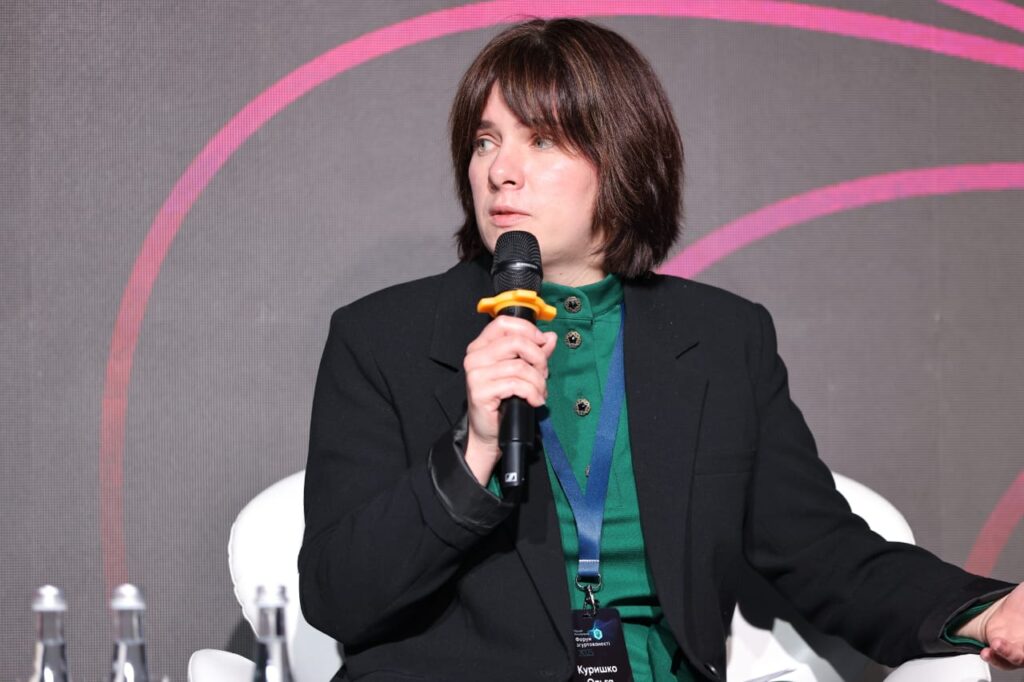
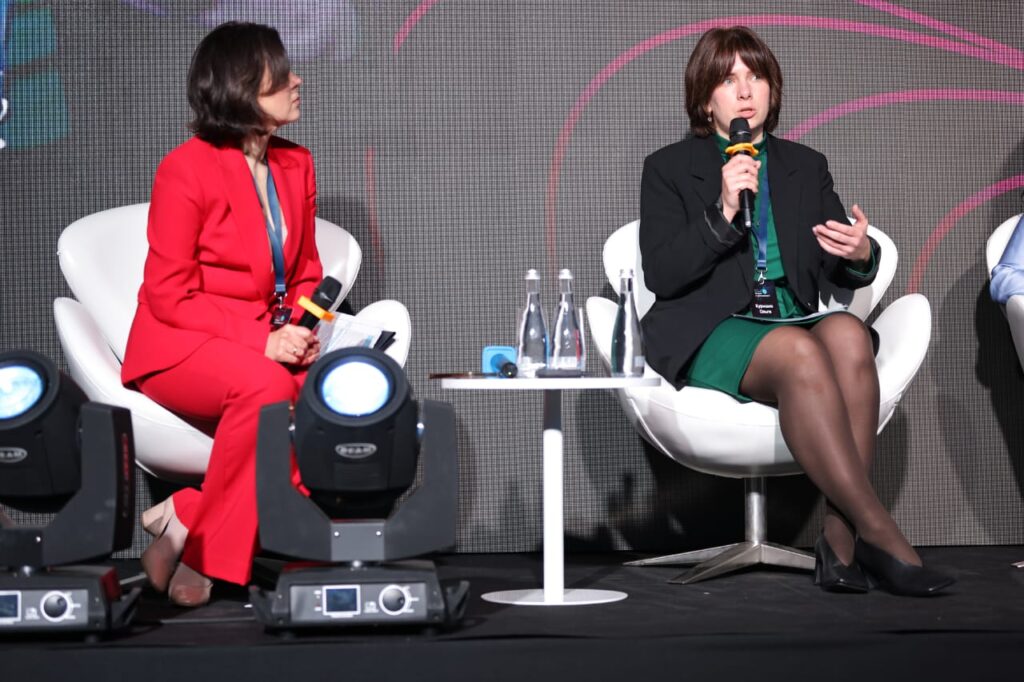
Permanent Representative Olha Kuryshko participated in the panel discussion “People During the War” held within the Shaping the Future International Cohesion Forum framework.
Participants of the panel included Nina Maya Schrepfer, Deputy Representative of the UNHCR in Ukraine; Shamiza Abdullah, Deputy Head of UNICEF Ukraine for Programme Operations Human Capital Development for National Recovery; Member of Parliament Tamila Tasheva; Mayor of Kharkiv Ihor Terekhov; Head of Yunakivka Village Council in Sumy Region Olena Sima; and Dmytro Kurylovych, veteran of the battalion named after Hero of Ukraine Major General Serhii Kulchytskyi, Knight of the Order for Courage, and Head of the DRONGO NGO. The discussion was moderated by Ukrainian journalist Marichka Padalko.
Permanent Representative Olha Kuryshko emphasized several aspects of the Mission’s activities:
“Our experience is unique in that we already have strategic documents and a vision for the post-de-occupation future of Crimea, which we are gradually starting to implement in practice. These are not merely conceptual frameworks — they are concrete steps toward restoring Ukrainian statehood in the temporarily occupied territories,” noted Olha Kuryshko.
The Permanent Representative emphasized that the development of such strategic documents was carried out at the instruction of the President of Ukraine:
“All documents prepared by the Mission are grounded in a human-centered approach. This is a core principle of our team. In the vision outlining the initial steps for restoring state governance after the liberation of the territory, there is a dedicated focus on personnel reserves and training future public administrators. While the cognitive de-occupation strategy has not yet been formally adopted at the state level, certain elements are already being implemented — including youth engagement, the development of educational hubs, counteraction to Russian propaganda narratives, and support for Ukraine’s Indigenous peoples: the Crimean Tatars, Karaites, and Krymchaks.”
During the discussion, the Permanent Representative raised the crucial issue of the future of children who have grown up under occupation. She stressed that an entire generation knows Crimea only as occupied, and the state must begin today to win back their hearts and minds through education, culture, and youth-oriented initiatives.
“Imagine a child who is 11 years old and was born after the beginning of the temporary occupation. There are children who know Crimea only as occupied. We ask ourselves: what can we, as a state, do for these people, for society? And today, we are already beginning to implement elements of de-occupation — primarily through working with young people,” emphasized Olha Kuryshko.
During the discussion, participants addressed the challenges faced by communities in frontline and temporarily occupied territories: widespread destruction, the urgent need for organized evacuations from high-risk zones, disrupted access to education for children, and the isolation of vulnerable groups, including the elderly. They also highlighted the importance of coordinated efforts between the state, local communities, and international partners to implement systemic solutions in education, social protection, and civilian safety.