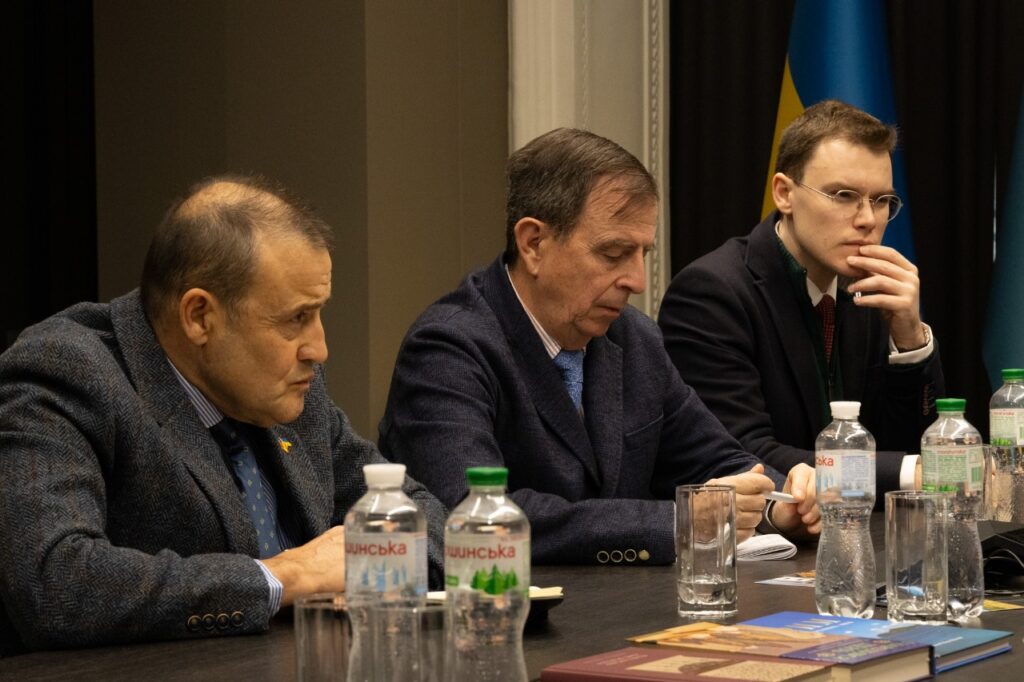
The Permanent Representative Met with Spanish Military and International Analysts Delegation
09.02.2025
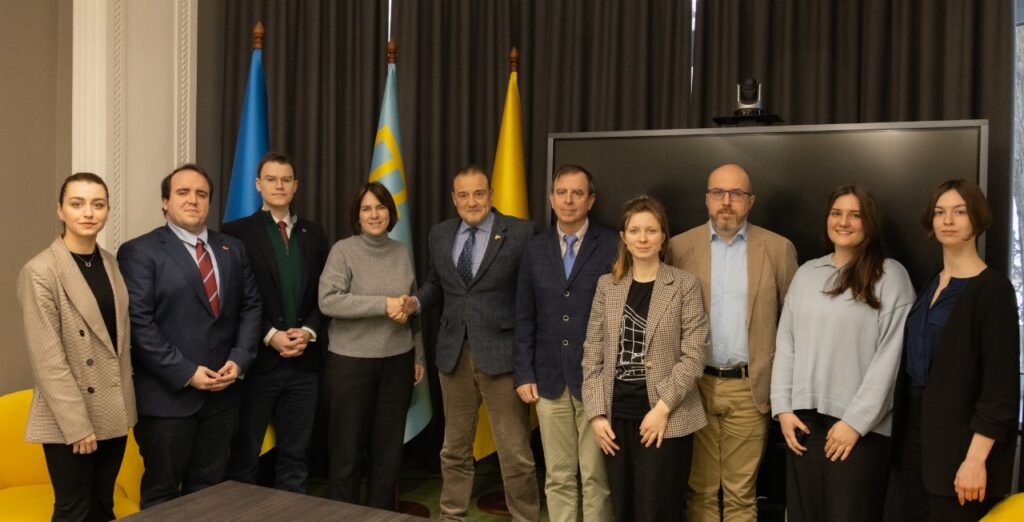
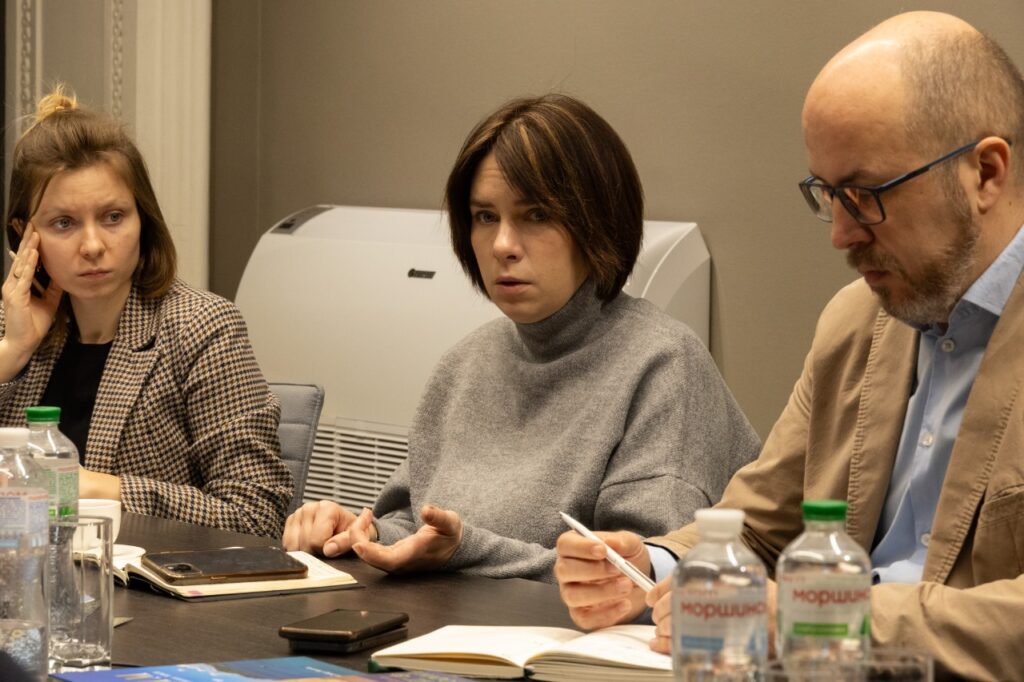
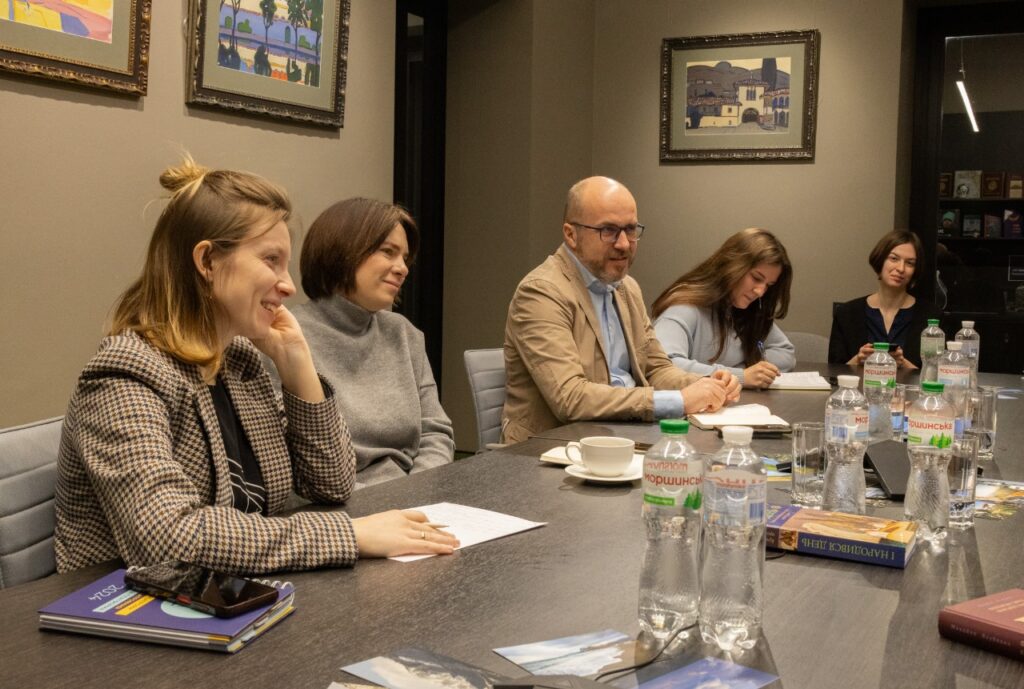
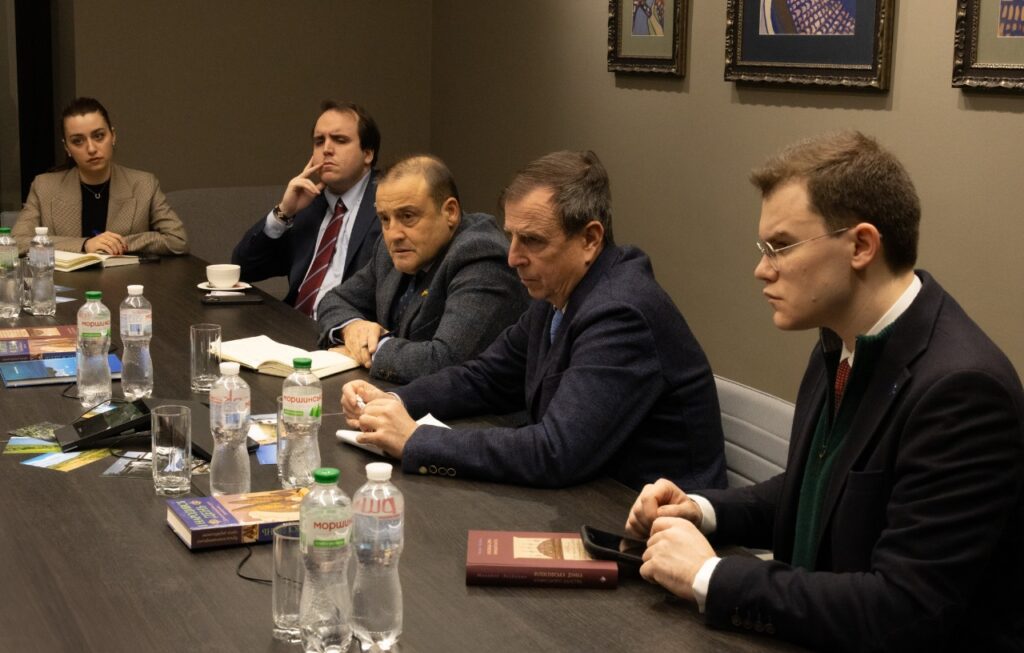
On February 7, Permanent Representative Olha Kuryshko met with a Spanish military and international analysts delegation. The meeting was organized by the Center for Transatlantic Dialogue NGO.
The event was attended by Deputy Permanent Representative Denys Chystikov, Head of the Crimea Platform Department Anna Sytnikova, Director of the Spanish Institute for Strategic Studies Víctor Bados Nieto, Senior Analyst of the Spanish Institute for Strategic Studies Ignacio Fuente Cobo, Director of Institutional Relations at UNIVERSAE Manuel José Gazapo Lapayese, President of Eurodefense Joven España Amín Lejarza de Bilbao Essalhi, and representative of the Center for Transatlantic Dialogue NGO Alina Rohach.
During the meeting, Olha Kuryshko provided an overview of the activities of the Mission, focusing on the current situation in temporarily occupied Crimea, the ongoing efforts to develop the Economic Recovery Strategy, and the Priorities of Ukraine After the De-Occupation of Crimea. She emphasized that the key objectives include restoring Ukrainian governance on the peninsula, forming a personnel reserve, training specialists, and resolving legal issues related to documents issued in the temporarily occupied territory. These measures aim to ensure institutional, legal, and social stability in Crimea after its return under Ukraine’s control.
Olha Kuryshko also highlighted the widespread repression systematically used by the Russian occupation administration against Ukrainian citizens in Crimea. She noted that as of February 3, 2025, a total of 218 Ukrainian citizens remain illegally imprisoned, 132 of whom are Crimean Tatars. They are being prosecuted in fabricated cases on charges of “terrorism,” “extremism,” and “state treason,” which serve as instruments of intimidation and suppression of resistance to the occupation.
“Russia uses political persecution as a mechanism to erase Ukrainian and Crimean Tatar identity. We are witnessing a new wave of repression: on February 5, occupation security forces raided the homes of Crimean Tatars in the Dzhankoi and Feodosiia districts, detaining five individuals—Emir Kurtnеzirov, Abibulla Smedliaiev, Rustem Mustafaiev, Myrzaali Tazhybaiev, and Bakhtiiar Ablaiev. All of them have been charged in fabricated criminal cases,” stated the Permanent Representative.
Anna Sytnikova, Head of the Crimea Platform Department, added that Russia is not only using its criminal code as a tool for persecuting Ukrainian citizens in temporarily occupied Crimea. The growing number of illegal administrative proceedings in occupation “courts” under the article on so-called “discrediting the Russian Armed Forces” is further evidence of this. As of January 31, 2025, there have been 1,203 recorded cases of materials filed under Article 20.3.3 of the Code of Administrative Offenses of the Russian Federation submitted to occupation “courts” in Crimea and other authorities.
“The occupiers detain Ukrainian citizens for any display of national identity—whether it be a trident tattoo or blue-and-yellow manicure. They illegally impose administrative fines for so-called ‘discrediting the Russian army’ and, in some cases, combine these charges with other articles to issue harsher sentences,” said Anna Sytnikova.
During the meeting, Olha Kuryshko also pointed out that Russia has implemented a policy of artificially altering the demographic composition of Crimea, deliberately resettling Russians to assimilate Ukrainians and Indigenous peoples of Ukraine.
“Before 2014, Crimea had a population of around two million people. After the occupation, a significant number of Ukrainians and Crimean Tatars were forced to flee, escaping persecution. At the same time, Russia has been conducting a deliberate colonization of the peninsula, having already relocated more than one million Russians to Crimea. This is not just illegal migration—this is a deliberate attempt to erase Crimea’s Ukrainian identity and sever its connection to Ukraine,” emphasized Olha Kuryshko.
The Spanish delegates expressed keen interest in the current situation in temporarily occupied Crimea, the efforts to counter Russian disinformation narratives, and the challenges Ukraine faces in the context of de-occupation. They reaffirmed that Spain stands firmly in support of Ukraine.