The Mission Participated in the Panel Discussion Paths to Unity: How War Challenges Social Cohesion
05.12.2024
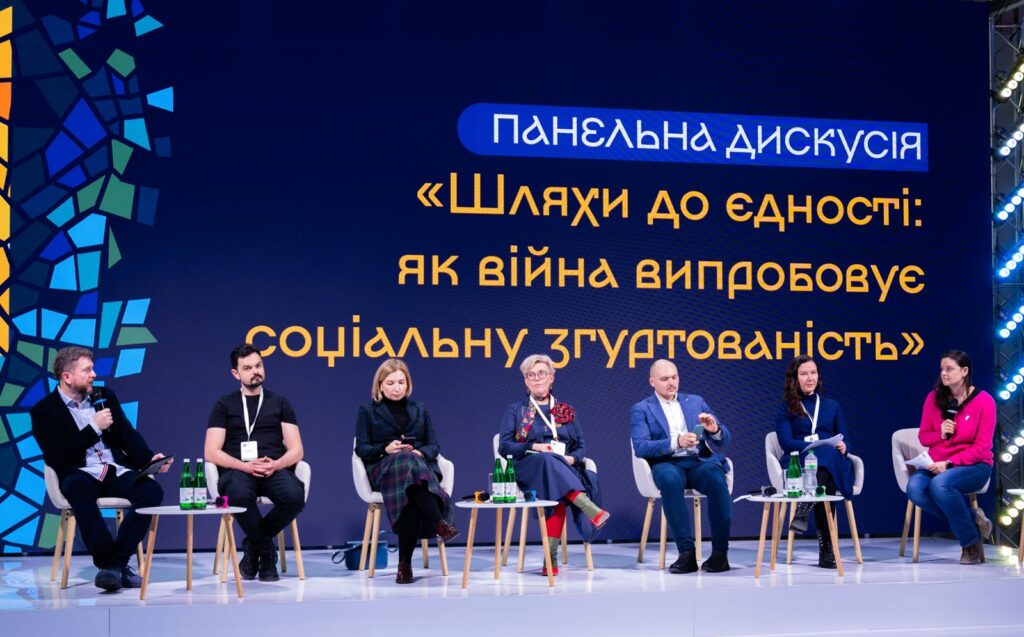
Today, the Mission participated in the panel discussion Paths to Unity: How War Challenges Social Cohesion, organized in partnership with UNDP as part of the XIII Civil Society Development Forum [We] Stand Firm.
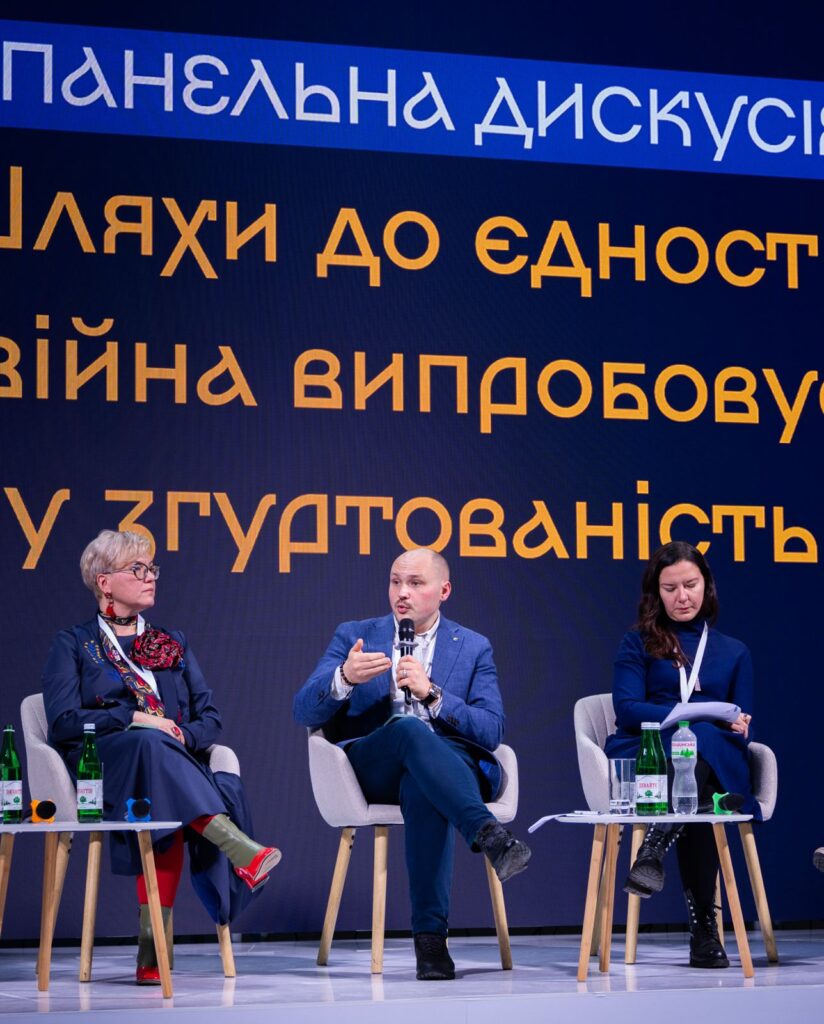
The panel discussion featured Yevhen Bondarenko, Head of the Information Department of the Mission; Ana Lukatela, Regional Recovery Lead for the United Nations Development Programme in Ukraine; Olha Aivazovska, Chair of the Board of the OPORA Civil Network; Tetiana Troshchynska, journalist, media manager, and laureate of the Gongadze Prize 2024; Lina Romanukha, Senior Specialist in Culture and Arts for the USAID Engage! Program; and Dmytro Zolotukhin, Executive Director of the Institute of Post-Information Society NGO.
The discussion was moderated by Taras Liutyi, philosopher, writer, and lecturer at the Kyiv-Mohyla Academy.
The Head of the Information Department, Yevhen Bondarenko, emphasized in his speech the shift in narratives surrounding the Russian-Ukrainian war, particularly the increased focus on the topic of Crimea since the beginning of the full-scale invasion. He noted that one of the Mission’s key areas of work is the implementation of the Strategy for the Cognitive De-occupation of Crimea, highlighting the importance of its adoption at the state level. As part of the activities of the Council on Cognitive De-occupation, an in-depth study was conducted by the Kyiv International Institute of Sociology, allowing an assessment of Ukrainian society’s attitudes toward the occupied Crimean Peninsula. Bondarenko pointed out that only 8% of survey respondents believe Ukrainian media provide sufficient information about Crimea, while 30% consider it somewhat sufficient. The majority, however, feel there is a need for more information about the peninsula.
“Our analysis of the situation in occupied Crimea shows that after 10 years of occupation, Russia has failed to subjugate Ukrainian citizens in Crimea. As a result, it has implemented a policy of artificially altering the peninsula’s demographic composition by relocating Russians to assimilate Ukrainians and the Indigenous peoples of Ukraine,” emphasized Yevhen Bondarenko.
The Head of the Mission’s Information Department emphasized that, according to the Kyiv International Institute of Sociology (KIIS) survey, 78% of Ukrainians view Crimea as part of Ukraine and support its de-occupation. This demonstrates the absence of significant societal polarization on the issue. He underscored the importance of dismantling Russian narratives and replacing them with the understanding that Crimea is an inseparable part of Ukraine.
“Crimea is not a separate land; it is territorially, historically, and socially united with Ukraine. Despite the differing experiences of Ukrainians in regions controlled by Ukraine and those under occupation, we must recognize that we share a common enemy—Russia,” stated Yevhen Bondarenko.
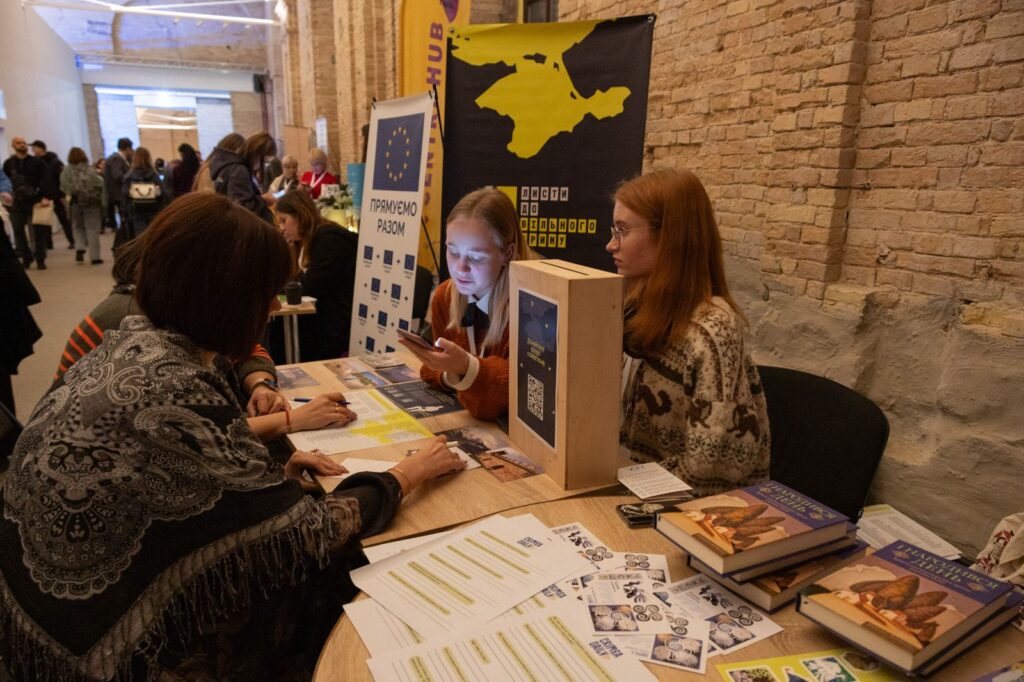
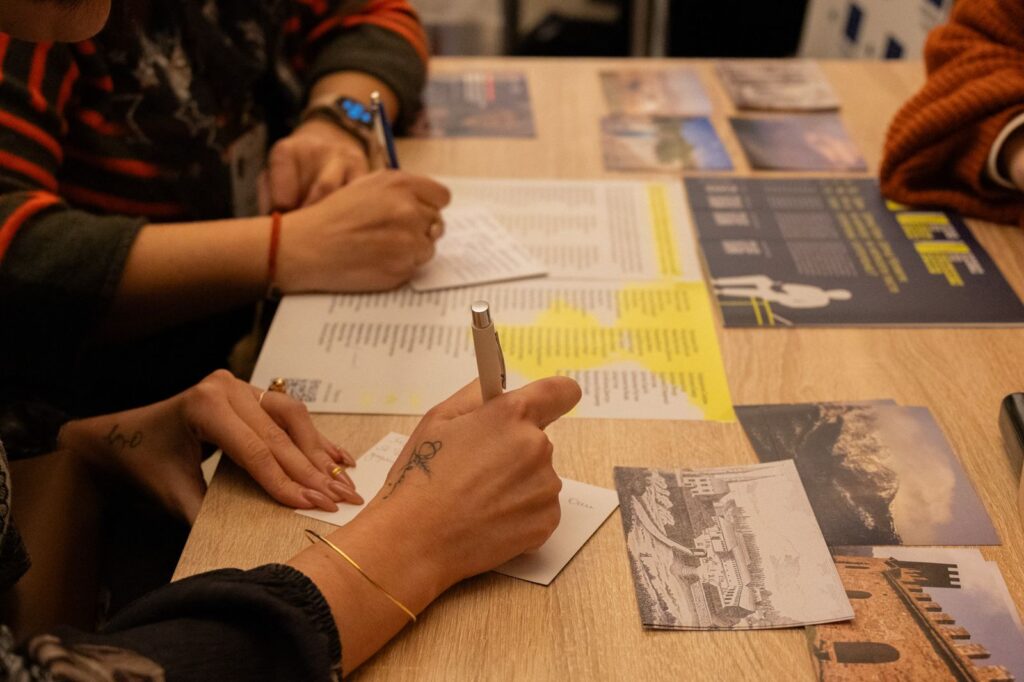
Participants of the XIII Civil Society Development Forum [We] Stand Firm also had the opportunity to write letters to Ukrainian political prisoners as part of the Letters to Free Crimea initiative and take part in a Crimea-themed quest.
At the conclusion of the forum, the panelists emphasized that the perception of polarization within Ukrainian society outweighs actual polarization. They noted that this illusion of division is fueled by Russian propaganda and emotional debates among Ukrainians on social media. The speakers also stressed the importance of consolidating various social groups, such as military personnel and their families, to prevent feelings of loneliness and isolation. Additionally, they highlighted the need to create inclusive spaces for those returning from the frontlines.