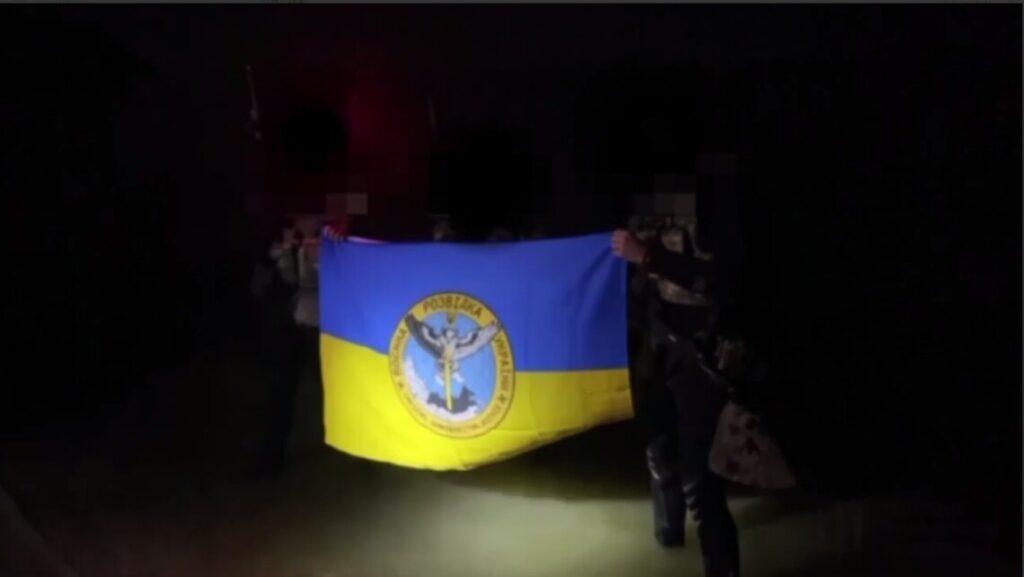
Today, on August 23, Ukraine celebrates National Flag Day, a flag that has always symbolized Ukraine’s unwavering trust in freedom, democracy, and justice. The flag represents the struggle for dignity and liberty, especially today, during Russia’s large-scale aggression, when Ukraine is fighting for its sovereignty. This is not just a day of a flag but a day of a national symbol that unites millions of people worldwide—in Ukraine itself or the diaspora, among refugees or Ukrainians in other countries—reminding them that they are Ukrainians.
The blue and yellow colors have served the Ukrainian people for many centuries, but they have gained special significance and symbolism since the Russian Federation launched its war against Ukraine. When the occupying power began its aggression against Ukraine with the occupation of Crimea, the blue and yellow flag became one of the main “enemies” of the Russian occupiers because it symbolized more than just the Ukrainian government on the peninsula. It represents the citizens’ resistance to the occupation regime, their refusal to put up with criminal acts, and most importantly, their trust in the liberation of the peninsula and the restoration of Ukraine’s control over Crimea.
Today, we are discussing events in which the blue and yellow flag has been a constant symbol of resistance to the beginning of the occupation of Crimea in 2014 and remains an essential element of connection between mainland Ukraine and the Crimean Peninsula.
In 2014, by occupying Crimea, Russia launched a war against Ukraine, and the Crimean Peninsula became the first target of Russia’s aggressive campaign to conquer the Ukrainian state.
Then, disagreeing with the illegal actions of the Russian Federation, thousands of Ukrainian citizens living in Crimea began to protest, and it was the colors of the Ukrainian flag that united people against Russian aggression.
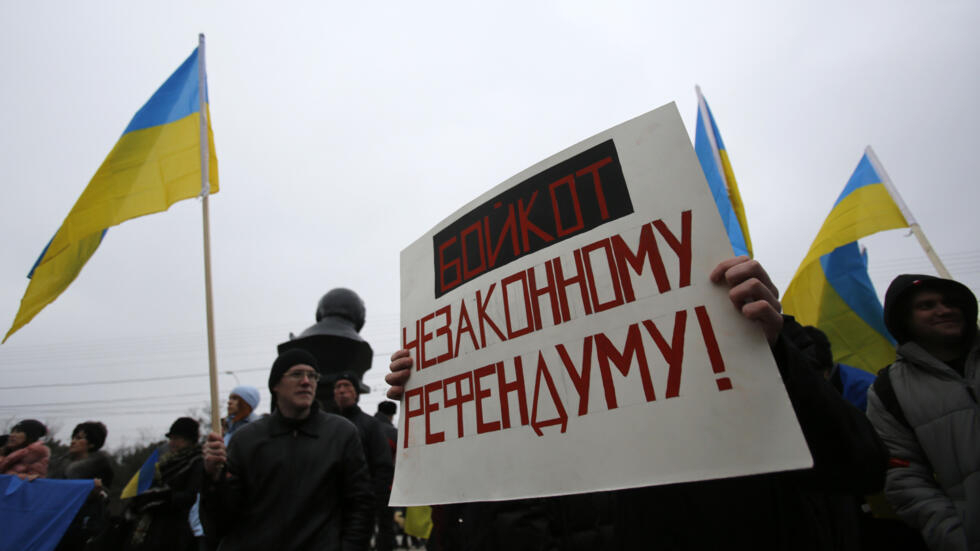
One of the largest rallies took place on February 26, 2014, when Ukrainians and Crimean Tatars demonstrated in support of Ukraine’s territorial integrity. At that time, the Russian Federation tried to undermine Ukraine’s constitutional order in the Autonomous Republic of Crimea, but activists flying under the blue and yellow flags managed to postpone it.
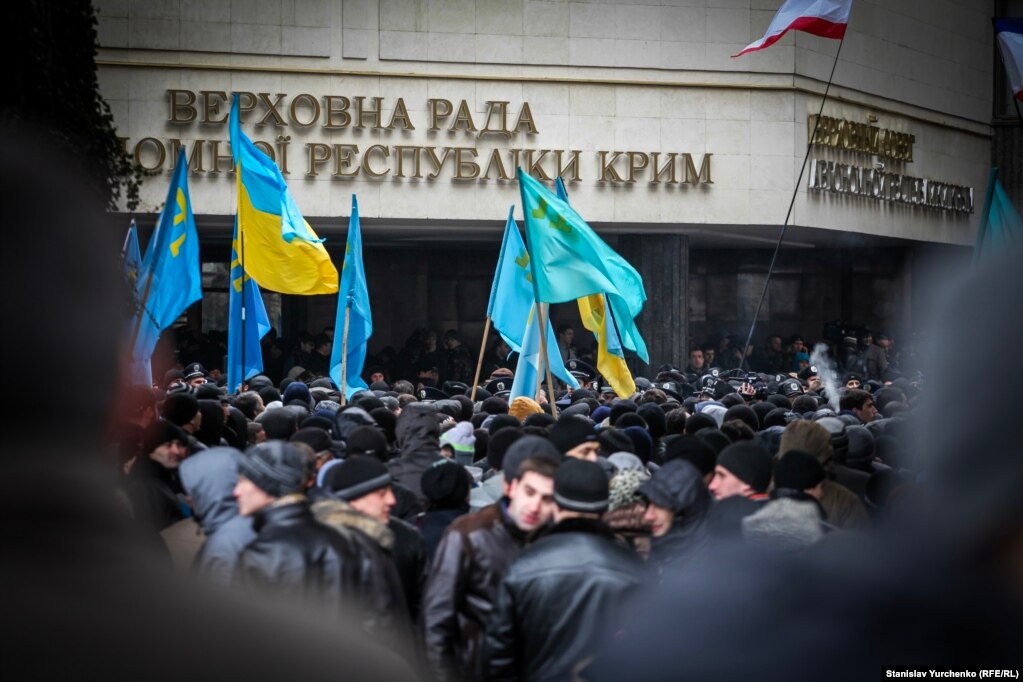
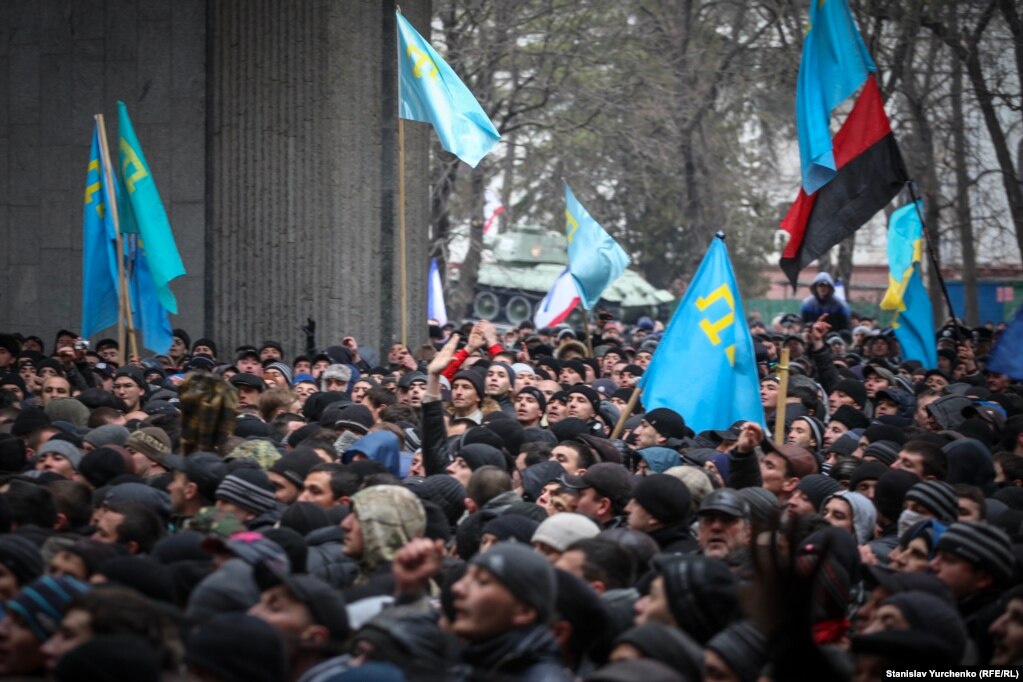
Rallies under the blue and yellow flags in Crimea continued after the occupiers seized administrative buildings and deployed Russian regular troops. For example, on March 9, thousands of Ukrainian demonstrators in Simferopol and Sevastopol came with national flags to monuments to Taras Shevchenko on the 200th anniversary of the Ukrainian poet’s birth.
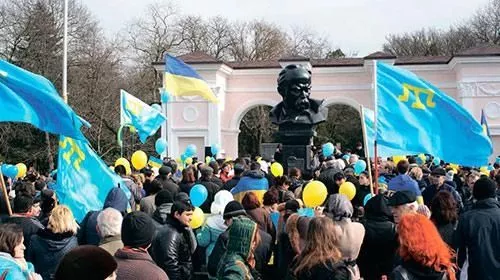
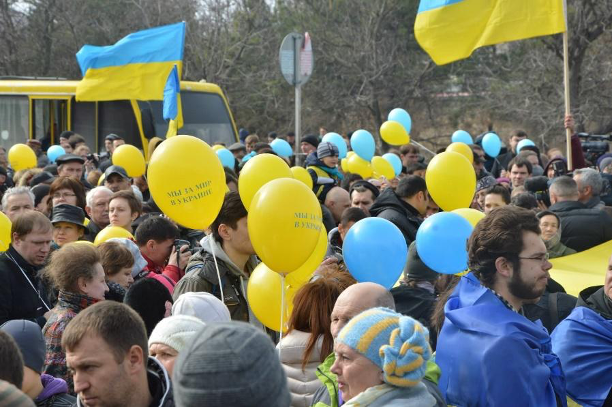
Activists with blue and yellow flags demonstrably opposed the so-called “referendum” on March 16. The blue and yellow flags were also used during the March protests called Women of Crimea for Peace.
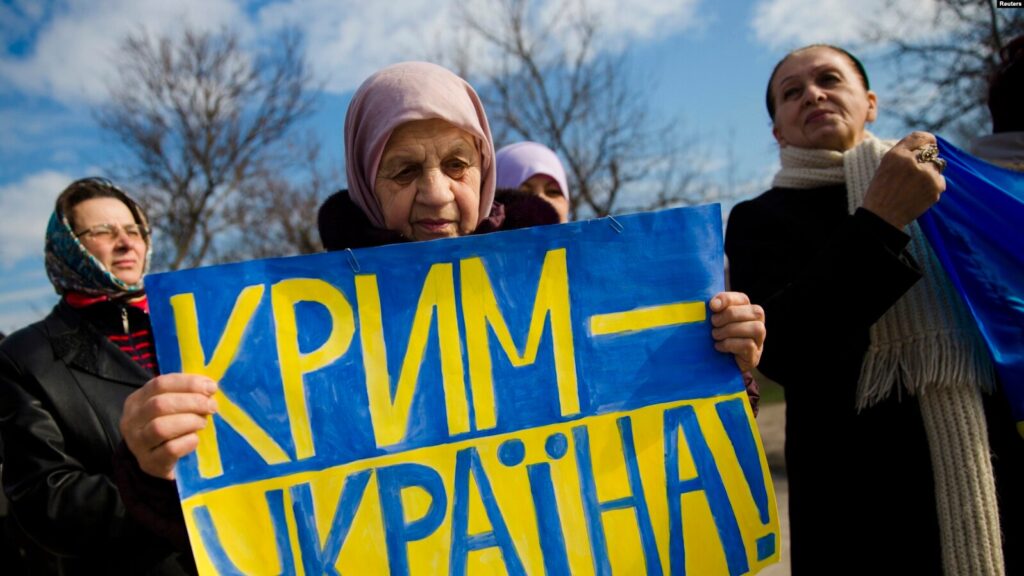
The occupation of Crimea by Russia has led to a consistent, almost complete ban on the Ukrainian flag, as its colors symbolize defiance and opposition to Russian crimes. Although there was no formal ban at first, the Ukrainian flag quickly became a pretext for the occupiers to detain Ukrainian citizens and accuse them of fabricated cases.
Nevertheless, Ukrainian citizens continued demonstrating their position and loyalty to Ukraine by hanging flags on administrative buildings, installing them in the mountains, and painting them on walls. This practice became increasingly dangerous every year.
ЗWith the beginning of the full-scale invasion, the occupiers classified the Ukrainian flag as a “symbol of Nazism,” and the Russian occupation administration outlawed it. People were fined and imprisoned simply for having a flag at home.
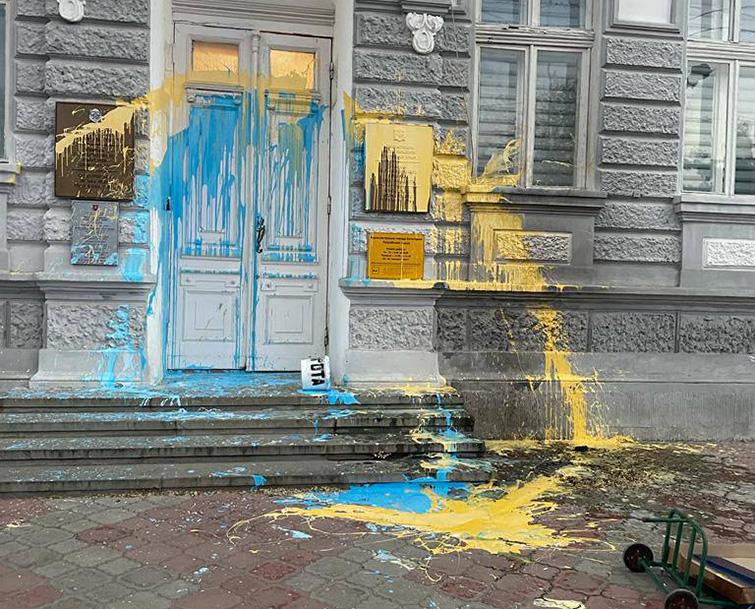
For example, one of the detainees was Bohdan Ziza, who, in May 2022, poured blue and yellow paint on the building of the occupation administration of Yevpatoriia and was charged with “terrorism.”

Today, the blue and yellow flag of Ukraine continues to be the main symbol of the struggle for the liberation of Crimea from Russian occupiers. These colors are also used by the Ukrainian military, who are fighting for the de-occupation of the peninsula with weapons in their hands.