The Congress of the Indigenous Peoples of Ukraine Officially Opened in Kyiv
02.12.2025
On December 2, the official opening of the Congress of the Indigenous Peoples of Ukraine took place in Kyiv. For the first time, it brought together in one space representatives of the Indigenous Peoples of Ukraine, their delegates and advocates, as well as public policy experts, international partners, and leading human rights defenders.
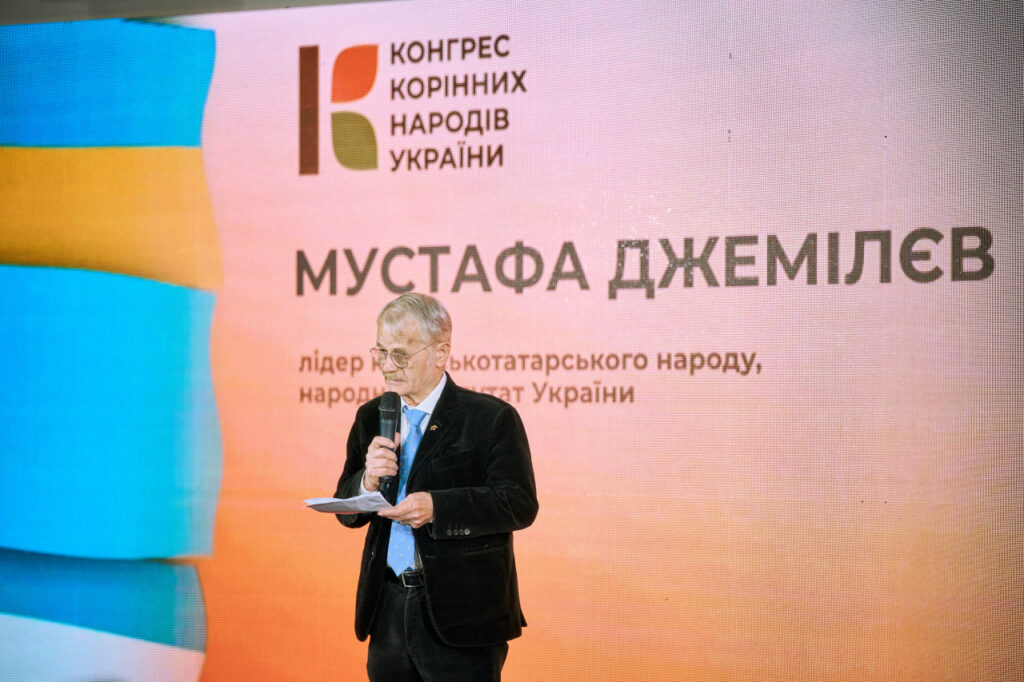
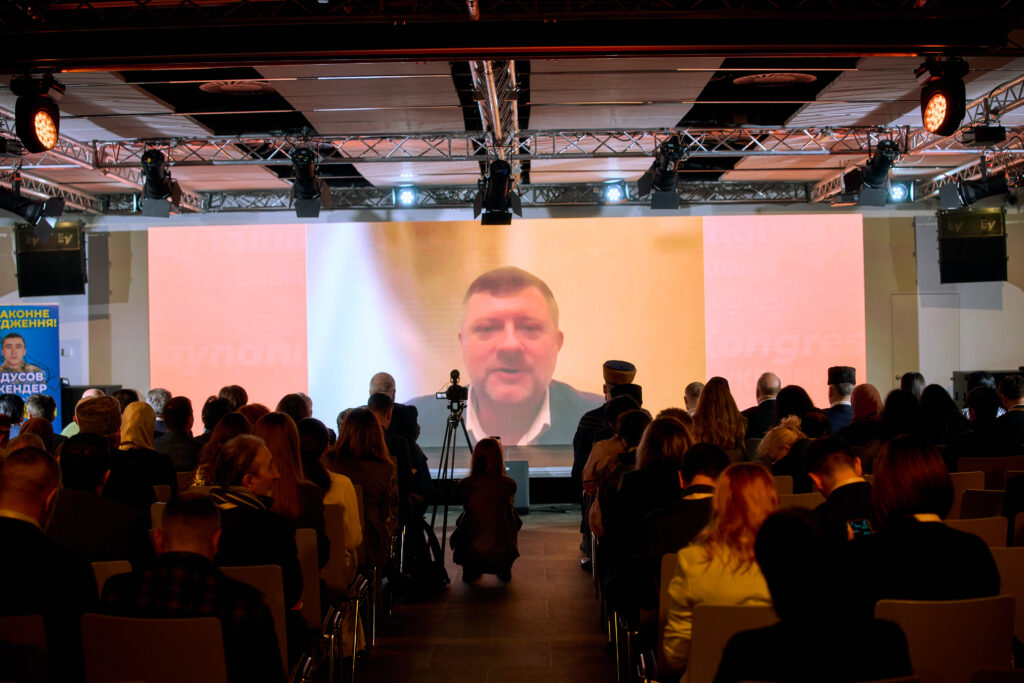
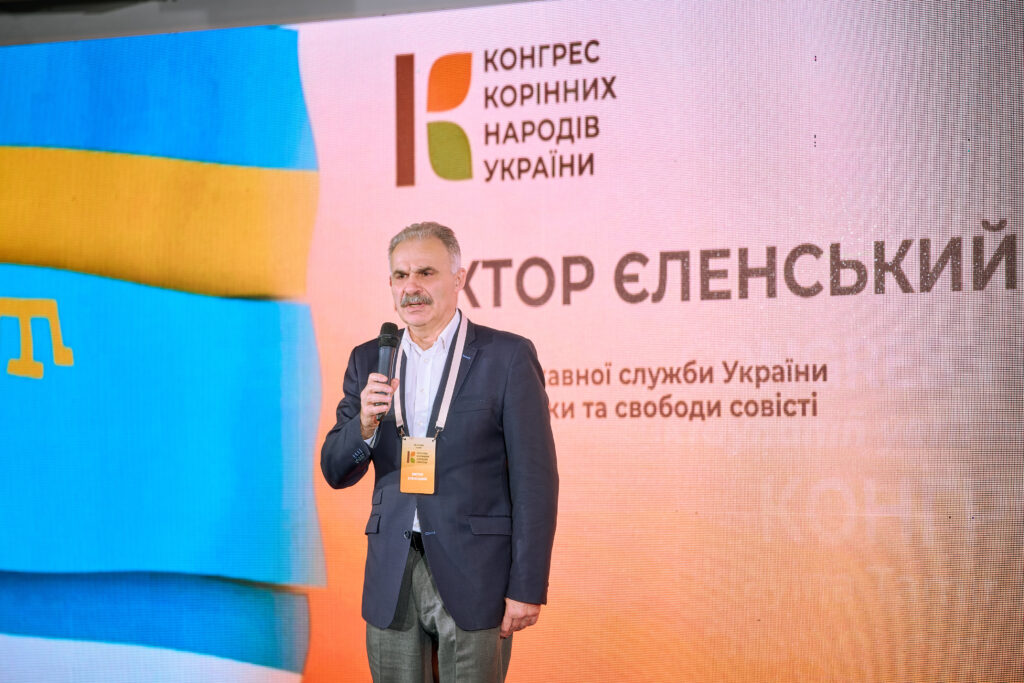
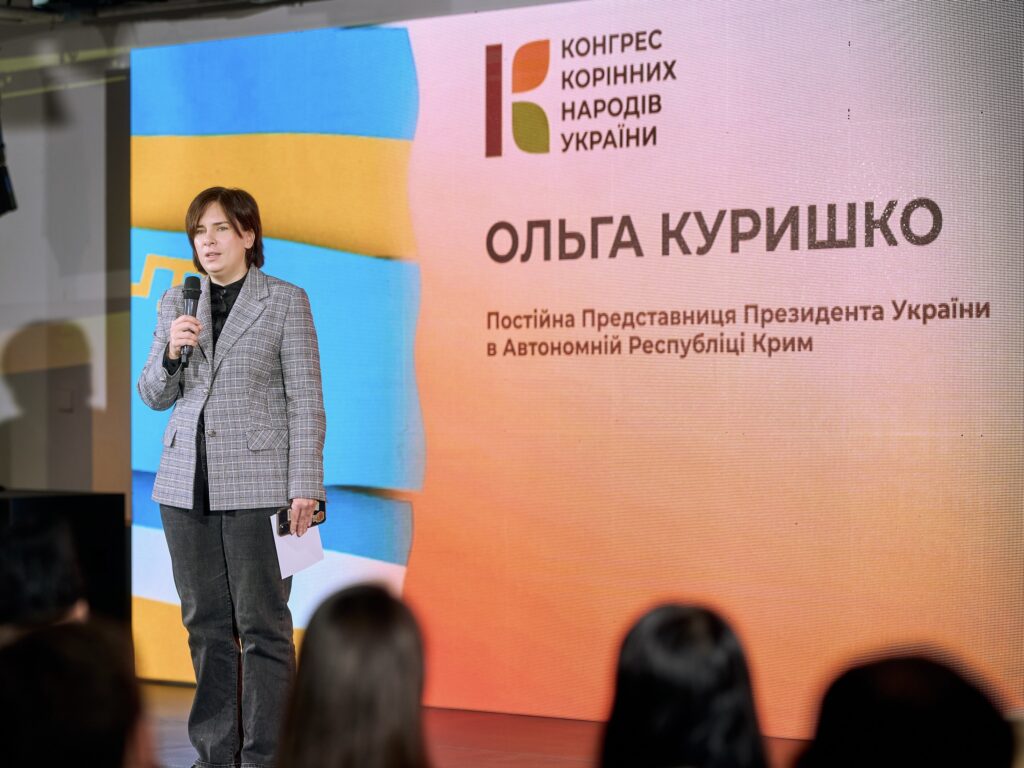
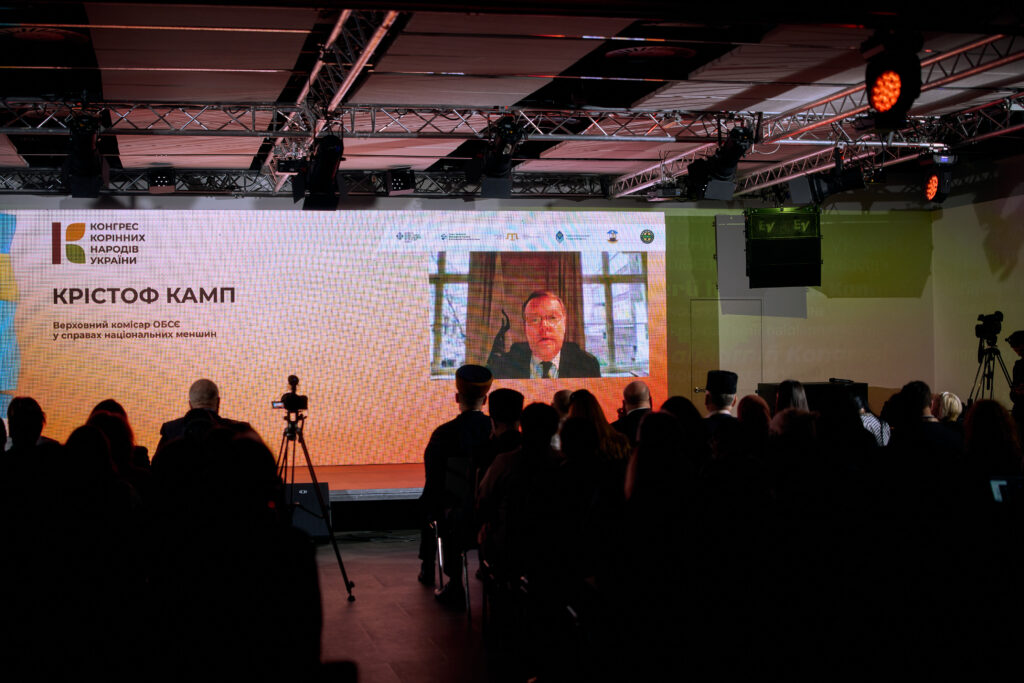
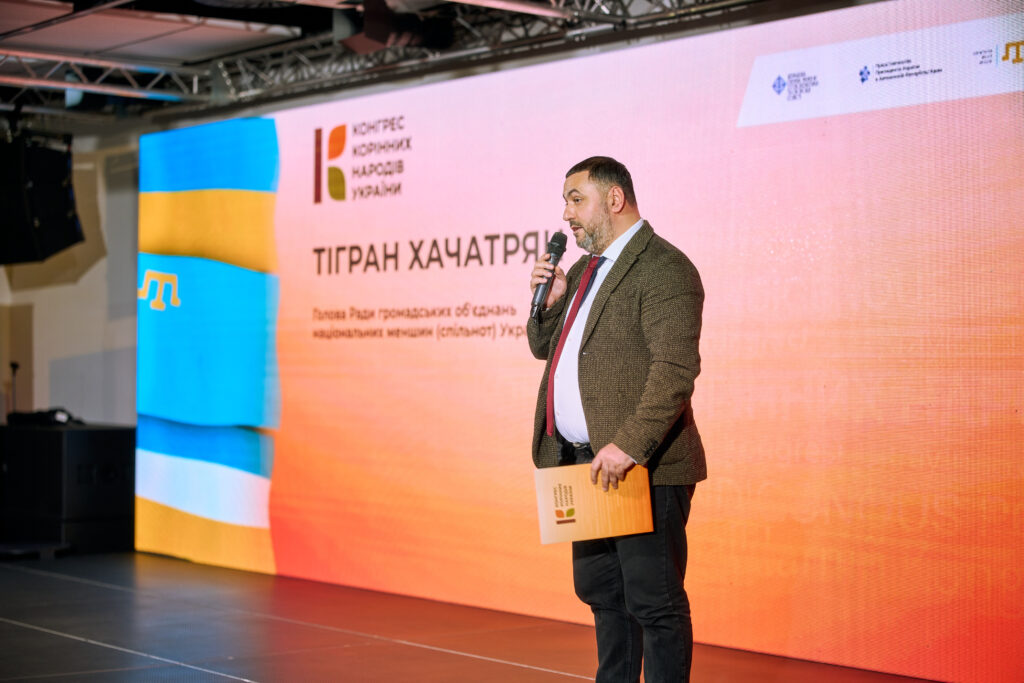
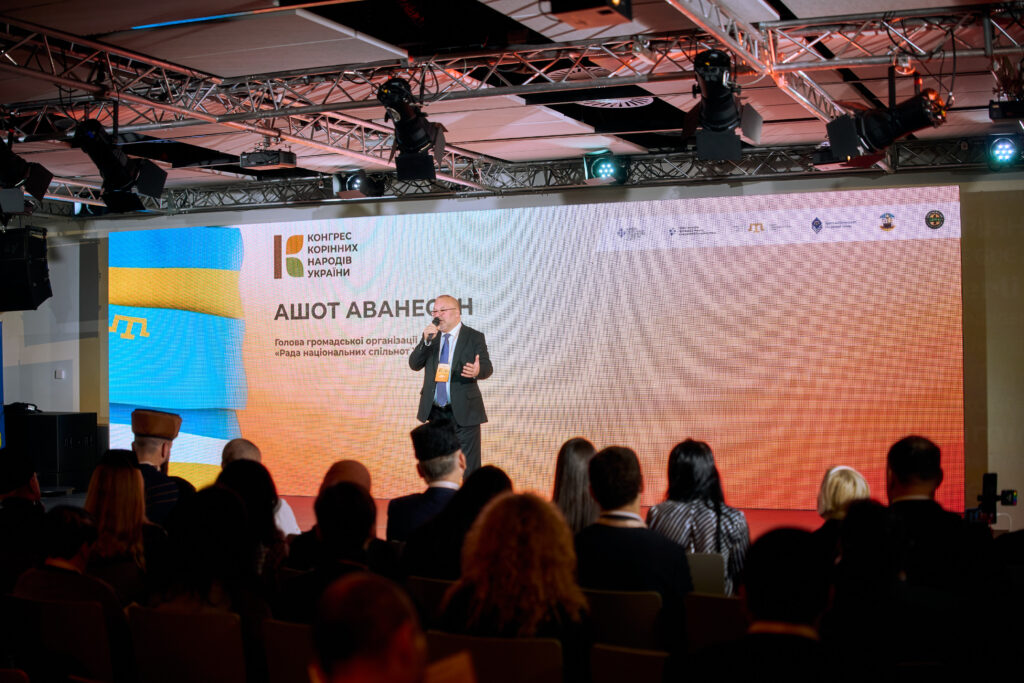
Opening remarks were delivered by the leader of the Crimean Tatar people and Member of Parliament of Ukraine Mustafa Dzhemilev, First Deputy Chairman of the Verkhovna Rada of Ukraine Oleksandr Korniienko, Head of the State Service of Ukraine for Ethnopolitics and Freedom of Conscience Viktor Yelenskyi, OSCE High Commissioner on National Minorities Christophe Kamp, Permanent Representative of the President of Ukraine in the Autonomous Republic of Crimea Olha Kuryshko, Head of the Council of Public Associations of National Minorities (Communities) of Ukraine Tigran Khachatrian, and Head of the public organization “Council of National Communities of Ukraine” Ashot Avanesyan.
“When the legislative framework has been defined, we now face a new and much more complex stage — the full development of the regulatory and legal framework necessary for the practical implementation of the Law on the Indigenous Peoples of Ukraine. This is especially relevant to the issues surrounding the de-occupation of Crimea. The return of the peninsula under Ukraine’s control will require prompt and legally precise decisions that will restore Ukrainian legislation throughout Crimea, guarantee the political, cultural, and religious rights of the Indigenous Peoples, ensure a fair assessment of the actions of the occupation authorities, and restore the representative bodies of the Indigenous Peoples and institutions of national self-government,” said Mustafa Dzhemilev, leader of the Crimean Tatar people and Member of Parliament of Ukraine.
Mustafa Dzhemilev emphasized that preparations for the de-occupation process must begin now, including the development of mechanisms for transitional justice, reconstruction, the return of deported families, protection of property rights, and support of the Indigenous Peoples during the transition period. For them, it is essential not only to survive under occupation but also to become full-fledged actors of state policy after it ends.
“We all remember the intense humanitarian, media, communication, and organizational pressure that the Russian Federation exerted on Crimea, constantly encroaching upon it, as well as the cultural expansion that Russia pursued in Crimea. At the same time, we also remember that the Crimean Tatar people and the kindred Karaims and Krymchaks have always played an important pro-Ukrainian role on the peninsula — reminding that Crimea was, is, and will be Ukraine, no matter how much this is opposed in the Kremlin or other Russian offices,” said Oleksandr Korniienko, First Deputy Chairman of the Verkhovna Rada of Ukraine.
Oleksandr Korniienko emphasized that the legislative branch consistently supports the Indigenous Peoples, who have repeatedly proven their loyalty to Ukraine, including through their shared readiness to defend Ukrainian land. According to him, the Council of Europe will facilitate the first serious consultations between the Ukrainian authorities and representatives of the Crimean Tatar people, including the Chairman of the Mejlis, to find the best model for the life of Indigenous Peoples in Ukraine.
“There are peoples who occupy very little space on the map but a great deal in history. This history takes one’s breath away when one realizes that, among the many peoples who once walked alongside Crimean Tatars, Karaims, and Krymchaks on the Crimean land, only a few lines remain in archaeology textbooks. But the Crimean Tatars, Karaims, and Krymchaks walk and will continue to walk on this land — and that is why I am confident in their future,” said Viktor Yelenskyi, Head of the State Service of Ukraine for Ethnopolitics and Freedom of Conscience.
Viktor Yelenskyi emphasized that the state must do everything necessary to ensure that the Crimean Tatars, Karaims, and Krymchaks not only preserve their history and culture but also develop them while living on their ancestral land and passing them on to future generations. He noted the need to ensure the development of their languages, make them functional in all spheres, approve and promote their orthography, and fully implement the Law on Indigenous Peoples with a complete package of by-laws. It is important to prepare so that the de-occupation of Crimea coincides with the readiness of all legal instruments that will guarantee the development of these peoples.
“Today, the whole world is amazed by Ukraine’s stability, resilience, and courage, as well as by its capacity for development. Under such difficult circumstances, holding a congress of the Indigenous Peoples is our shared great success,” said Olha Kuryshko, Permanent Representative of the President of Ukraine in the Autonomous Republic of Crimea.
In her address, Olha Kuryshko emphasized that protecting the rights of the Indigenous Peoples of Ukraine is one of the key areas of the Representation’s work. She stressed the importance of ensuring that Crimean Tatars, Krymchaks, and Karaims retain their place in state policy, have the opportunity to participate in its formation, remain heard, and maintain sustainable communication with state institutions. Concluding her speech, Olha Kuryshko assured that the Representation will continue to be a reliable partner for the Indigenous Peoples of Ukraine and will make every effort to support the development of state policy to protect their rights.
“Ukraine has made important progress in recent years in strengthening the rights of Indigenous Peoples. The Law on Indigenous Peoples, language legislation, long-term strategies, and educational initiatives demonstrate a clear commitment to protecting identity and heritage. Strengthening legal protection is key to enabling Indigenous Peoples to preserve their identity, language, and culture wherever they are forced to live today,” said Christophe Kamp, OSCE High Commissioner on National Minorities.
Christophe Kamp emphasized that Indigenous Peoples have endured much suffering and that pressure on them does not diminish. He spoke about his experience in dialogue with representatives of these communities and about the “quiet diplomacy” he pursues to ensure that the issue of their future does not fall off the international agenda. He also drew attention to the importance of preserving the languages, culture, and identities of young people who were forced to leave their homes. Separately, he stressed that the future of Crimea cannot be decided without the participation of the Indigenous Peoples themselves. Therefore, the principle “nothing about us without us” must be decisive.
“Indigenous Peoples are the custodians of a unique heritage and deep historical memory and continue to enrich our common Ukrainian future. We will continue to stand in defense of the rights of every community, ensuring a space where the voice of each people is heard and its culture preserved, supported, and protected. State-building and cultural diversity are sources of resilience and development,” said Tigran Khachatrian, Head of the Council of Public Associations of National Minorities (Communities) of Ukraine.
“After the adoption of a separate law for Indigenous Peoples, one might think that we, as national communities, are separate, and Indigenous Peoples are separate. But I have always believed that we are together—and indeed, we are. This is, so to speak, a manifestation of the tolerance of our state, of our Ukraine,” said Ashot Avanesyan, Head of the public organization “Council of National Communities of Ukraine.”
Ashot Avanesyan noted that the Indigenous Peoples are our brothers with whom we have been working side by side for 35 years. He emphasized that the Krymchaks, Karaims, and Crimean Tatars have always actively participated in everything organized by the national communities and have been involved in various projects.