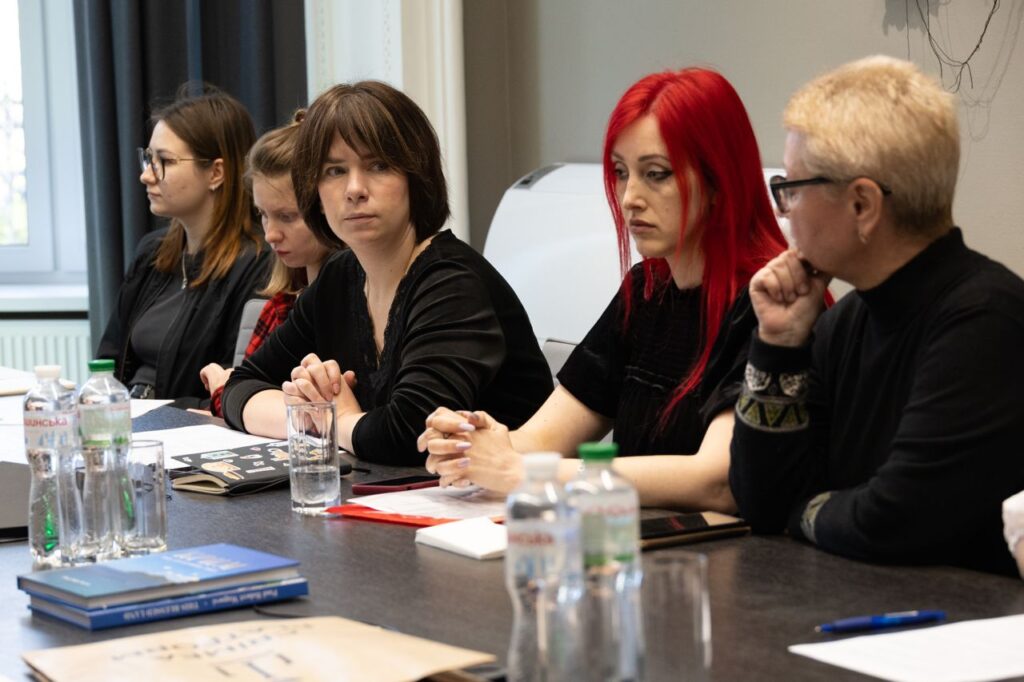
A Meeting with Polish Journalists and Families of Political Prisoners Held at the Mission
17.04.2025
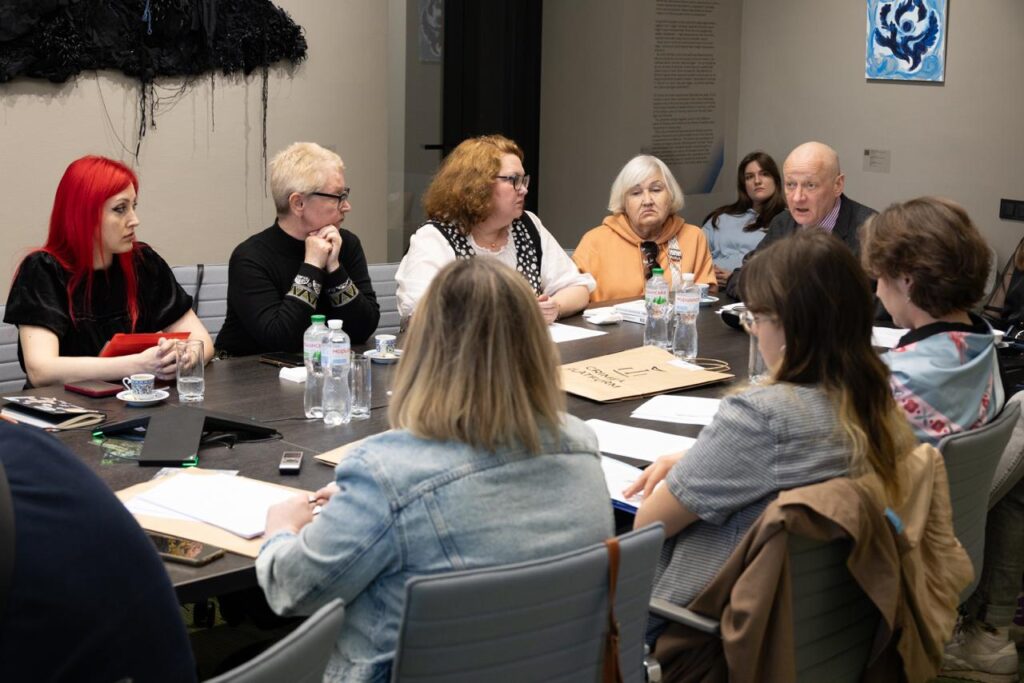
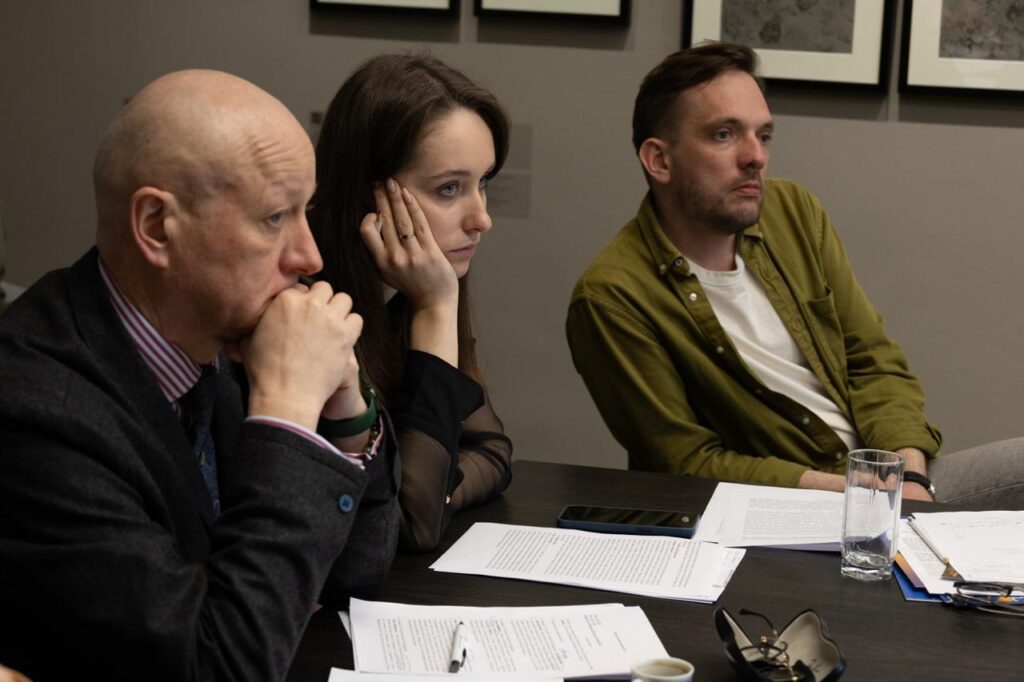
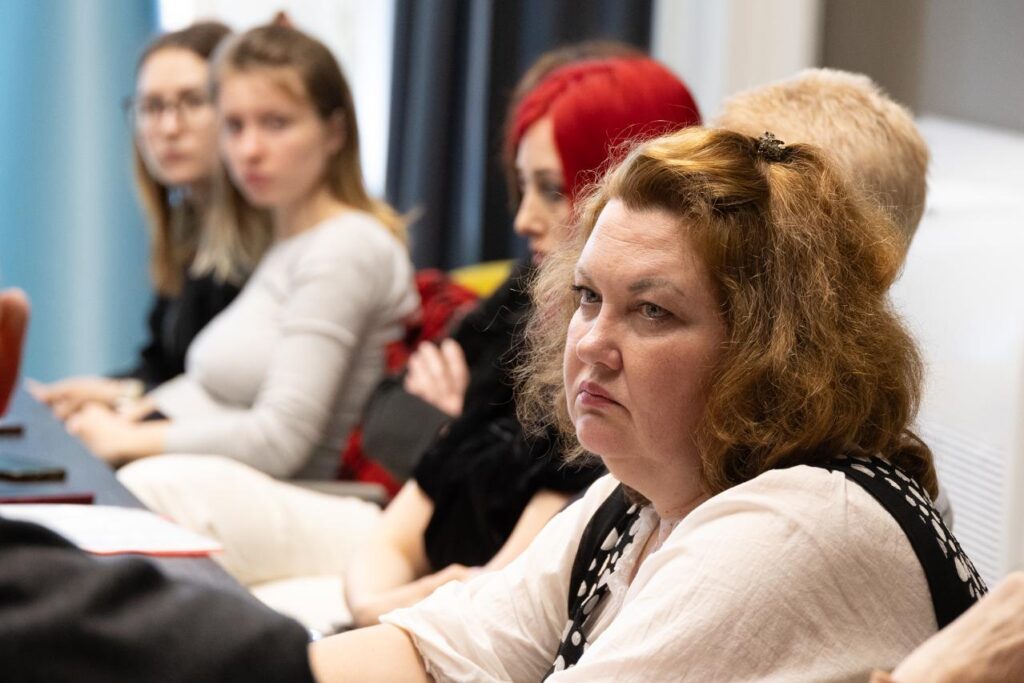
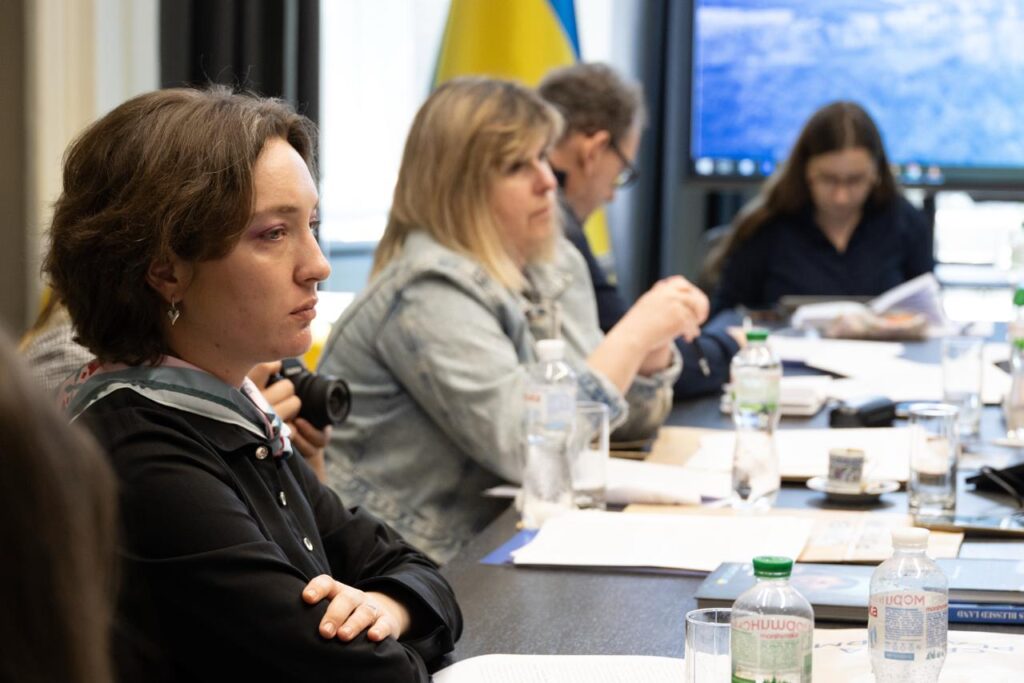
On April 17, Permanent Representative Olha Kuryshko and the team of the Mission held a meeting with Polish journalists and families of political prisoners.
Among the participants were representatives of leading Polish media outlets, including Gabriela Bogaczyk, correspondent and head of the Lublin bureau of Polska Agencja Prasowa; Joanna Kwapién, editor at Glissando; Jędrzej Słodkowski, deputy head of the Culture section at Gazeta Wyborcza; Piotr Pogorzelski, deputy director of Polish Radio for Abroad; Estera Flieger, journalist at Rzeczpospolita; Jacek Pawlicki, foreign affairs correspondent for Newsweek Polska; and Michał Kujawski, journalist for Kyiv Post and correspondent for TOK FM. The meeting took place within the framework of an orientation visit project for thought leaders (writers, journalists, bloggers), organized by the Ukrainian Institute in partnership with the Julius Mieroszewski Dialogue Centre. The initiative aims to immerse participants in Ukraine’s current cultural and social context and deepen their understanding of the country’s history and culture.
During the discussion, family members of political prisoners shared their personal stories, including Mariia Kostiuk, daughter of political prisoner Oksana Senedzhuk; Anna Sviatnenko, wife of political prisoner Volodymyr Ananiev; and Olha Afanasieva, mother of political prisoner Hennadii Afanasiev, along with his grandmother Halyna Afanasieva. Aishe Kurtamet, mother of political prisoner Appaz Kurtamet, also joined online.
The Permanent Representative spoke about the Mission’s activities and the overall human rights situation in the temporarily occupied territory of Crimea.
Aishe Kurtamet shared the story of her son’s imprisonment, emphasizing the unlawful actions of the Russian occupation administration: “My son committed no crime. He is a hero, not a terrorist. He never abandons or betrays those in need—that is why he is being punished. Appaz is one of the youngest Crimean political prisoners.”
Anna Sviatnenko, the wife of Volodymyr Ananiev—the oldest known Crimean political prisoner who the Russian FSB detained in February 2024—spoke about her husband’s story and deteriorating health condition: “Volodymyr suffers from high blood pressure, has undergone two eye surgeries (with glaucoma developing in one eye), and has serious issues with his spine, including herniated discs and problems with his hip and knee joints. He went to Crimea walking with a cane because he can no longer walk properly.“
Mariia Kostiuk, daughter of political prisoner Oksana Senedzhuk—sentenced in December 2023 by an occupation “court” in Sevastopol to 15 years of imprisonment on charges of “state treason”—highlighted the politically motivated and unlawful nature of her mother’s persecution: “My mother has always held pro-Ukrainian stance, and that is exactly why she was targeted—especially since 2022.” Oksana has been held for over a year and a half in Simferopol Pre-Trial Detention Center No. 1.
Olha Afanasieva, the mother of former political prisoner Hennadii Afanasiev, spoke about the brutal torture her son endured in the Russian Lefortovo prison. Following Russia’s illegal “referendum” in Crimea in 2014, Hennadii was falsely accused of “terrorism” due to his activism and pro-Ukrainian stance. In June 2016, Ukraine secured his release with another prisoner. After returning home, Hennadii became actively involved in advocating for the release of Ukrainian political prisoners held in Russia and Crimea. He served as a special envoy of the Ministry of Foreign Affairs of Ukraine, working within a platform focused on supporting the release of Ukrainians unlawfully detained in the Russian Federation. With the start of Russia’s full-scale invasion, Hennadii joined the Armed Forces of Ukraine. In December 2022, he was killed in action during a combat mission in the Luhansk region.
Polish journalists expressed strong interest in the stories of Crimean political prisoners and the human rights situation of Ukrainian citizens subjected to unlawful persecution by the occupation administration in Crimea.
“We must give maximum visibility to the stories of political prisoners. Public attention to these cases is precisely what the Russian Federation fears most. The families of political prisoners are ready to share the stories of their loved ones, and that’s why it is crucial for the journalistic community to actively engage with this topic—to support their efforts and ensure these voices are heard,” concluded the Permanent Representative.