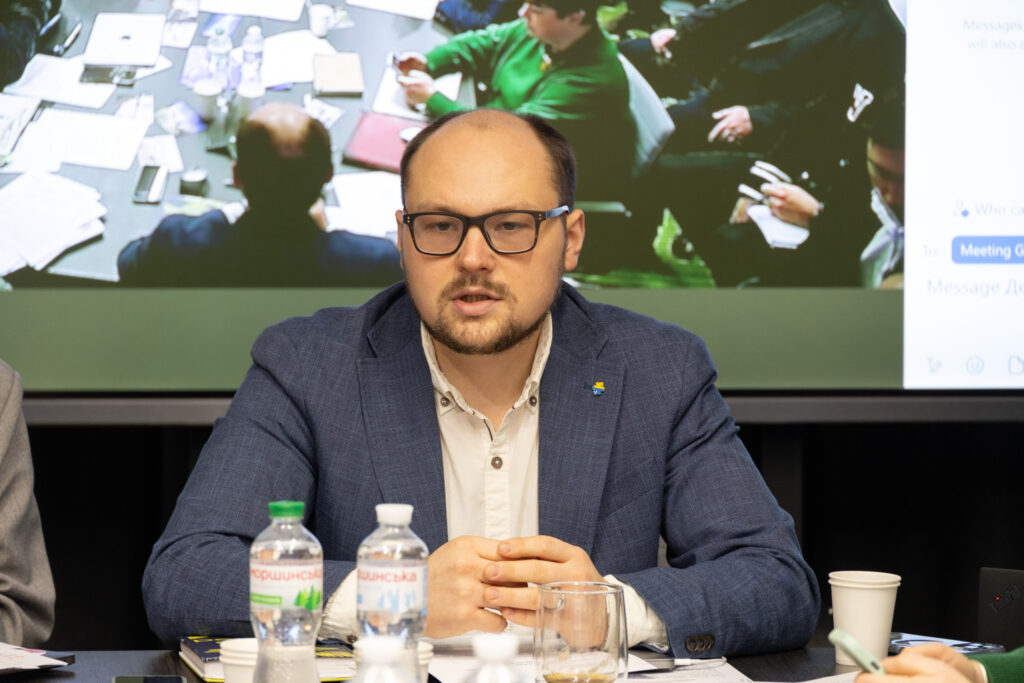
The Mission Hosted the Ninth Meeting of the Council on Cognitive De-Occupation of Crimea
15.01.2025
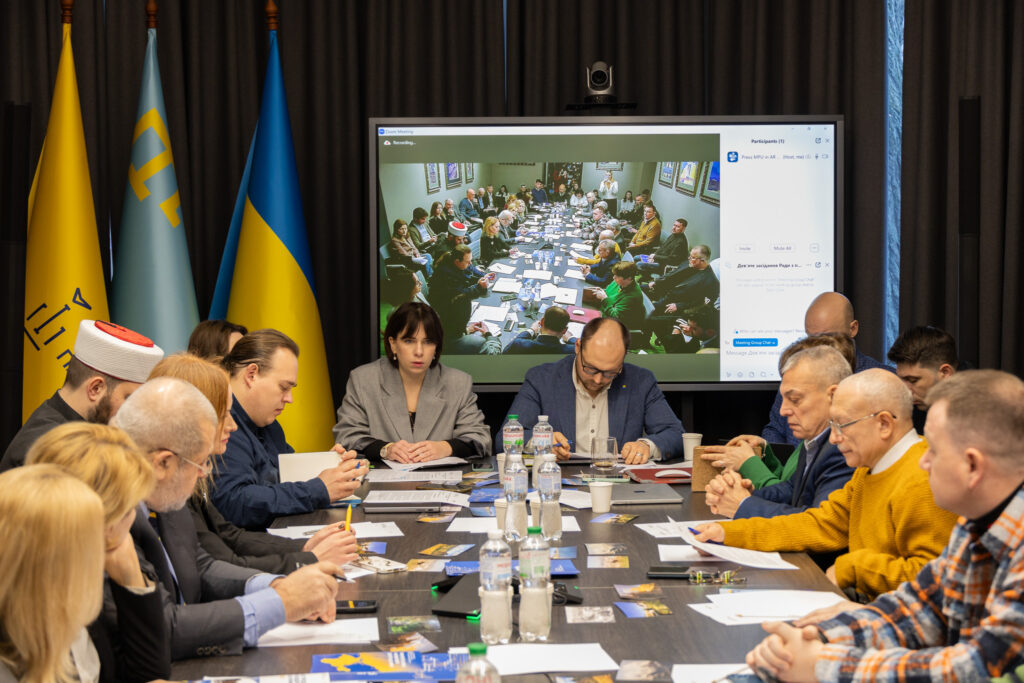
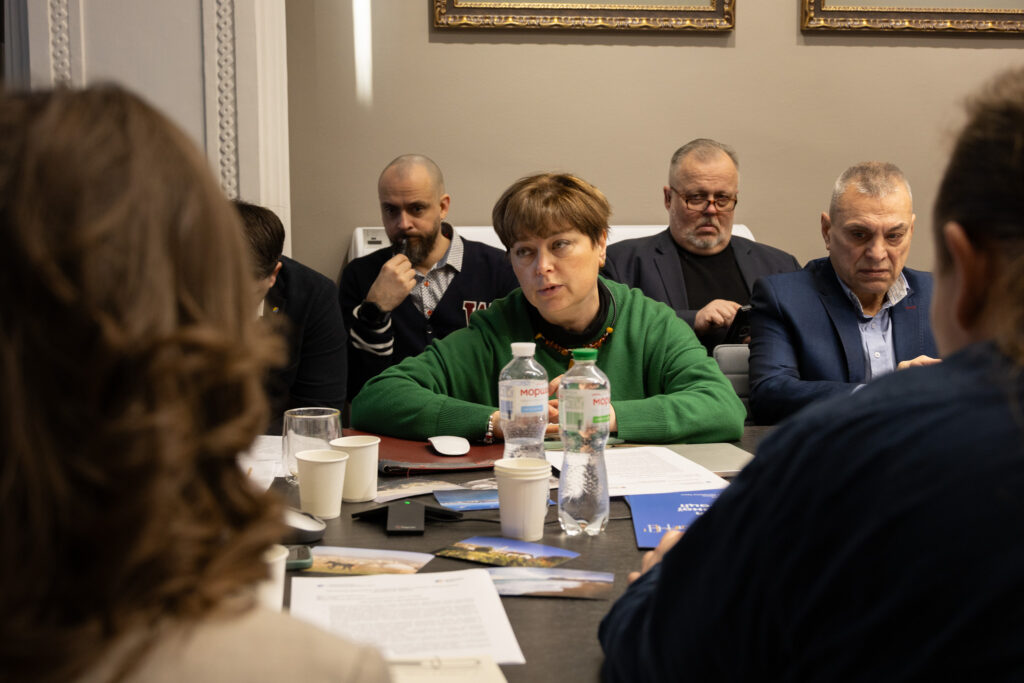
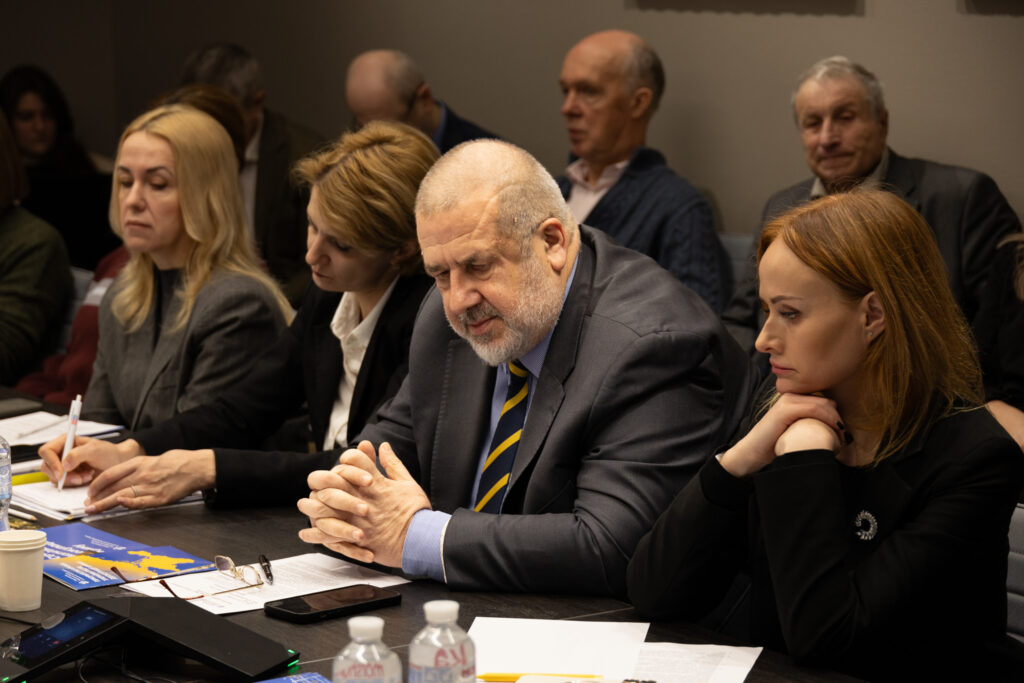
Yesterday, the Mission hosted the ninth meeting of the Council on Cognitive De-Occupation of Crimea and the first in 2025. The event brought together 48 participants, including Acting Permanent Representative Olha Kuryshko, members of the Ukrainian Parliament, representatives of state authorities, ministries, the Mejlis of the Crimean Tatar People, and members of the public, academic, and expert communities. The meeting was moderated by the Head of the Mission’s Information Department, Yevhen Bondarenko.
Olha Kuryshko expressed gratitude to the Council members for their productive work in 2024 and emphasized the importance of continued efforts. She highlighted key achievements, including the development of the Strategy for Cognitive De-Occupation of Crimea and the document Priority Steps of Ukraine after the De-Occupation of Crimea, while addressing the challenges encountered in securing state-level approval for these documents.
Participants reviewed research findings conducted by the Kyiv International Institute of Sociology with the support of the Partnership Fund for a Resilient Ukraine and discussed outcomes from simulation training sessions. Additional discussions focused on extending workshops and expanding interfaith initiatives.
Particular attention was given to memorializing military personnel from Crimea who lost their lives defending Ukraine. Council members emphasized the need to develop mechanisms for honoring fallen defenders, especially those whose communities cannot currently pay tribute due to the occupation.
A significant topic was the launch of a youth-focused initiative by the Council. This will include a series of discussions titled “Crimea and Youth: Visions of Resilience, Values, and Unity,” starting later this month, as well as the establishment of Crimean Studies at the National University of Kyiv-Mohyla Academy.
During the first meeting of 2025, participants outlined directions for the Council’s work, agreed on refining shared communication messages about Crimea, and formed preliminary working groups for future activities.
Yevhen Bondarenko concluded the meeting by summarizing the Council’s key priorities for 2025:
“We are finalizing communication messages, addressing the issue of dismantling memorials installed by the Russian Federation in Crimea in collaboration with the Ukrainian Institute of National Memory. We continue interfaith dialogues, prepare an information campaign titled ’11 Years of Resistance,’ and have launched a youth track complemented by Crimean Studies at the Kyiv-Mohyla Academy. Our work continues with national memory workshops, simulation training, and preparations for the Crimean Media Forum.”
The Council on Cognitive De-Occupation of Crimea, established under the Mission’s framework, is responsible for preparing practical steps and initiatives as part of the Strategy for Cognitive De-Occupation of Crimea. Its members include representatives of state authorities, parliamentarians, academics, human rights defenders, and communication experts.