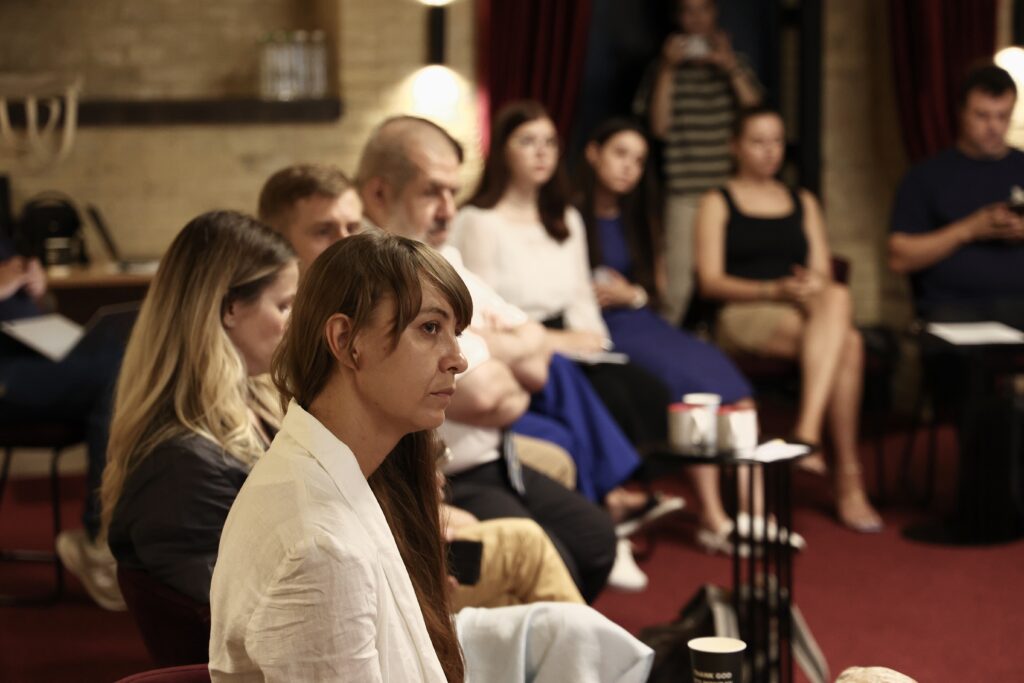
Today, Deputy Permanent Representative Olha Kuryshko joined the expert discussion Temporarily Occupied Crimea: What Civil Society Organizations Can and Should Do Today, initiated by the Center for Democracy and Rule of Law with the support of Ednannia Initiative Center to Support Social Action and UCIPR within the framework of the USAID Ukraine Civil Society Sectoral Support Initiative project.
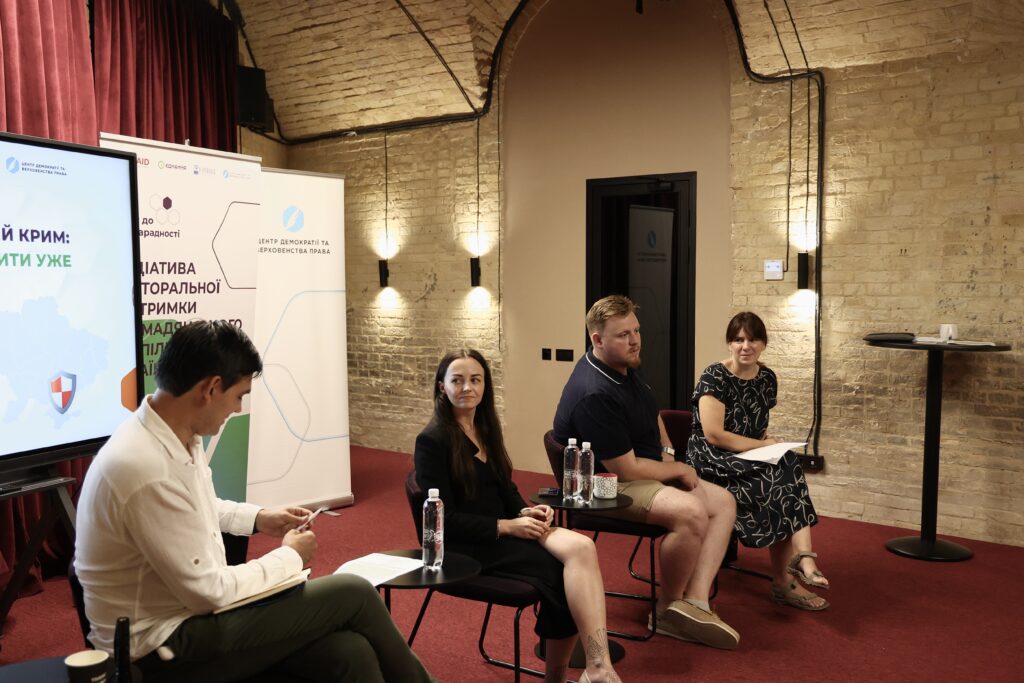
During the discussion, Olha Kuryshko emphasized the resistance of Ukrainian citizens to the occupation, which has grown significantly since the start of the large-scale invasion, as well as the growing expectations of the peninsula’s residents to liberate Crimea.
The Deputy Permanent Representative also spoke about the work of the Mission in the field of cognitive de-occupation, emphasizing that it is essential to revive the reminders of the existence of Ukraine, Ukrainian and Crimean Tatar culture, historical names, and history of the peninsula after the restoration of Ukrainian sovereignty over it. In addition, Olha Kuryshko emphasized the need to work on forming a personnel reserve to find professional and motivated people ready to work in the de-occupied territories. In addition, the Deputy Permanent Representative emphasized the importance of the economic recovery of Crimea after its de-occupation:
We must have a vision of what Crimea can look like after liberation and what needs to be done to restore it. Today, Russia is doing everything possible to destroy the peninsula. Even when the occupiers say that they have “built” something, they de facto destroyed some landmark elsewhere: a spit, a Crimean Tatar cemetery, or a cultural heritage site.