Official opening of the art exhibition “LOMYKAMINʼ. Women’s resistance in Crimea”
26.02.2024
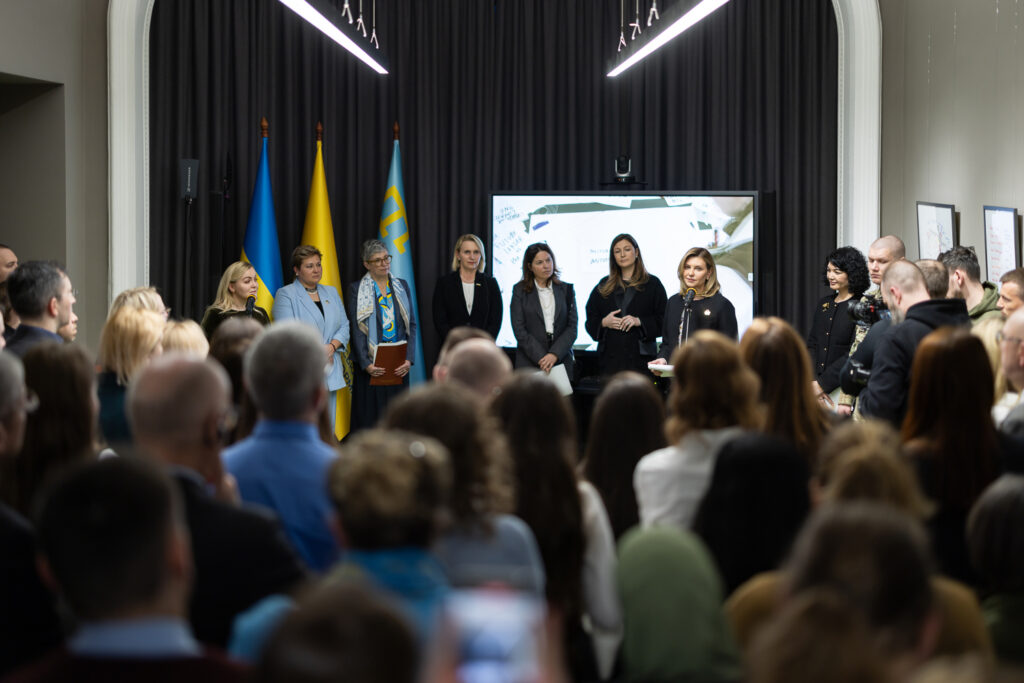
On February 26, the Mission of the President of Ukraine in the Autonomous Republic of Crimea/Office of the Crimea Platform hosted the official opening of the art exhibition “LOMYKAMIN’. Women’s resistance in Crimea”, which aims to raise public awareness of the stories of women who were illegally imprisoned for supporting Ukraine; to honour the strength and courage of the wives of political prisoners, as well as those who daily resist the occupiers, demonstrating the fight for their rights and freedoms. The exhibition aims to show that the resistance of Ukrainian citizens in Crimea continues and is gaining more and more strength every day.
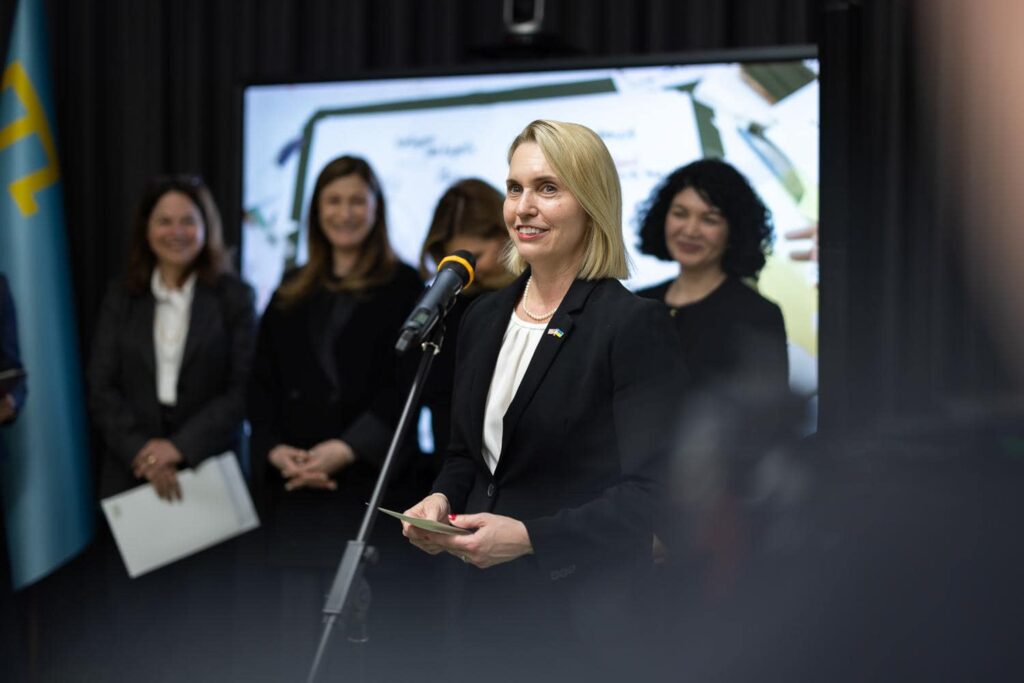
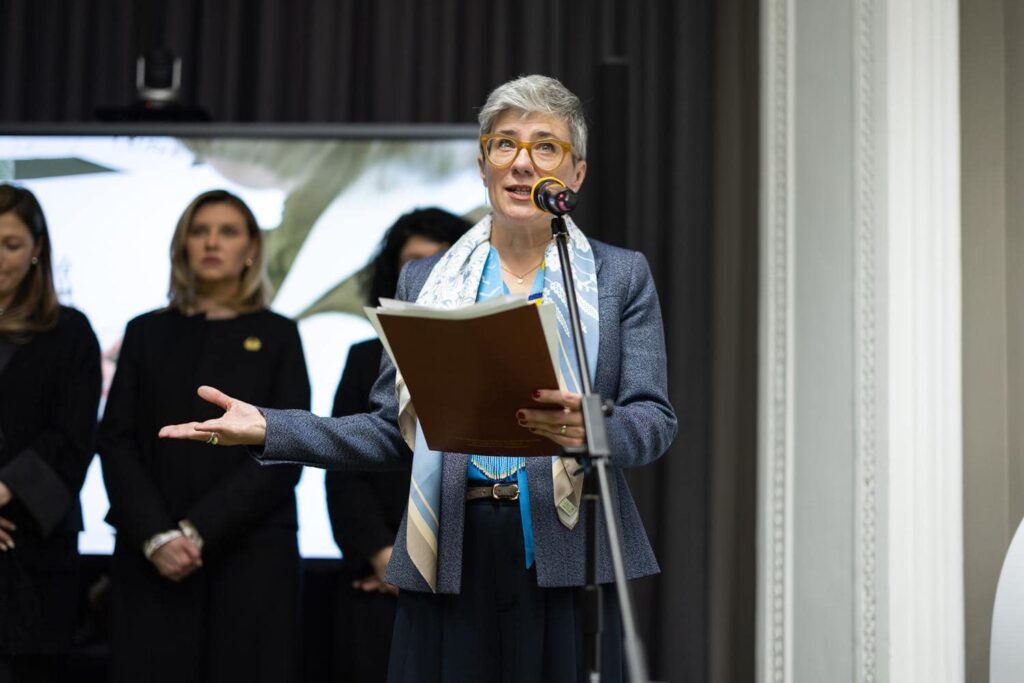
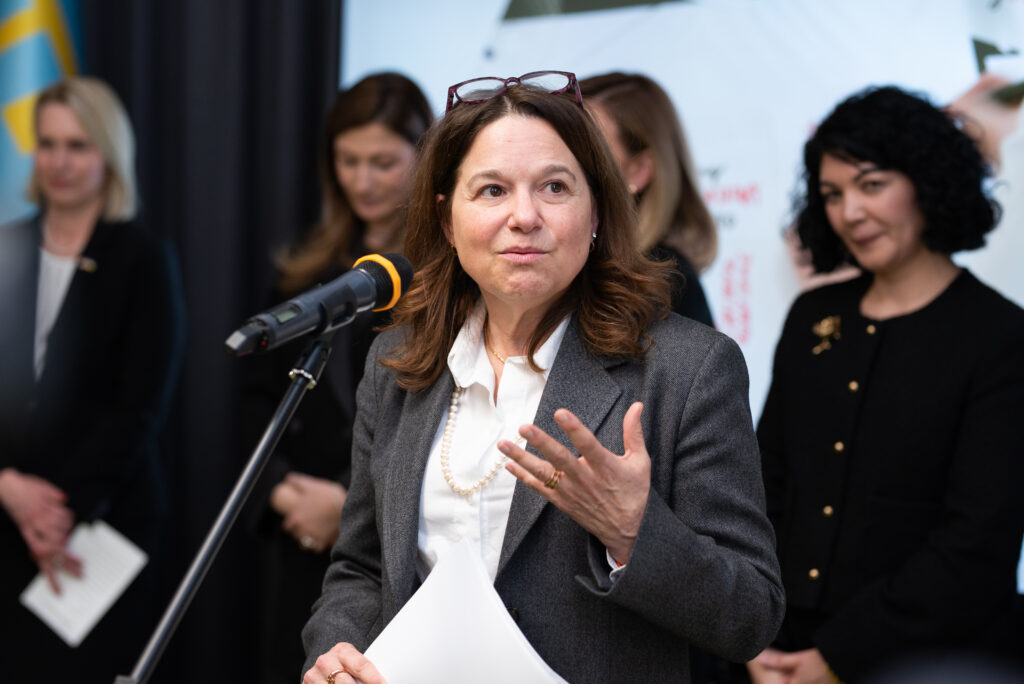
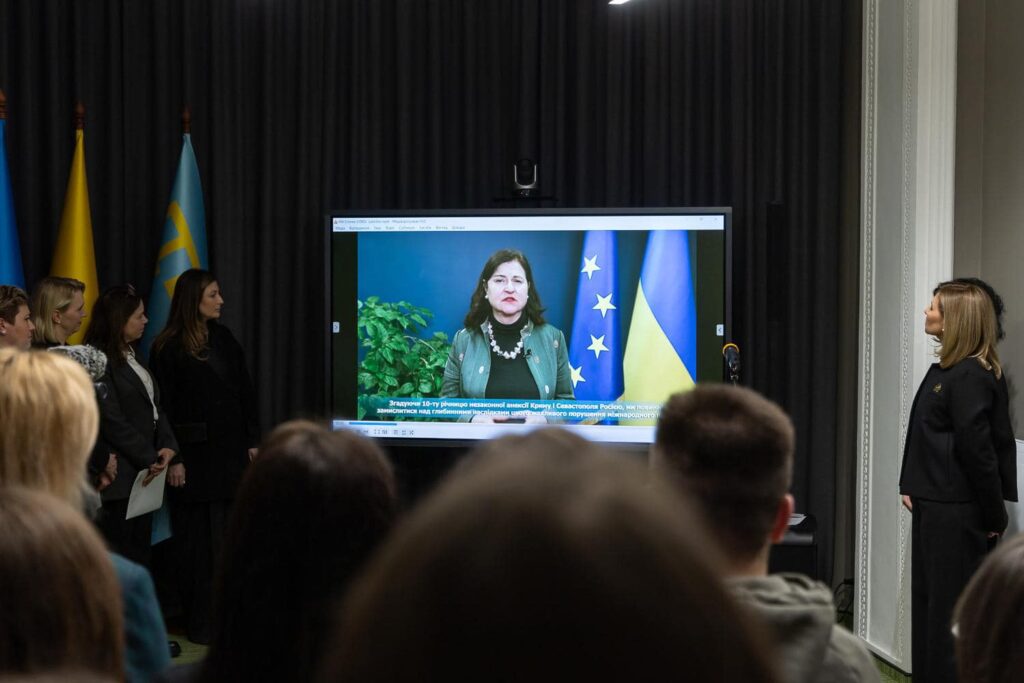
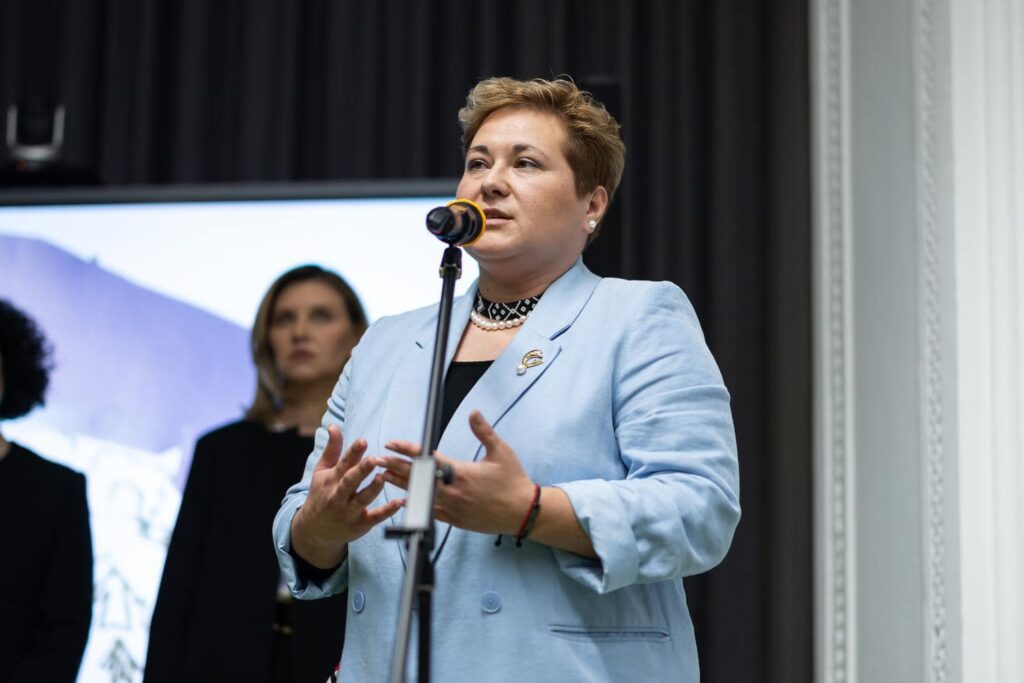
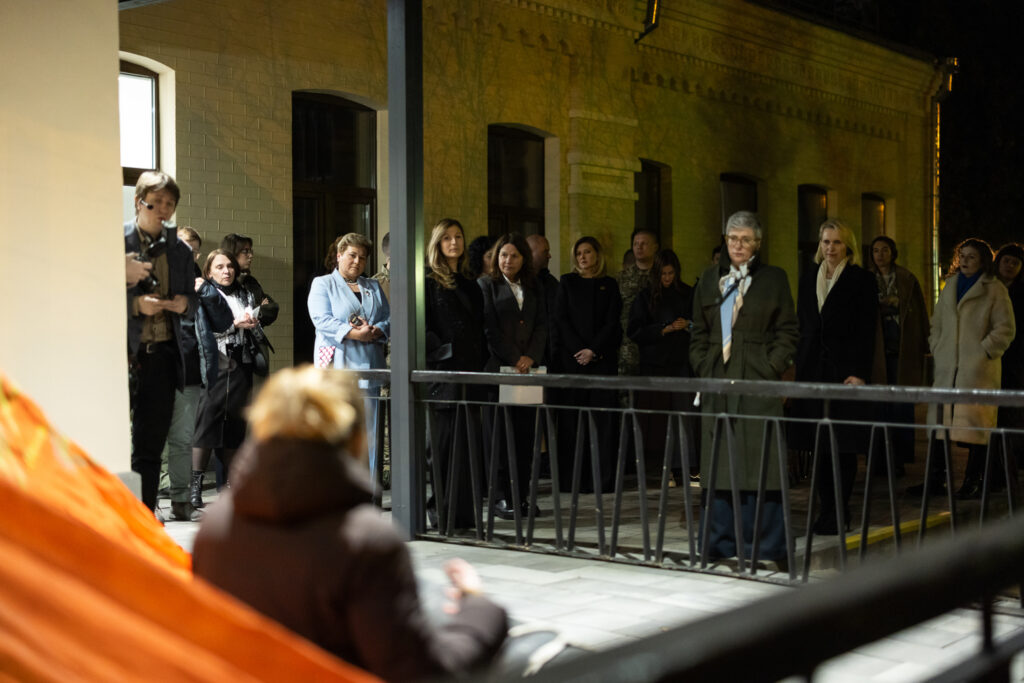
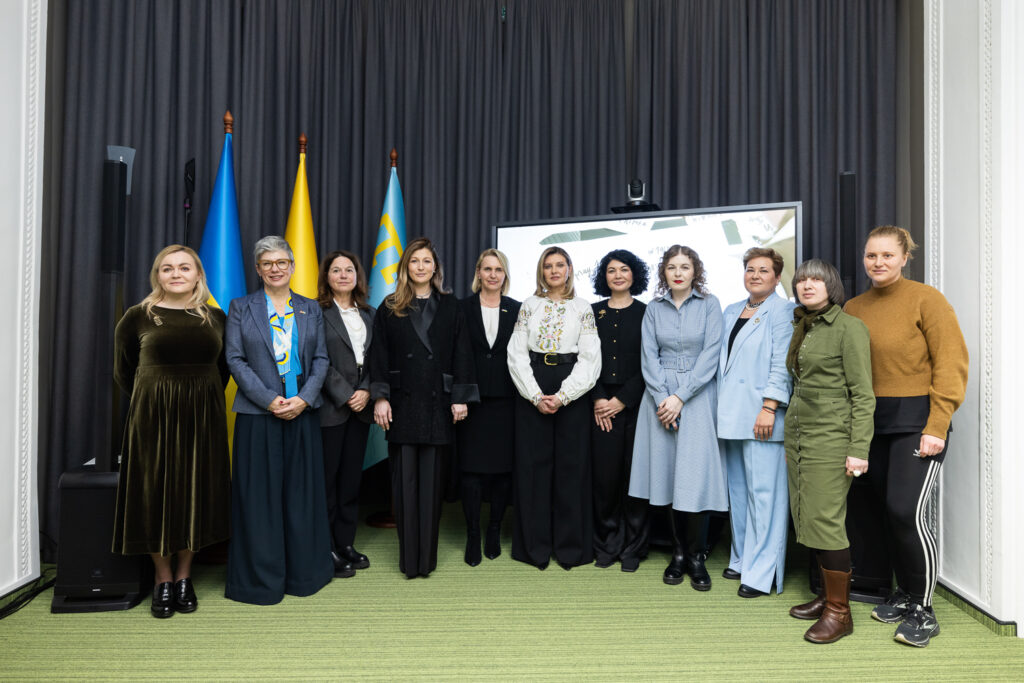
The exhibition was opened with an official event attended by First Lady of Ukraine Olena Zelenska, Permanent Representative of the President of Ukraine in the Autonomous Republic of Crimea Tamila Tasheva, First Deputy Minister of Foreign Affairs of Ukraine Emine Dzeppar, Ambassador Extraordinary and Plenipotentiary of the United States to Ukraine Bridget Brink, Ambassador of Canada to Ukraine Natalka Cmoc, and the Head of the UN Human Rights Monitoring Mission in Ukraine Danielle Belle. The Ambassador of the European Union to Ukraine, Katarina Mathernova — delivered an online speech.
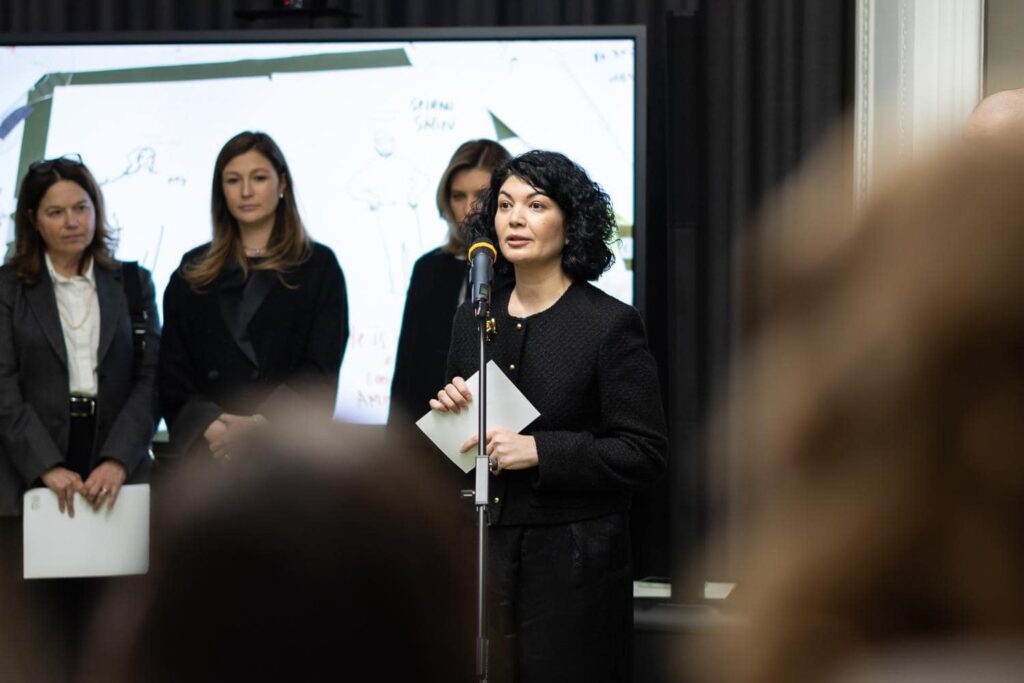
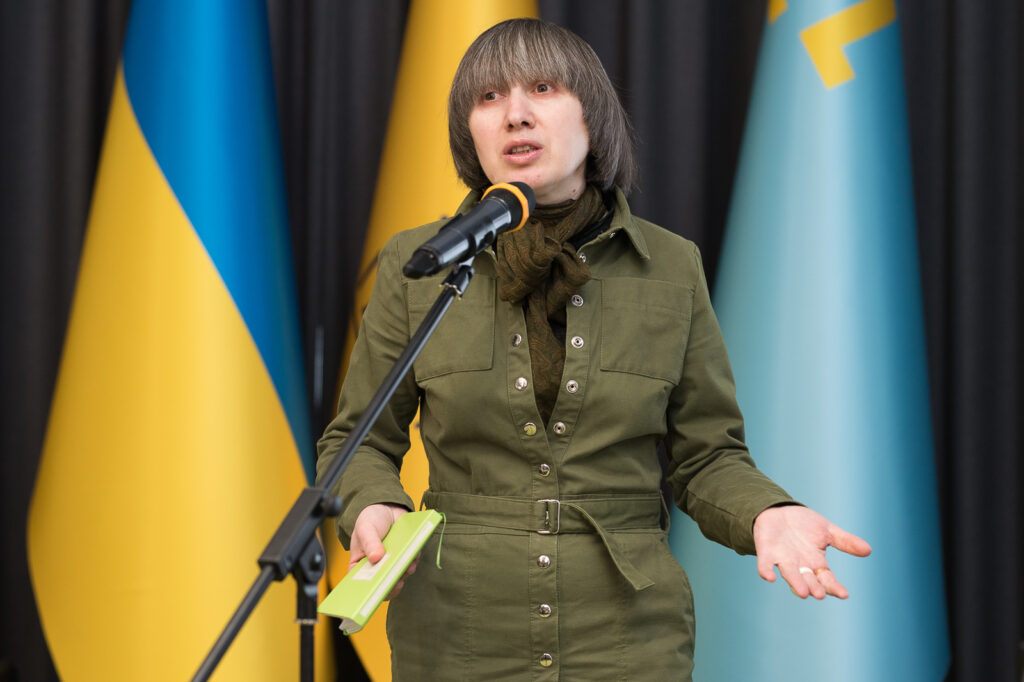
Permanent Representative Tamila Tasheva during the opening ceremony underlined:
“Often, when we talk about the resistance that Ukraine has been putting up against the Russian occupiers for 10 long years, many people have an image of a man. A political prisoner. A warrior. A defender. But today we want the face of women’s resistance in Crimea to be recognizable. We want the voices of brave and dedicated women who were not afraid to resist the occupation to be heard. Activists of the resistance movement. Political prisoners. Our defenders. We pay tribute to each of you. Thank you for not giving up. The fight continues. Our resistance continues.”
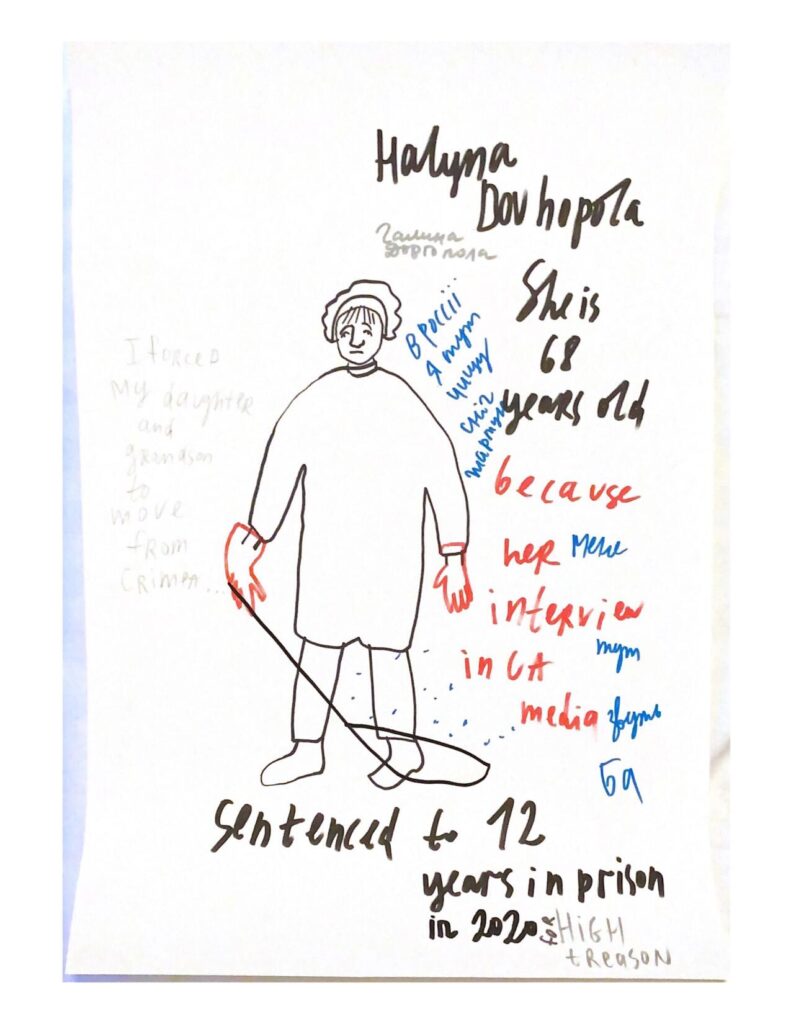
In her speech, Tamila Tasheva also mentioned human rights activist and journalist Lutfiie Zudiieva, political prisoners Iryna Danylovych, Halyna Dovhopola, and Leniie Umerova, and also quoted Aishe Seitmuratova, a veteran of the Crimean Tatar national movement.
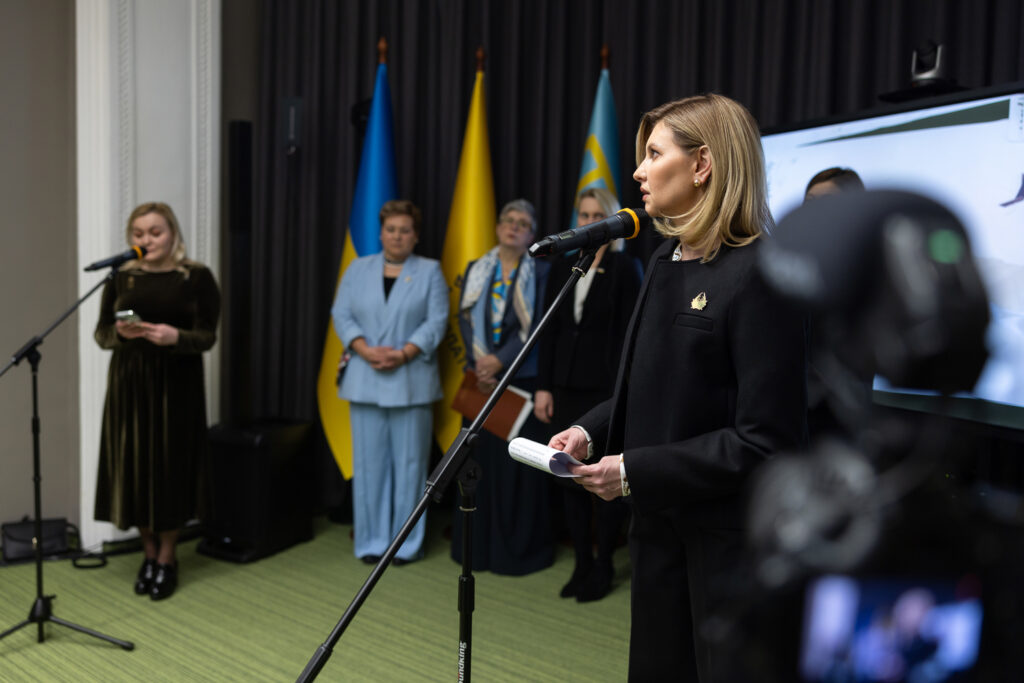
First Lady of Ukraine Olena Zelenska spoke to the guests: “Fortunately, no one needs to be told why, when we say “thank you to the Armed Forces”, we address it to both men and women defenders, why women defenders are separately mentioned in the name of the national holiday on 1 October – because we, as a society, are learning to make the daily heroism of women visible. To appreciate it. This exhibition continues this mission by focusing on brave women and their daily resistance in the occupied Crimea. Resistance that is often silent and lonely – but all the more important and courageous.”
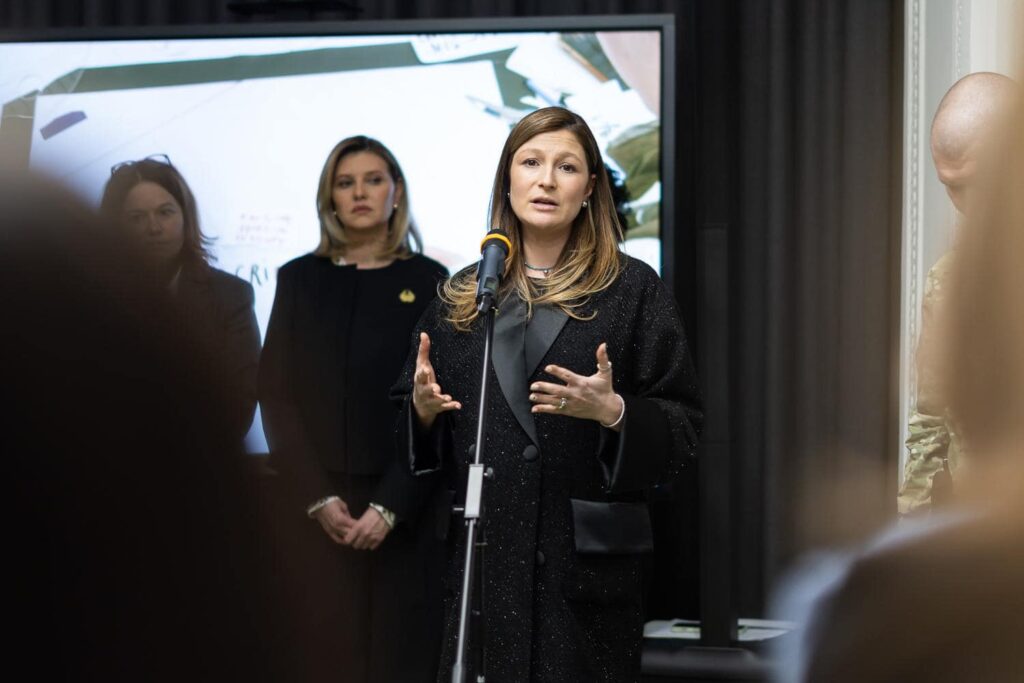
First Deputy Minister for Foreign Affairs of Ukraine Emine Dzheppar emphasized: “It is important to tell the stories of people who have been under pressure for their pro-Ukrainian position by the occupiers. There are stories behind every drawing, every photo, every film. These are the fates of thousands of people who do not have a normal life because of the occupation, because of the pressure of the occupiers. Only the de-occupation of our territories can bring normal life back to our lands.”
“I am honoured to be here today and to be among such a powerful group of women. This exhibition demonstrates the strength, courage, resilience, power and creativity of Crimean Tatar women. Those who seek justice face repression, unjust persecution, and horrific punishment. The expression of what was once a cultural identity, has become a dangerous act that threatens security and freedom,” said the US Ambassador to Ukraine, Bridget Brink.
The Ambassador of Canada to Ukraine, Natalka Cmoc, highlighted the violation of the rights and pressure on Crimean Tatars, spoke about the importance of covering the courage of women who resist the occupiers, and quoted Lesia Ukrainka’s words that demonstrate this resistance: “No, I am alive, I will live forever, I have in my heart what does not die.”
The Head of the UN Human Rights Monitoring Mission in Ukraine, Danielle Belle, said: “It is horrifying that those who have shown their loyalty, who have shown their identity, have been subjected to terrible repression. We must reflect on the consequences of this terrible violation of international law.”
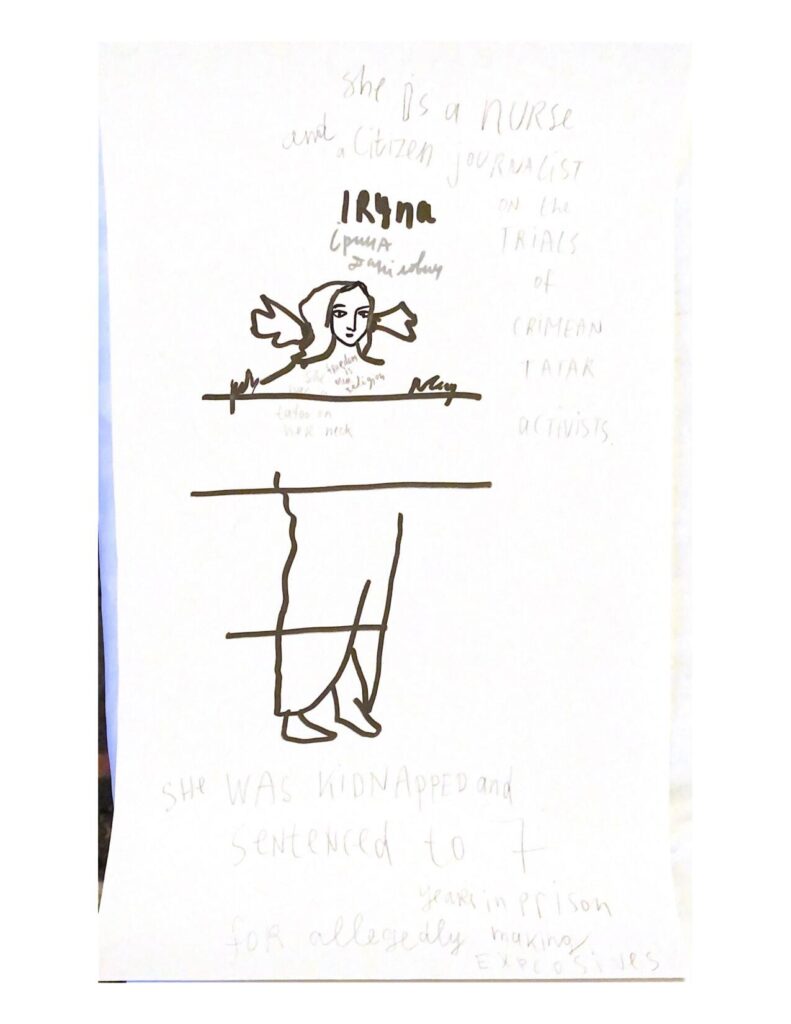
In her online speech, the Ambassador of the European Union to Ukraine, Katarina Mathernova, shared the story of Iryna Danylovych: “I would like to particularly note the mentoring program launched by the Ministry of Foreign Affairs of Ukraine with the support of the Crimea Platform, which is aimed at supporting political prisoners in Crimea. I consider it my political and moral duty to join this program. I will be honoured to be mentored by Iryna Danylovych, a 44-year-old human rights activist and citizen journalist. I will pledge to keep her case in the spotlight at every opportunity. As an EU ambassador and as a woman who stands in solidarity with Iryna and her family, I urge everyone here today to join the mentoring program and support her.”
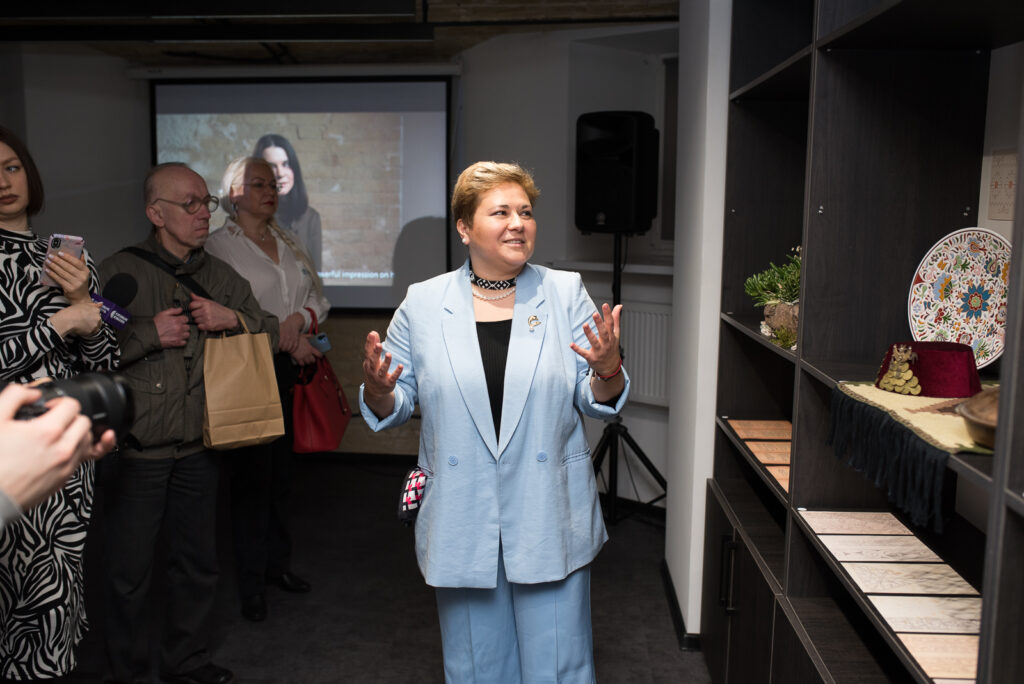
As part of the official opening of the exhibition, Tetiana Filevska gave a curatorial excursion. In her speech, Tetiana noted the importance of the topic of women’s resistance and thanked the Permanent Representative for her initiative and invitation to join the organization of the art exhibition.
During the opening, the artists Maria Kulikovska, Alevtina Kakhidze, and Yulia Po also presented their artworks.
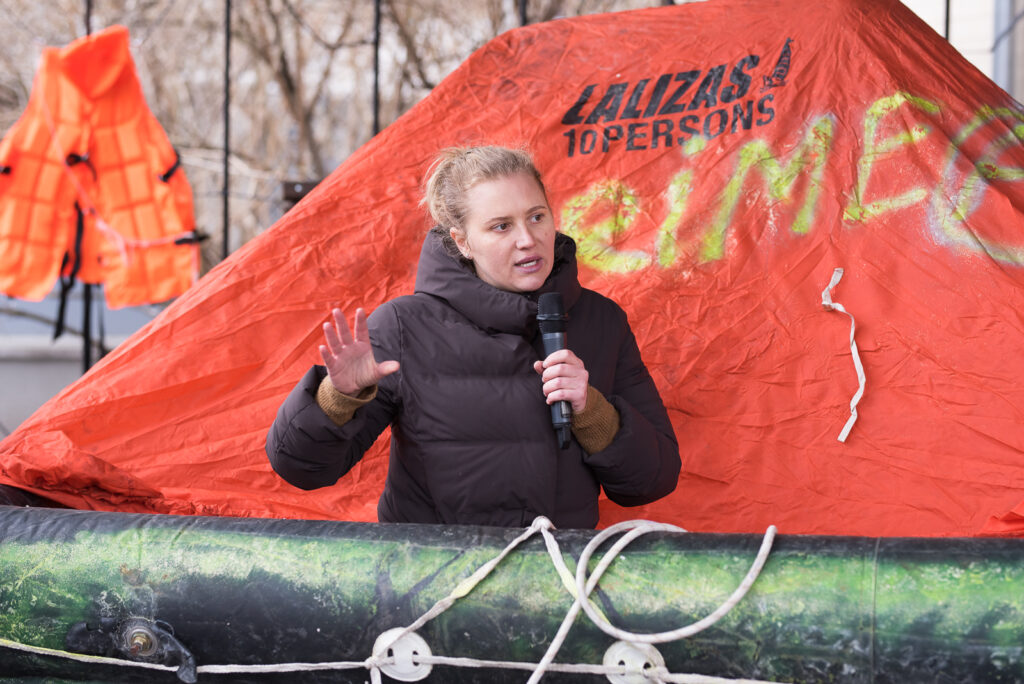
All guests participated in a curatorial excursion, during which the installation “Beach” by Liia Dostlieva and Yulia Po was presented; occupation diaries by Yulia Po, which provide a unique perspective on the events that took place in Crimea in 2014; social sculpture “Raft Crimea” by Maria Kulikovska; creative project by Alevtina Kakhidze, in which she talks about the illegally imprisoned by the occupiers in Crimea – a large number of political prisoners, activists, Ukrainians and Crimean Tatars, as well as civilians. In her work, Alevtina also highlights the story of 93-year-old Mumine Murtaza-Karabash, a member of the Crimean Tatar national movement and a mother of many children, who was honoured with the Second Class Order of Motherly Glory.
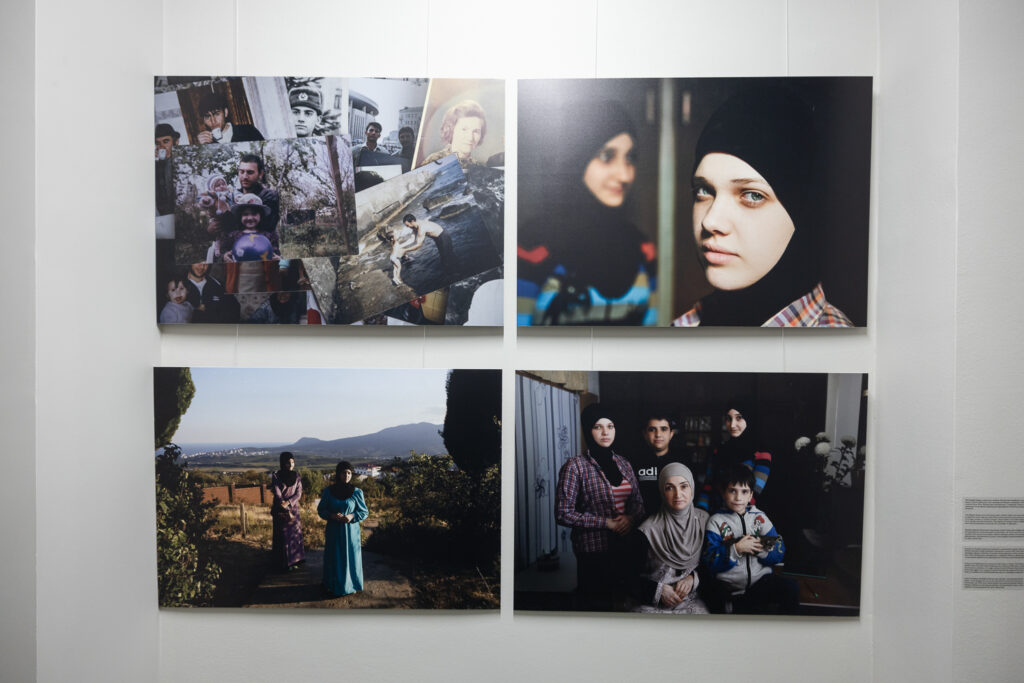
The Crimea Platform Office also hosted the works of the “Crimea. Home” project by Emine Ziyatdinova. This series of photographs is a visual sequence that reflects on the experience of Crimean Tatars who found their home in a complicated geopolitical environment before and after the occupation of Crimea by Russia. The exhibition also featured a part of the project “Crimea. Home” project by Emine Ziyatdinova – “There is no other home”. For Ziyatdinova, the camera and recorder became tools for finding answers: Who am I? Where do I belong? What is Home? They allowed her to reveal family stories of Crimea’s past and present that are missing or distorted by remaining Soviet and Russian propaganda narratives.
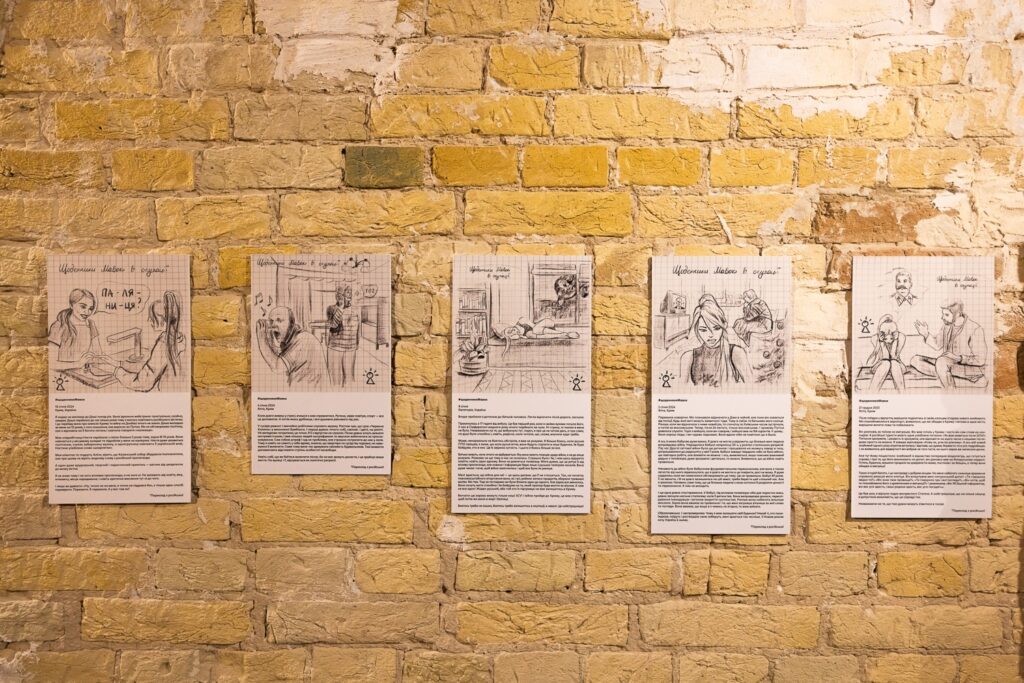
The exhibition also includes diaries of the “Zla Mavka”, in which activists tell their stories, share their feelings, and become heard beyond the occupation. “Zla Mavka” is a women’s resistance movement that unites more than a hundred members in the occupied territories of Ukraine. They are brave women who resist the Russian occupiers every day. Mavka’s diary notes are published in the “Zla Mavka ” telegram channel https://t.me/zlaya_mavka. The exhibition presents the stories of Mavkas from the occupied Crimea.
The exhibition also presents the historical context that appeals to the figure of Lesia Ukrainka and her works. One of it — the exhibition “Iphigenia in Tauris. Lesia Ukrainka in the Crimea”. This exposition presents objects and documents collected during the curatorial research for the exhibition and outlines the historical context in which our modern-day contemporaries find themselves. Her stay in the Crimea was not only a place of recovery for Lesia Ukrainka after the progression of her illness, but also had an impact on her work: here she was formed as a mature playwright who placed Ukrainian literature in the European context, as well as studied and incorporated Crimean Tatar culture into her world. It is no coincidence that one of the first plots at this time is Iphigenia in Tauris, a story from the classic ancient tragedy written by Euripides, the main action of which takes place in the Crimea.
The excursion ended with a performance by Maria Kulikovska, during which she raised the topic of the occupation of Crimea.
Organizers and partners of the art project: The Mission of the President of Ukraine in the Autonomous Republic of Crimea / Office of the Crimea Platform; Ukrainian Institute; Taras Shevchenko Institute of Literature of the National Academy of Sciences of Ukraine. The project was implemented with the support of the Partnership Fund for a Resilient Ukraine (PFRU), funded by aid from the governments of Canada, Finland, Netherlands, Sweden, Switzerland, the United Kingdom, and the United States.