On April 22, 2025, a public discussion titled “Crimea and Youth: Visions of Resilience, Values, and Cohesion” was held in Odesa. The event was part of a series of discussions initiated by the Council on Cognitive De-occupation of Crimea, which operates under the Mission. Similar workshops had previously taken place in Kyiv and Poltava.
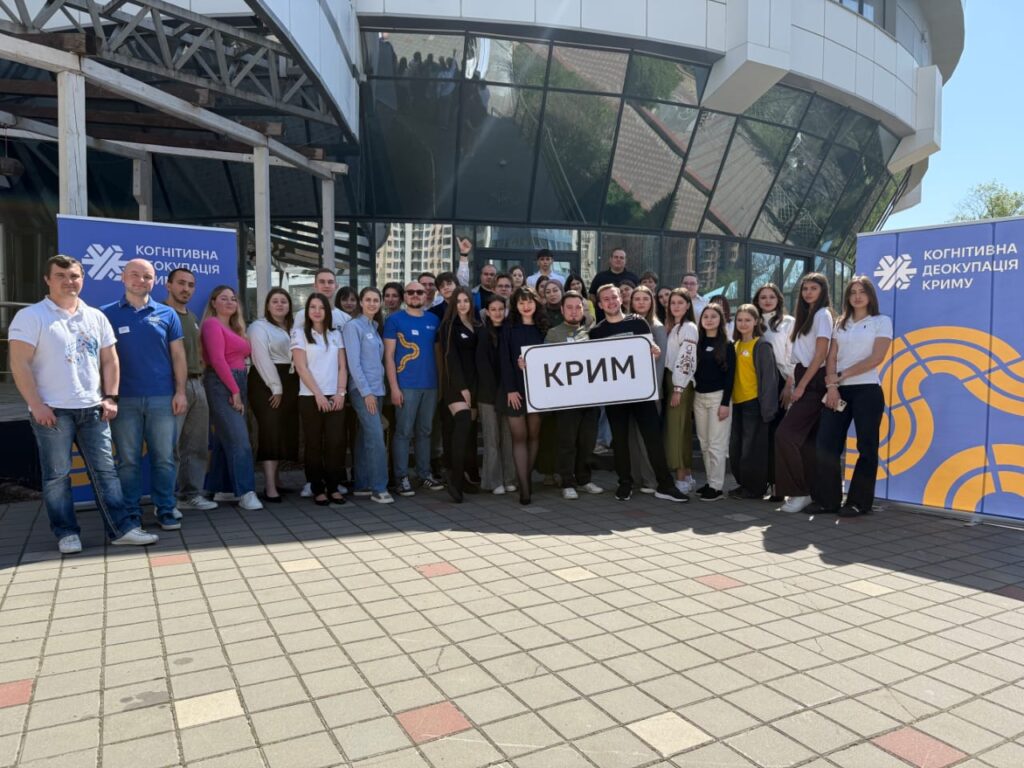
More than 40 young people participated in the event, including high school students, university students, representatives of civic initiatives, and youth activists. The discussion was held in an interactive workshop format, allowing participants not only to hear expert presentations but also to develop their own visions, future scenarios, and collective responses to key challenges.
The participant groups were symbolically named after historical Crimean toponyms that were destroyed by the Soviet authorities, including Simferopol, Dzhankoi, Yevpatoriia-Kezlev, and Alupka. This was intended to emphasize that the names of Crimean cities are an integral part of the peninsula’s future identity.
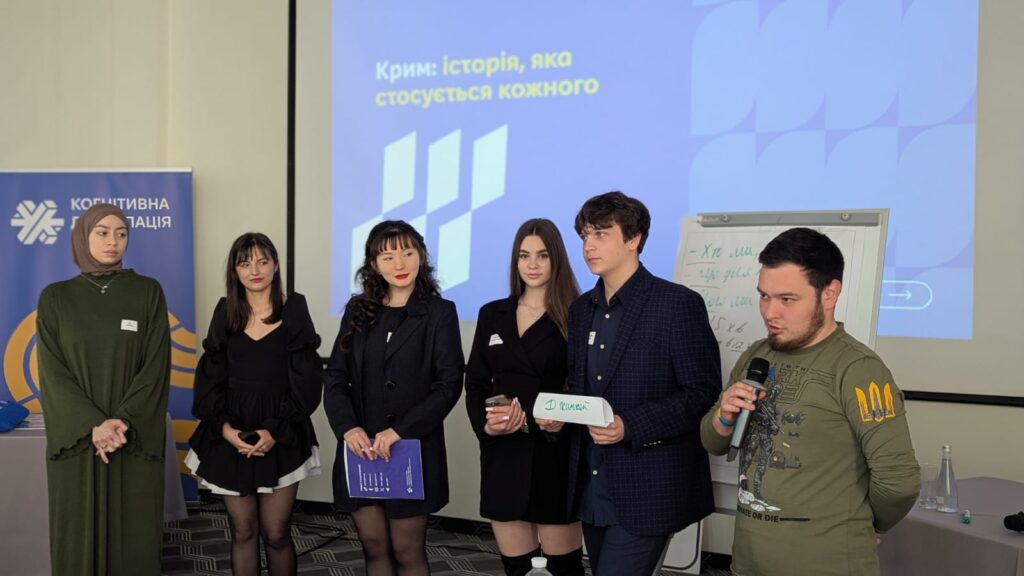
The event opened with welcoming remarks from Yevhen Bondarenko, Head of the Information Department. He stressed that the youth represent the driving force capable of setting the direction for Crimea’s reconstruction after its liberation.
“It is important to keep Crimea in focus within youth policy, because young people in Ukraine are the agents of change and builders of the country’s future. Today we are talking about Crimea—its history and challenges, but above all, about our common future,” emphasized Yevhen Bondarenko.
In his presentation, international expert on resilience, security, and strategic communications Dmytro Teperik encouraged participants to consider the future of Crimea as a field shaped by several forces: historical “burdens,” current “impulses,” and the desired “pull” toward transformation. Drawing attention to the complexity of the situation, he explained that any future encompasses not only absurd but also possible and plausible trajectories for development.
“The younger generation of Ukrainians and Europeans must engage in joint discussions about the details of our preferred shared future—including the integration of Crimea into Ukraine and the wider European democratic space,” Dmytro Teperik emphasized.
Yuliia Tyshchenko, Chair of the Board of the Ukrainian Independent Center for Political Studies and co-founder of the National Platform for Resilience and Cohesion, devoted particular attention in her remarks to the role of culture and education in strengthening horizontal ties among young people from different regions of Ukraine—primarily as a safeguard against future divisions.
“Ukrainian youth today need up-to-date knowledge about Crimea and what life under occupation is like. Young people in Ukraine often lack personal stories or direct experience related to Crimea, so it is logical to address this and work to broaden understanding of the situation there. After all, this is our shared future—our security, our policy, and the economy of Ukraine’s south. Cognitive de-occupation is precisely about such approaches: dismantling Russian narratives about Crimea’s supposed Russian past for a variety of audiences,” YuliiaTyshchenko noted.
A special lecture with a historical focus was delivered by historian and PhD, Martin-Oleksandr Kysly, a lecturer at the National University of Kyiv-Mohyla Academy and head of the Crimean Studies research center. Drawing on historical evidence, he illustrated how Russian imperial policy has consistently marginalized Crimean Tatar, Ukrainian, and Karaite cultural layers, replacing them with a uniform Russian imperial narrative.
“The history of Crimea is the key to understanding not only the past, but also the present and future of Ukraine. The current war waged by Russia against Ukraine is a direct consequence of more than two centuries of the aggressor’s colonialism,” Martin concluded.
The historian also emphasized to the youth that Russian historical myths still retain influence and are, at times, perpetuated even in Western discourse.
During the group sessions, participants discussed the challenges facing Crimea under occupation and developed their own visions for the peninsula’s peaceful future. The youth emphasized the impact of propaganda, the decline in education, demographic changes due to resettlement from Russia, and the discrimination against Ukrainian and Crimean Tatar languages. Special attention was given to the revival of the cultures of the Indigenous peoples as a key element of post-occupation recovery and social cohesion.
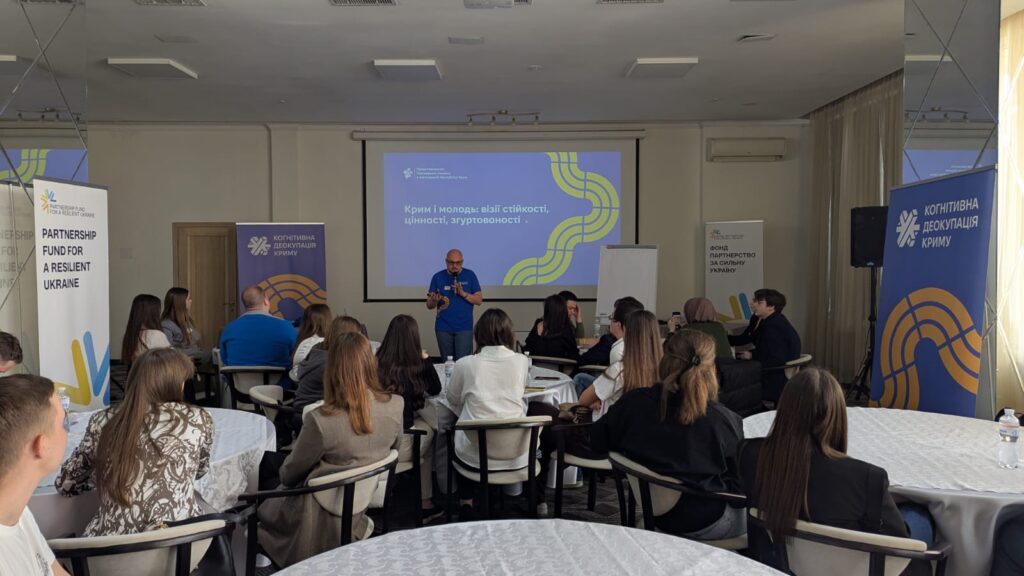
The event was organized by the Mission with the support of the Ministry of Youth and Sports of Ukraine, the All-Ukrainian Youth Center, the Odesa City Council, and the Odesa Regional Military Administration, as well as the media initiatives Crimea Daily and Cemaat, and School of Media Patriots and Resilient Ukraine civil society organizations.