On 15 May, the Mission held a comprehensive event dedicated to the Day of Remembrance of the Victims of the Crimean Tatar Genocide. The event was attended by representatives of foreign diplomatic missions in Ukraine, government bodies, the Mejlis of the Crimean Tatar People, the expert community, and the public.
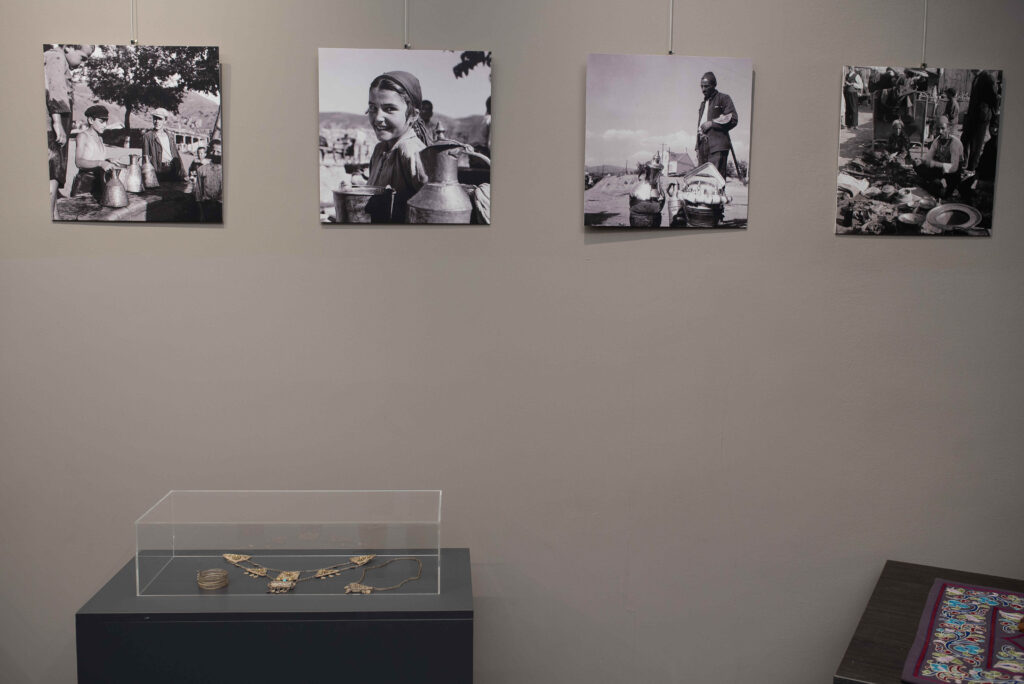
During the event, guests were presented with a thematic exhibition on the history of the Crimean Tatar people and the 1944 deportation. Among the exhibits were personal belongings that Crimean Tatars preserved in exile and brought back upon their return to Crimea, including a Quran written in deportation, traditional clothing, family photographs, and household items. A separate part of the exhibition featured archival documents reflecting the scale of the deportation, the decades-long struggle for the right to return to the homeland, and the revival of the Crimean Tatar people.
The exhibition was curated by historian Hulnara Abdullaieva, who acted as the event’s moderator. She shared the history of Crimea from the Crimean Khanate to the present day, as well as the details of the 1944 deportation.


During the breaks, participants had the opportunity to converse in an informal atmosphere and taste traditional Crimean Tatar treats — kurabiye, halva, and pakhlava — dishes prepared by Crimean Tatars during their time in exile.
The event concluded with a panel discussion, “Memory That Shapes the Future: Preserving Crimean Tatar Culture under Occupation”, dedicated to the 82nd anniversary of the deportation of the Crimean Tatar people and the 12th anniversary of the temporary occupation of Crimea by Russia.
The discussion was moderated by Olha Krapyvianska, coordinator of the Crimean Tatar linguistic and cultural project “Holosni”. Participants discussed the role of culture, literature, art, and historical memory in preserving the identity of the Crimean Tatar people and countering Russian colonial policy.
At the beginning of the discussion, Permanent Representative Olha Kuryshko emphasised that, on the eve of the 82nd anniversary of the deportation, it is particularly important to speak not only about the tragedy of 1944 but also about the strength and resilience of the Crimean Tatar people.
“No empire — neither the Soviet nor modern Russia — is capable of destroying Crimean Tatar identity. That is why the liberation of Crimea is a necessary condition for preserving its history, culture, and future,” Olha Kuryshko emphasised.
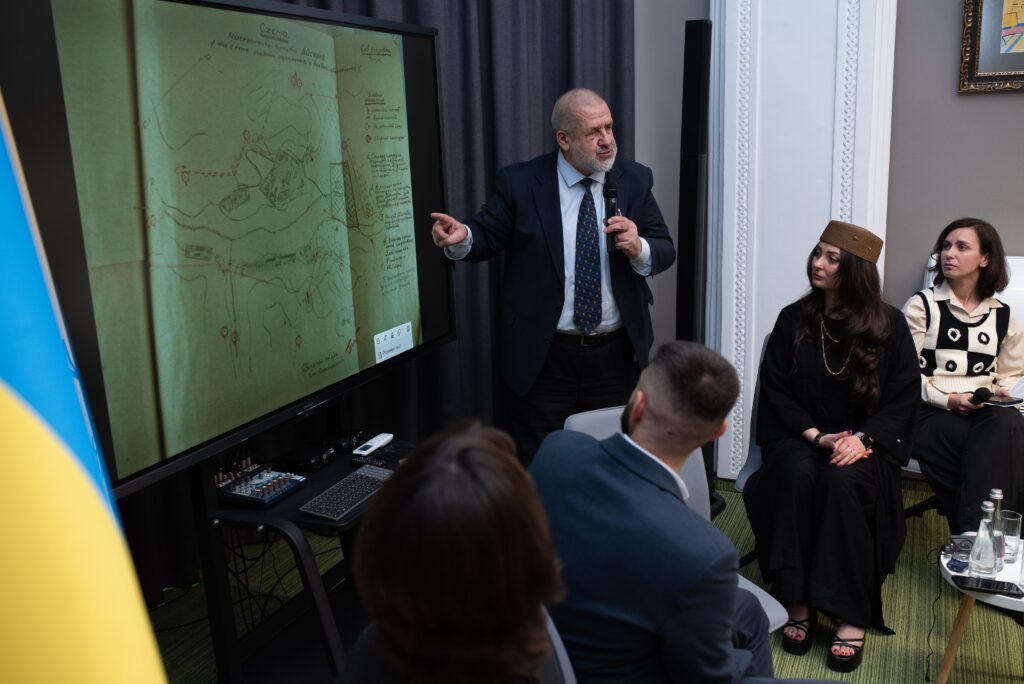
The Chairman of the Mejlis of the Crimean Tatar People, Refat Chubarov, recalled that accusing Crimean Tatars of “treason” became the formal pretext for the 1944 deportation. Using his native village of Ai-Serez as an example, he showed how, after the eviction of the people, the Soviet authorities changed the names of settlements to erase any mention of the Indigenous peoples of Crimea. According to him, today Russia repeats this policy, attempting to destroy not only Crimean Tatar but also Ukrainian identity.
“The de-occupation of Crimea is a chance for the revival of the Crimean Tatar people,” Refat Chubarov emphasised.
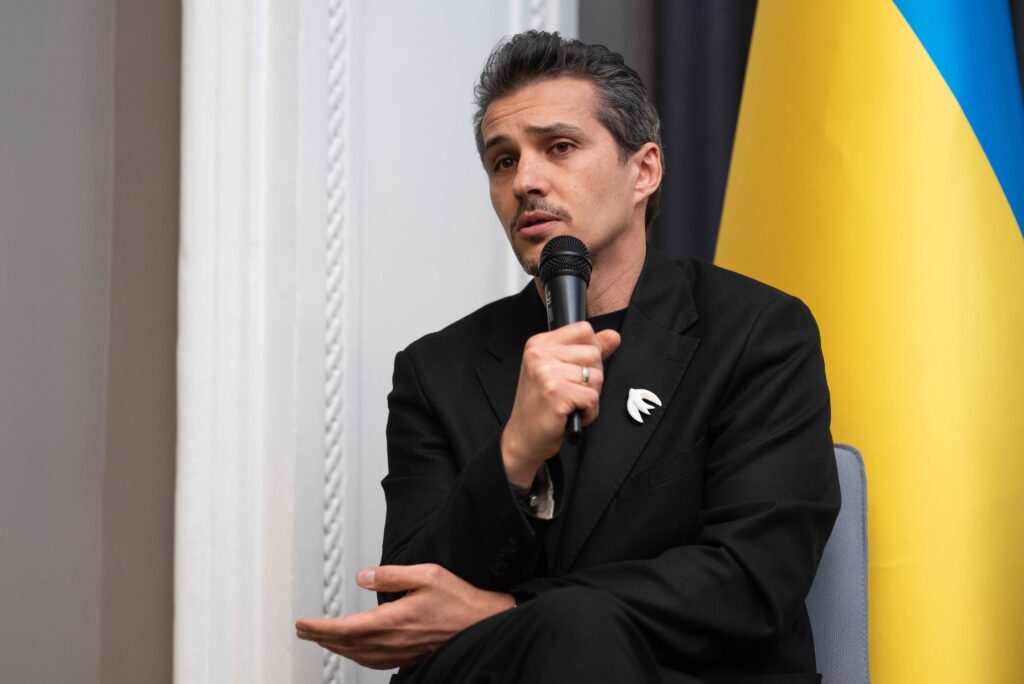
Alim Aliev, Deputy Director General of the Ukrainian Institute, also added that the struggle for identity has been ongoing for many generations and is existential in nature. He stressed the importance of developing Crimean Tatar studies globally so that the history and culture of the people are studied through their own lens, rather than through Russian narratives.
“We are undergoing a process of reclaiming our names. As Crimean Tatars, we are more than our trauma; we are more than the occupation,” said Alim Aliev.
Journalist and founder of the “Real History” project Akim Galimov drew attention to the fact that empires perceive small nations as a resource. He spoke about the systemic appropriation of cultural property of the Crimean Tatars, which was taken to Russian museums, as well as the destruction of the authenticity of sites such as the Khan’s Palace.

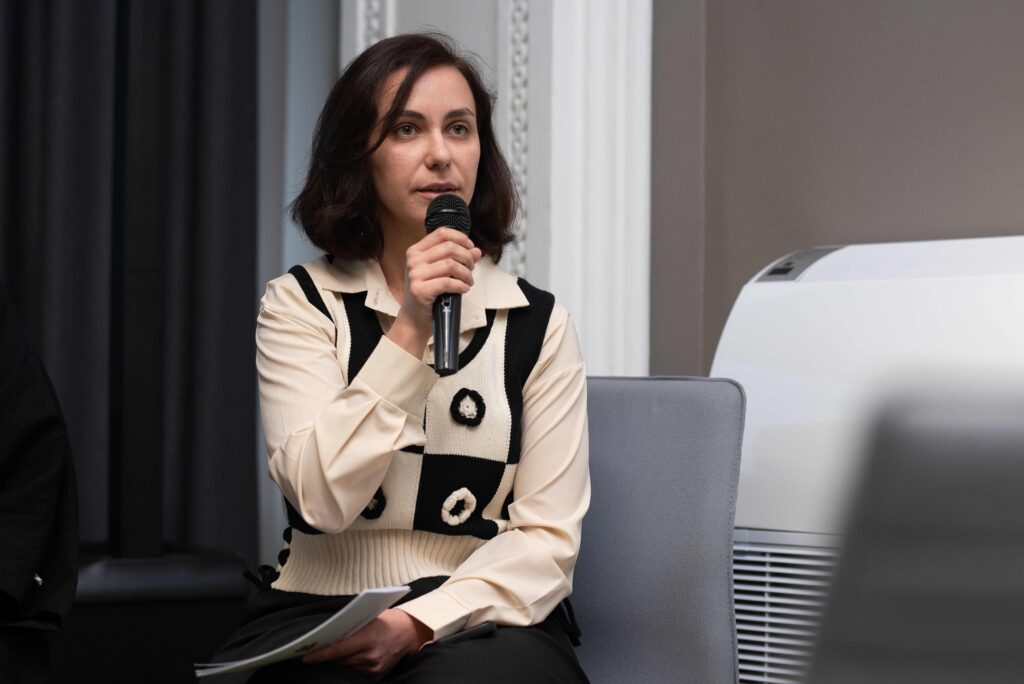
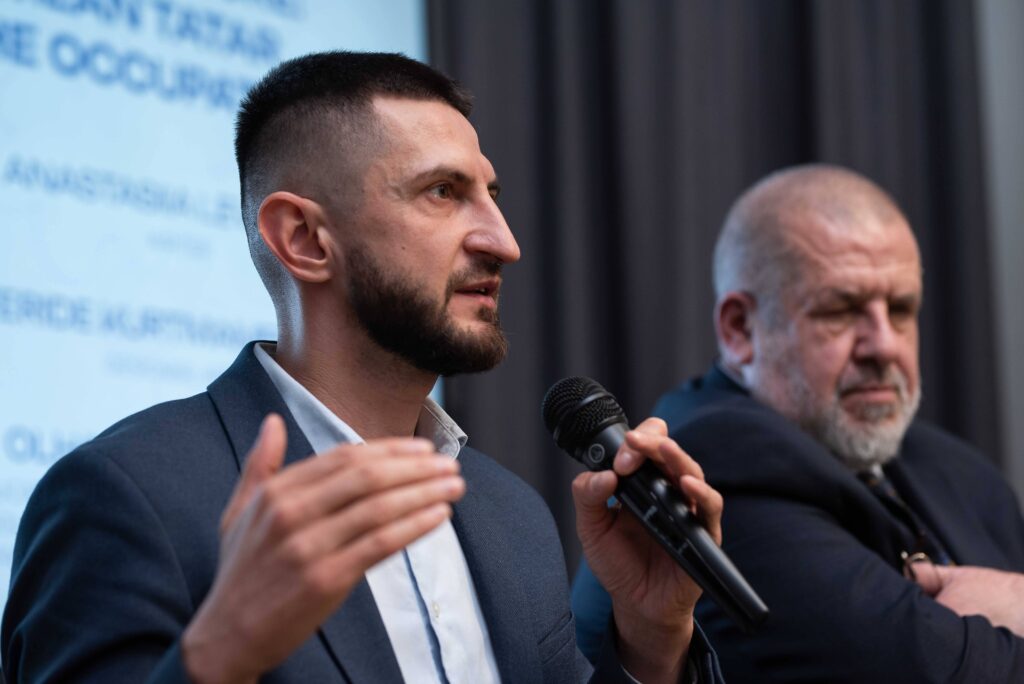
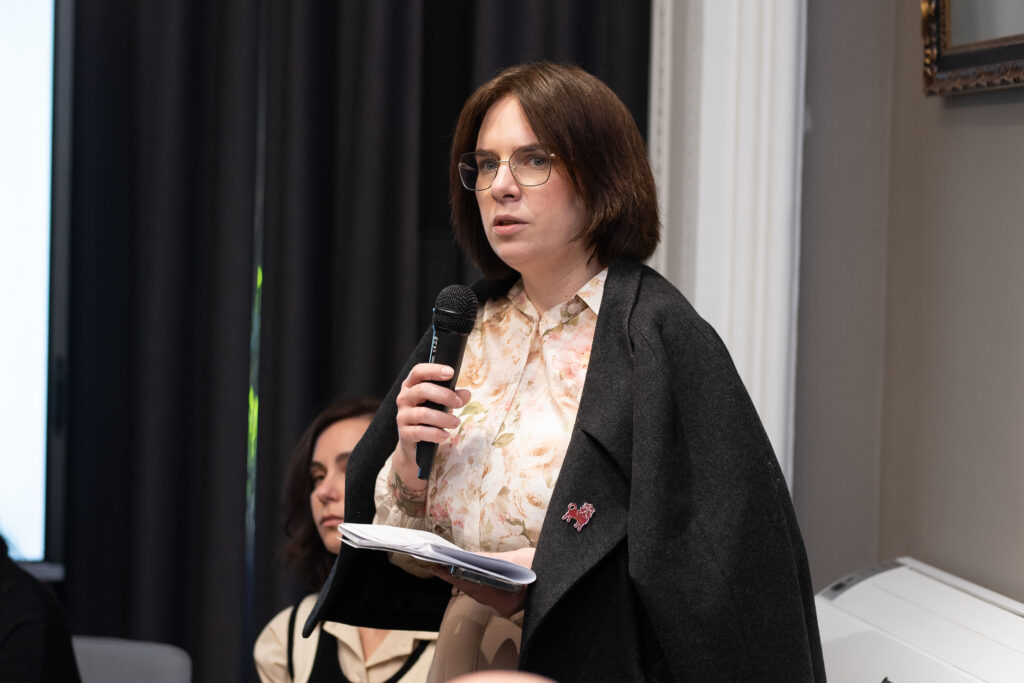
Speaking about the impact of occupation on the individual, writer Anastasia Levkova reflected on the influence of propaganda on human consciousness and the special role of literature in forming identity. She stressed that books preserve not only the memory of the past but also the potential for future cultural development.
“Currently, not only is the existing culture being destroyed, but also the culture that could have been,” noted Anastasia Levkova.
Finally, designer and artist Feride Kurtmamedova spoke about the significance of traditional Crimean Tatar ornamentation, found in clothing, ceramics, and household items. She reminded that the Örnek ornament has been inscribed on the UNESCO Representative List of the Intangible Cultural Heritage of Humanity, and that contemporary cultural projects help maintain a connection with those who remain in temporarily occupied Crimea.
“We must resist using the language of culture,” emphasised Feride Kurtmamedova.
The event was organised by the Mission of the President of Ukraine in the Autonomous Republic of Crimea / Crimea Platform Office with the support of the Partnership Fund for a Resilient Ukraine, funded by the governments of Canada, Estonia, Finland, Norway, Sweden, Switzerland, and United Kingdom.
We express our special gratitude to the “Crimean House” for support in creating the video, as well as to the “Crimean Studies” Centre of the National University of “Kyiv-Mohyla Academy” and the “Musafir” establishment for their assistance. We also thank the families from Crimea who provided their personal belongings for the exhibition.