A Pilot Discussion “Crimea and Youth: Visions of Resilience, Values of Unity”
17.01.2025
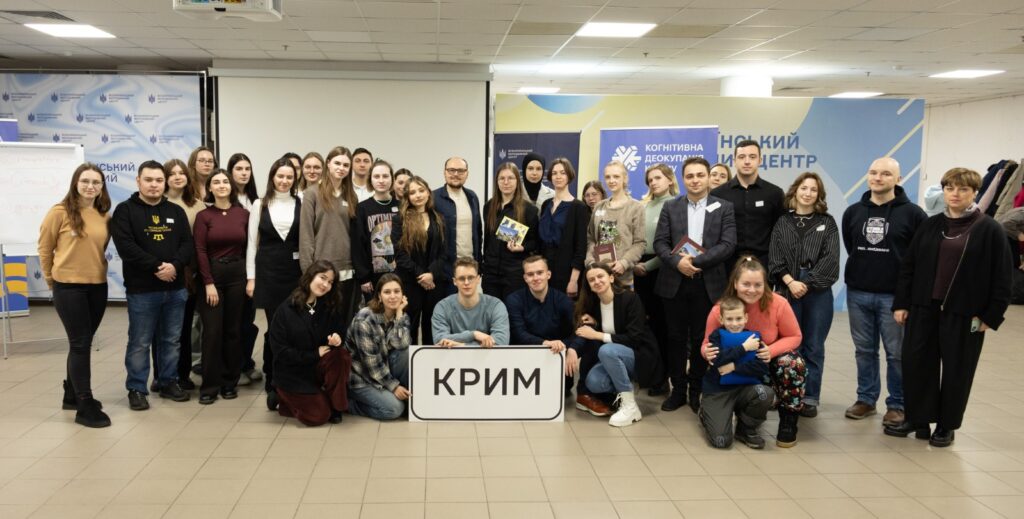
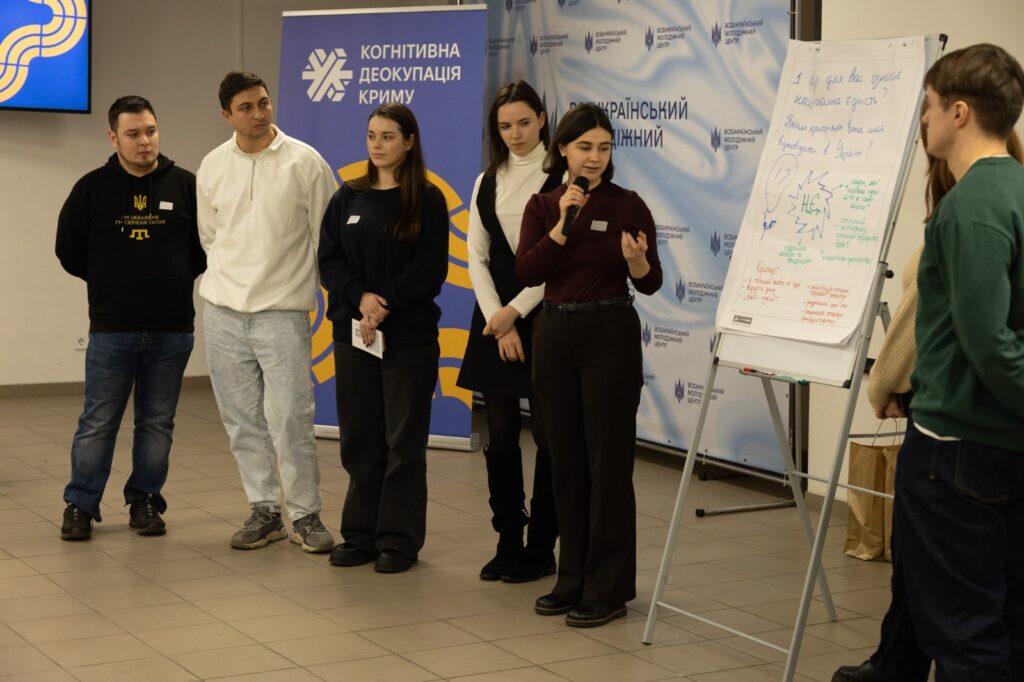
Today, January 17, 2025, a pilot discussion titled “Crimea and Youth: Visions of Resilience, Values of Unity” was held at the All-Ukrainian Youth Center on the initiative of the Mission of the President of Ukraine in the Autonomous Republic of Crimea. The event aimed to highlight the topic of Crimea and engage youth in the process of cognitive de-occupation—a policy focused on overcoming the consequences of Russia’s colonial policies and reintegrating residents of liberated territories into Ukraine’s cultural and social space.
At the start of the event, Yevhen Bondarenko, Head of the Information Department of the Mission, presented the Mission’s key initiatives to support youth, promote information policies, and preserve the cultural identity of Crimea. He emphasized the crucial role of young people in shaping new approaches to addressing cognitive de-occupation, particularly through fostering resilient values, unity, and national consciousness.
“Over more than a decade of Crimea’s occupation, the informational and cultural divide has not only been a challenge but also a test of our ability to maintain unity. Insufficient emphasis on issues such as history, human rights, and Russian repression only plays into the hands of enemy propaganda. Only through dialogue, recognition of shared heritage, and active reintegration can we overcome the consequences of the colonial policies of the occupying state,” Yevhen Bondarenko stressed.
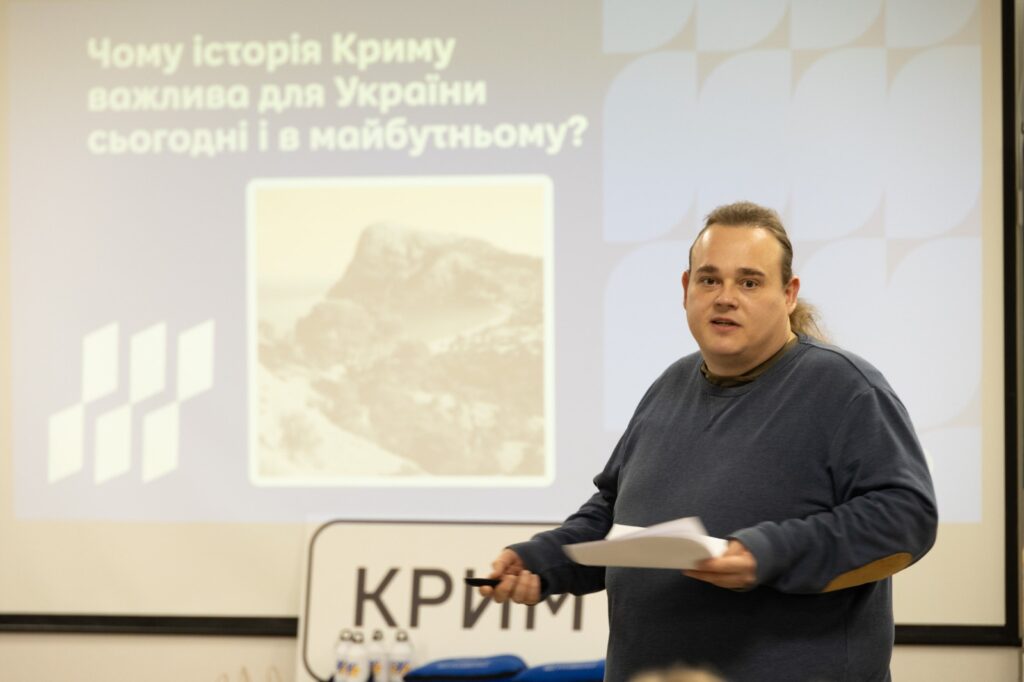
As part of the discussion, experts from the Council on Cognitive De-Occupation of Crimea—Martin-Oleksandr Kyslyi, Yuliia Tyshchenko, and Dmytro Teperyk—focused on the importance of Crimea’s history, practical aspects of cognitive de-occupation, and envisioning a resilient future for the peninsula. Their presentations helped outline key directions for Crimea’s reintegration.
Yuliia Tyshchenko emphasized a primary task in the process of cognitive de-occupation:
“One of the most important aspects of our work on cognitive de-occupation is addressing the consequences of occupation and war—restoring trust between the residents of occupied territories, Ukrainian society, and the Ukrainian state, while dismantling the dominance of Russian propagandist and imperial narratives about Crimea.”
Martin-Oleksandr Kyslyi elaborated on the symbolic significance of Crimea for national identity:
“Crimea is the key to understanding our past and shaping Ukraine’s future. It is the homeland of Indigenous peoples who have preserved their culture and traditions for centuries. It is a land that has never been and will never be ‘primordially Russian,’ as its history, like its spirit, is inseparably linked to the Ukrainian people and their struggle for freedom and justice,” emphasized Martin-Oleksandr Kyslyi.
Dmytro Teperyk addressed the challenges and opportunities shaping Crimea’s future:
“The future of Crimea lies in balancing the weight of its multilayered historical past, the momentum of the present demanding justice and freedom, and the pull of ideas that inspire the building of a peaceful, integrated society. The vision of the future may seem absurd, feasible, or plausible, but it is our striving for the desired—de-occupation, reintegration, and the revival of Crimea’s identity within Ukraine—that will determine which of these scenarios becomes reality.”
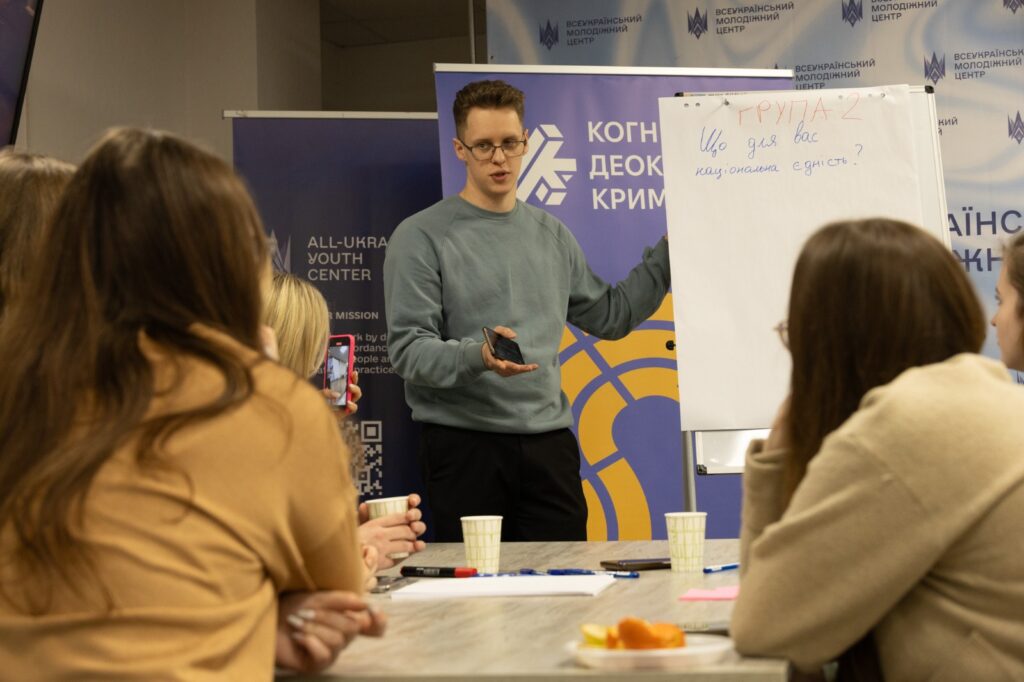
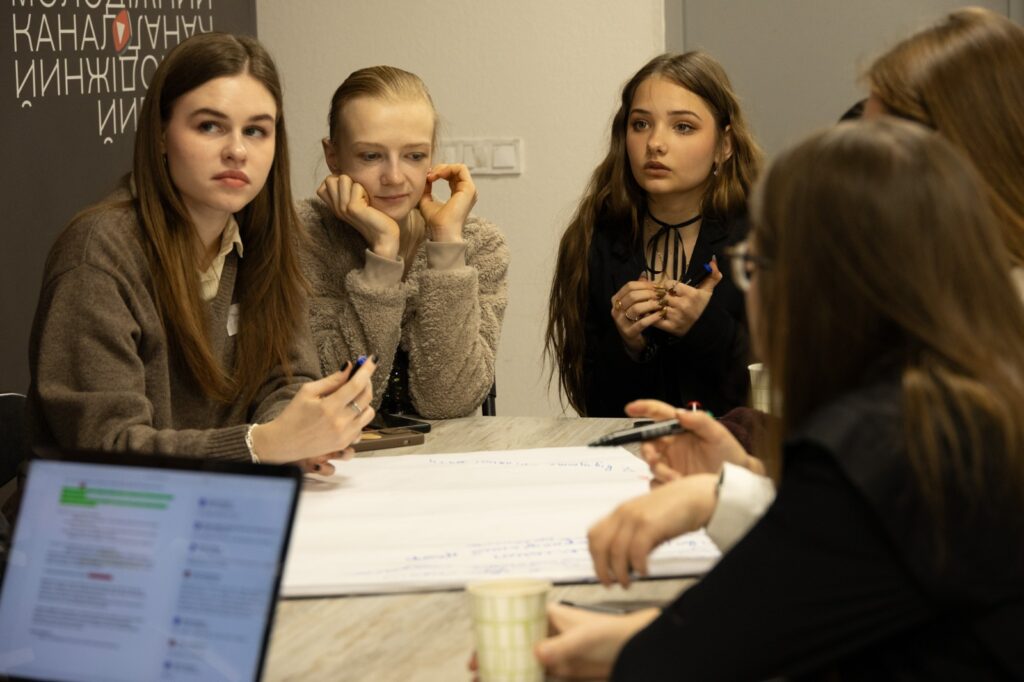
Participants actively engaged in group discussions, addressing key questions about Crimea’s future and Ukraine’s unity. They reflected on the meaning of national unity, the criteria it should meet in Ukraine, and its significance. The youth also contemplated three main risks that could emerge after Crimea’s liberation from Russian occupation and the new opportunities this liberation could open for society. Additionally, participants analyzed the commonalities and differences currently experienced by Ukrainian youth in occupied and free territories, particularly in the context of shared and divergent experiences for the future.
The event was organized by the Mission with the support of the Ministry of Youth and Sports of Ukraine, the All-Ukrainian Youth Center, the Crimea Daily media initiative, Cemaat, and the School of Media Patriots and Resilient Ukraine civic organizations.